To get in the mood for this journey, learn all about this important era through an innovative exhibition at the world's first Romanticism Museum, and then set out to become a romantic yourself.

Experience idyllic old towns and unspoilt nature, walk in Goethe's footsteps from classical to Romantic times, or enjoy Wagner's music. With day trips from Frankfurt am Main, Nuremberg and Eisenach, you can visit 10 UNESCO World Heritage Sites in 12 days and discover your romantic side everywhere.

You can find details of train connections at:
Cheap Train Tickets | Timetables for Germany & Europe - Deutsche Bahn

Route info

Recommended duration of trip: 12 days
Total distance: 675 km
Recommended modes of transport: Train, other public transport
Number of UNESCO World Heritage Sites visited: 10
Cultural Route Highlights of Romanticism
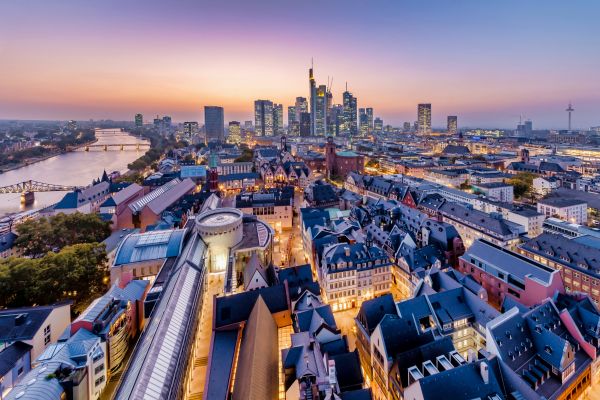
Skyline mit hohen Gebäuden und beleuchteten Straßen in Frankfurt am Main bei Sonnenuntergang Frankfurt am Main: Skyline at sunset from the cathedral ©#visitfrankfurt

Frankfurt am Main (1 night)
  • Day 1: To get in the mood for this tour, visit the world's first Museum of Romanticism, and the neighbouring Goethe House (3 mins by S-Bahn from Hauptbahnhof, or a short walk through the city centre).

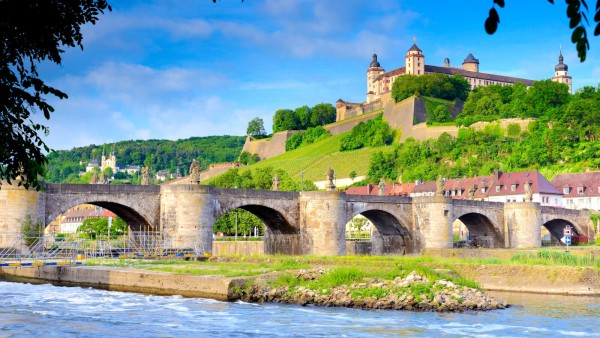
Würzburg: Marienberg Citadel overlooking the banks of the river Main Würzburg: Marienberg Citadel overlooking the banks of the river Main ©DZT

Würzburg (2 nights)
  • Day 2: Continue your journey to the certified Fairtrade Town of Würzburg (1.5 hours by train) Visit the Würzburg Residence, an extraordinary Baroque palace, and wander through the Court Gardens. Stroll through the city and visit the Zukunftshaus (House of the Future) for an environmentally-friendly shopping trip, followed by lunch right on the River Main, surrounded by its idyllic vineyards.
    Tip:
    From the Court Gardens in Würzburg, it is a short walk to the tomb of the minstrel Walther von der Vogelweide in the hidden Lusamgärtchen Gardens. Unhappy lovers lay roses here in the hope of soothing their pain.
  • Day 3: Excursion to Bad Kissingen (1 hour by train), wander through the spa garden and Europe's largest pump room, taste the 7 healing waters, visit the graduation house, and enjoy the brine Kneipp pool.

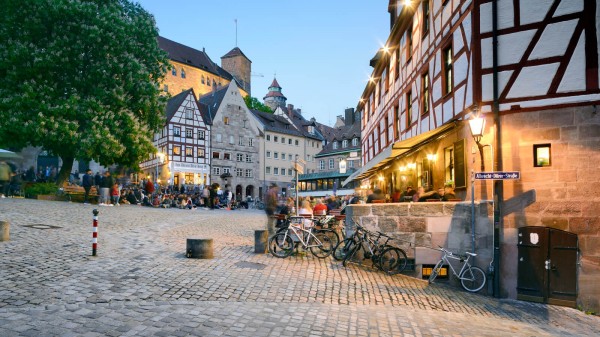
Nuremberg: View of the Tiergärtnertorplatz Nuremberg: View of the Tiergärtnertorplatz ©DZT

Nuremberg (3 nights)
  • Day 4: Continue your journey on to Nuremberg (1 hour by train) Stroll through the city, visit the city's landmarks – the Imperial Castle – followed by Albrecht Dürer's House.
  • Day 5: Excursion to Bayreuth (1 hour by train) Visit the Margravial Opera House, then continue on foot along the Wagner Walk, until you reach the Richard Wagner Museum and other notable sites of this great Romantic composer.
    Tip:
    Opera performances in this Baroque opera house bring the beginnings of European opera culture to life in one of the original venues, and are a unique experience.
  • Day 6: Excursion to Regensburg (1 hour by train). Visit to the Old Town with its Stadtamhof, and more than 100 listed buildings. The well-preserved remains of the Roman legionary camp – the fortification walls with the Porta Praetoria and the Roman excavations under the Romanesque Niedermünster church – are also located in the Old Town and are part of the Danube Limes UNESCO World Heritage Site.
    Tip:
    On Regensburg's Climate Protection Trail, at 11 different stations, you will learn all about the importance of climate change adaptation to this former imperial city.

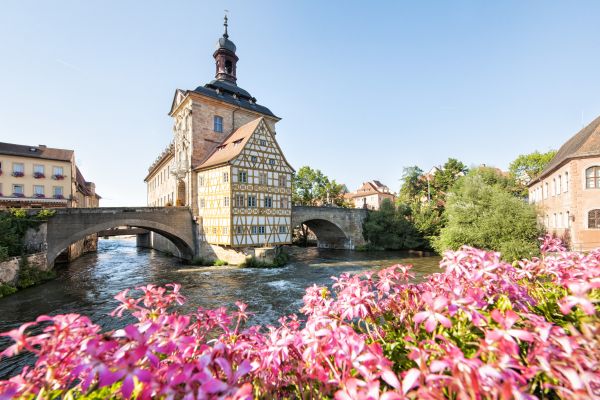
Photo of the old town hall in Bamberg Bamberg: UNESCO World Heritage, The old Town Hall with bridge ©DZT

Bamberg (1 night)
  • Day 7: Continue your journey on to Bamberg (2 hours by train) and stroll through the historic streets of Bamberg's Old Town. Visit the Bamberg Cathedral and the Bamberg Market Gardeners' District. The numerous inner-city garden areas are unique in Germany. In the evening, visit one of the traditional brewery pubs.
    Tip:
    Bamberg is the capital of German beer. The craft brewing process is an intangible cultural heritage, and family-run breweries produce their sometimes internationally award-winning beer specialities in this way. One particular speciality is the traditional Bamberg smoked beer.

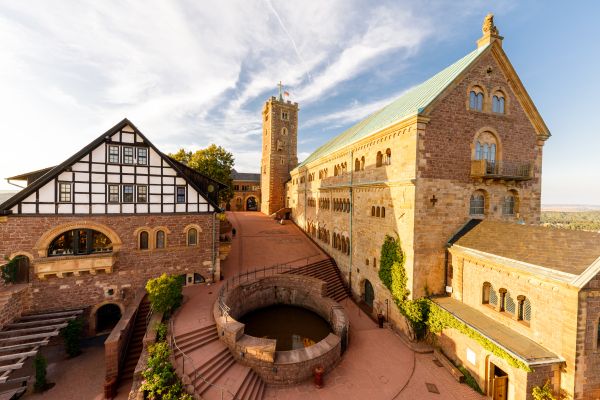
Ein Innenhof der Wartburg in Eisenach mit mehreren Gebäuden aus Stein und Fachwerk. Eisenach: Wartburg Castle courtyard with Gadem, keep and palace, UNESCO World Heritage Site ©DZT

Eisenach (3 nights)
  • Day 8: Continue your journey on to Eisenach (2 hours by train) Visit Wartburg Castle, a very well-preserved castle from the German Middle Ages, and the place where Martin Luther translated the Bible.
    Tip:
    Eisenach is also the birthplace of Johann Sebastian Bach, so you have the opportunity to visit the Bach House, the world's largest museum dedicated to the artist.
  • Day 9: Excursion to the Hainich National Park (1 hour by Hainich Bus). Visit the Baumkronenpfad treetop path, and hike in the Hainich.
  • Day 10: Excursion to Weimar (1 hour by train). Visit the sites of Goethe, Schiller and Herder – today, "Classical Weimar" bears witness to the simultaneously enlightened, courtly, and bourgeois culture from around the year 1800.
    Tip:
    Be sure not to miss the Bauhaus Museum in Weimer.

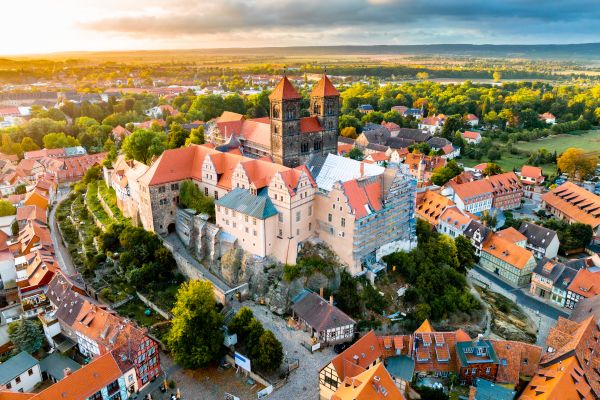
Luftaufnahme der St. Servatius-Kirche und des Schlosses. umgeben von Grünanlagen und historischen Gebäuden mit roten Dächern in der Altstadt von Quedlinburg. Quedlinburg: Aerial view of the Collegiate Church of St. Servatii, the Castle and the Old Town, UNESCO World Heritage Site ©DZT

Quedlinburg (1 night)

  • Day 11: Continue your journey on to Quedlinburg (3 hours by train). Visit the Collegiate Church of St. Servatii with its impressive cathedral treasury, and the Wipertikirche church and Marienkloster convent on the Münzberg. Afterwards, stroll through the Old Town and the historic Garden of Dreams of this town.
    Tip:
    From Quedlinburg, you can travel with the free excursions ticket HATIX around the whole region by bus and tram in a particularly climate-friendly way. Stay a little longer and discover the hiking region of the Harz, with the fabled Hexentanzplatz ("Witches' Dance Floor") near Thale, or travel to the half-timbered town of Wernigerode and from there take the Brockenbahn to the highest mountain in the Harz.
  • Day 12: Continue your journey on to Leipzig (2 hours by train) then return home.