Inspiring Germany
Digital detox in Germany: escapes among forests, water and wide-open spaces
This text was generated with the help of AI ✨
The smartphone stays in your backpack. Instead of notifications, there is birdsong; instead of scrolling, a walk through the forest; instead of screen light, the sun setting on the horizon. A digital detox while travelling does not have to follow a strict programme. Often, simply choosing to be less connected for a few hours or days is enough – leaving more time to experience your surroundings with greater awareness.
 Give “germany.travel” priority on Google
Germany offers a surprisingly diverse range of places to retreat and recharge. Peaceful hiking trails wind through low mountain ranges and forests, sparsely populated landscapes open up wide horizons, and on the coast, wind and water set the pace. Even in the heart of major cities, there are places for an analogue break. This journey leads to destinations where switching off comes naturally.
Wide-open landscapes, few distractions: Uckermark, Altmark and the Alps
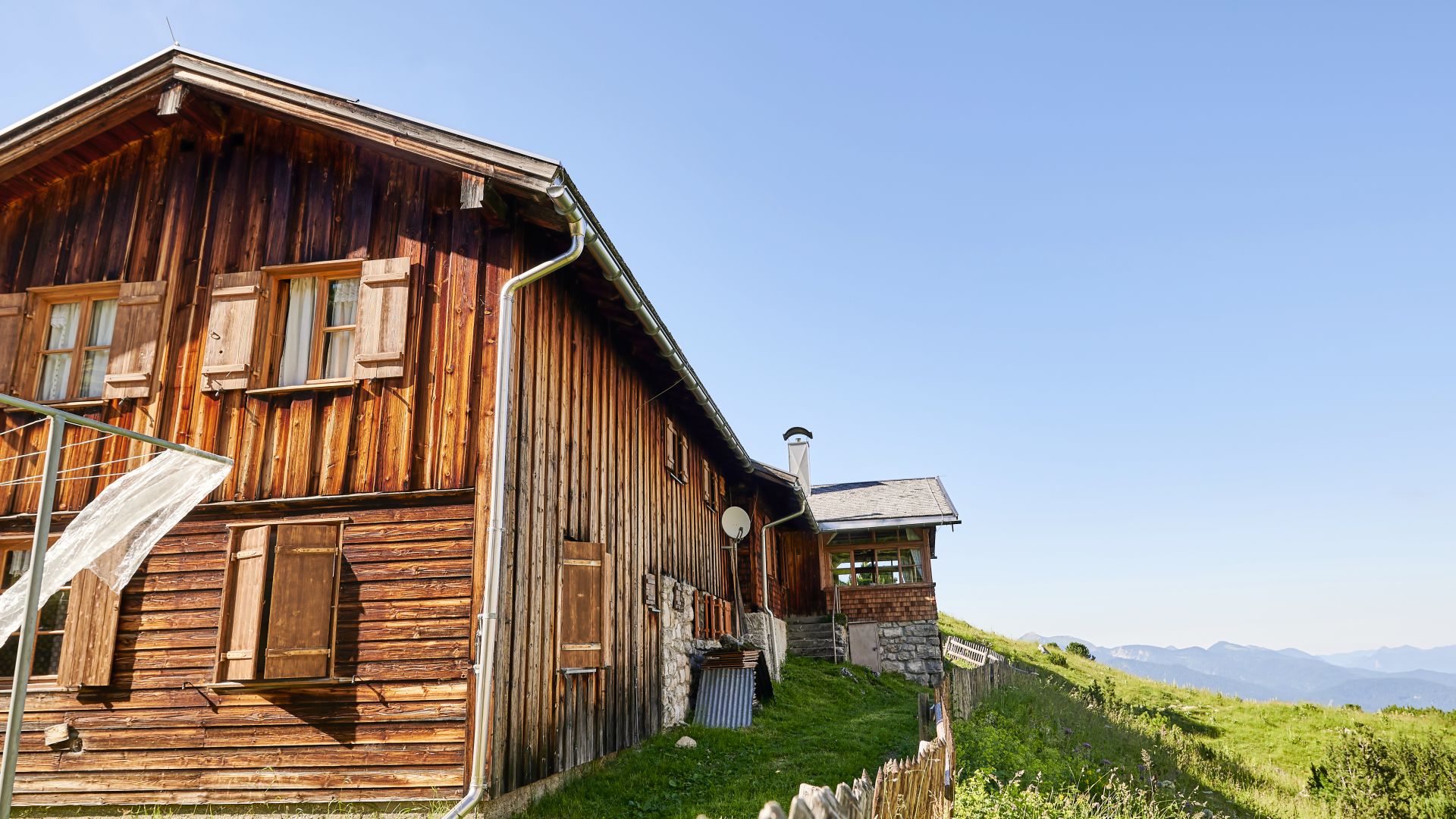 Garmisch-Partenkirchen: Schachenhütte in the Wetterstein Mountains
©DZT (Jens Wegener)
Garmisch-Partenkirchen: Schachenhütte in the Wetterstein Mountains
©DZT (Jens Wegener)
Fields, forests, small villages and plenty of space in between: the Uckermark is one of those regions where the landscape itself seems to slow things down. Hiking and nature experiences fill the day without the need for a packed itinerary. At Re:hof near Rutenberg, there is also a dedicated rural retreat offering accommodation without distracting technology – ideal for switching off in the countryside.
The Altmark feels similarly spacious. Between historic towns and open countryside, the region is best explored at a leisurely pace. Those wishing to immerse themselves even more deeply in nature will find a variety of camping options. Unzip the tent in the morning, have breakfast outdoors and start the day without a digital to-do list: sometimes slowing down requires nothing more than time and a place surrounded by nature.
A very different kind of seclusion awaits on hut-to-hut hikes in the German Alpine foothills and Alps. With every metre of elevation, roads, appointments and everyday routines recede a little further. Mobile reception is not always reliable on remote trails and at mountain huts either – so sometimes the digital break happens all by itself.
Among treetops and forest trails: tranquillity in the Bliesgau and Thuringian Forest
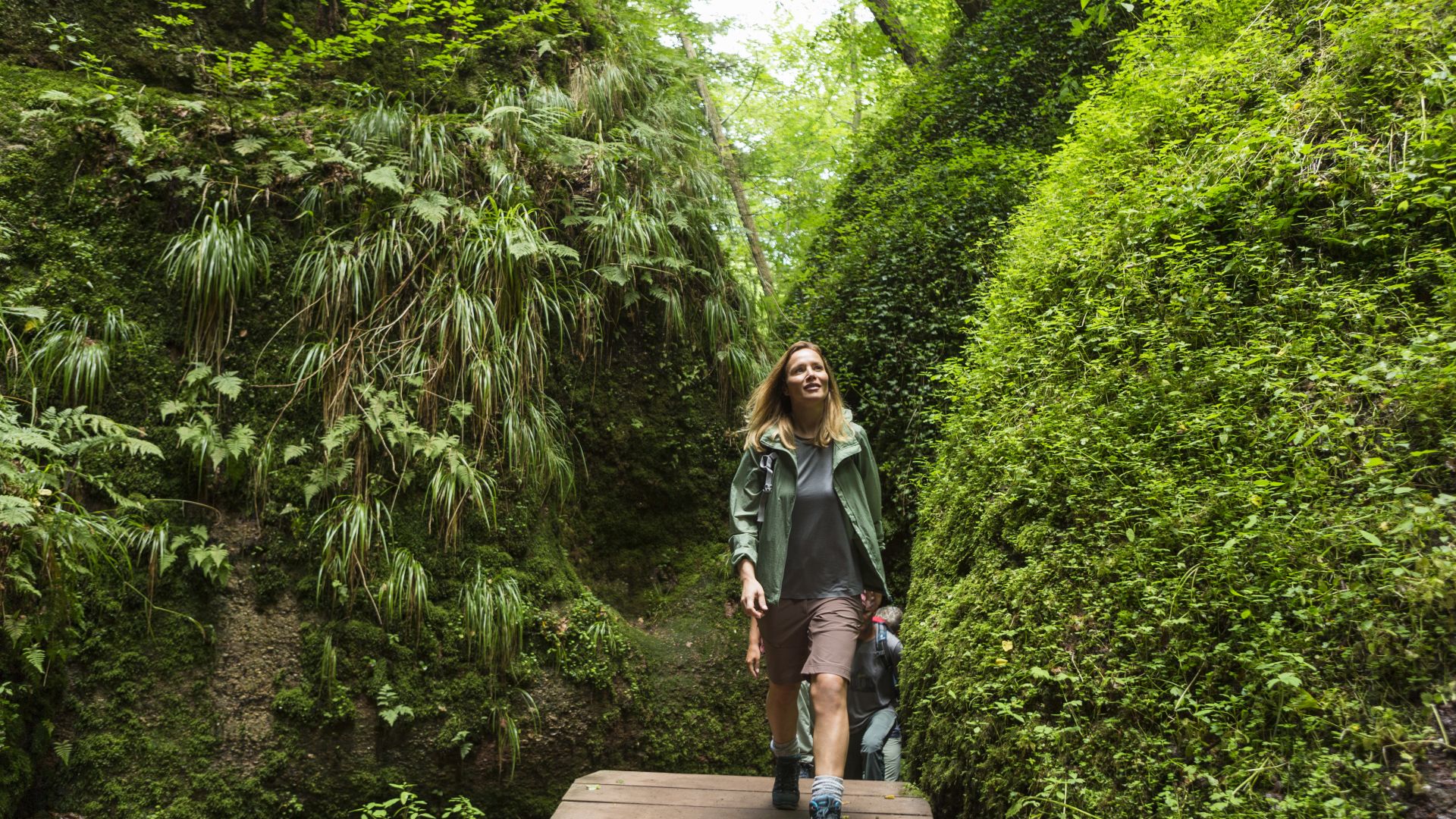 Thüringer Wald: Wandern mit Kindern in der Drachenschlucht
©TTG (Guido Werner)
Thüringer Wald: Wandern mit Kindern in der Drachenschlucht
©TTG (Guido Werner)
Forests are particularly well suited to days with fewer digital distractions. In the UNESCO Bliesgau Biosphere Reserve, a diverse cultural landscape shapes the experience of nature. Quite different, yet equally fitting, is the “Urwald vor den Toren der Stadt” – the primeval forest on Saarbrücken’s doorstep. Here, a natural retreat lies surprisingly close to urban life.
In the Thuringian Forest, the escape can last even longer. The historic Rennsteig trail runs through the low mountain range and creates space for a simple daily rhythm: set off, walk, rest, continue. Traffic noise, radio and smartphone alerts fade into the background. Instead, the sounds of the forest accompany the journey. After several hours on foot, it soon becomes clear how little it takes to clear your mind.
Wind in your face instead of a screen before your eyes: escapes in northern Germany
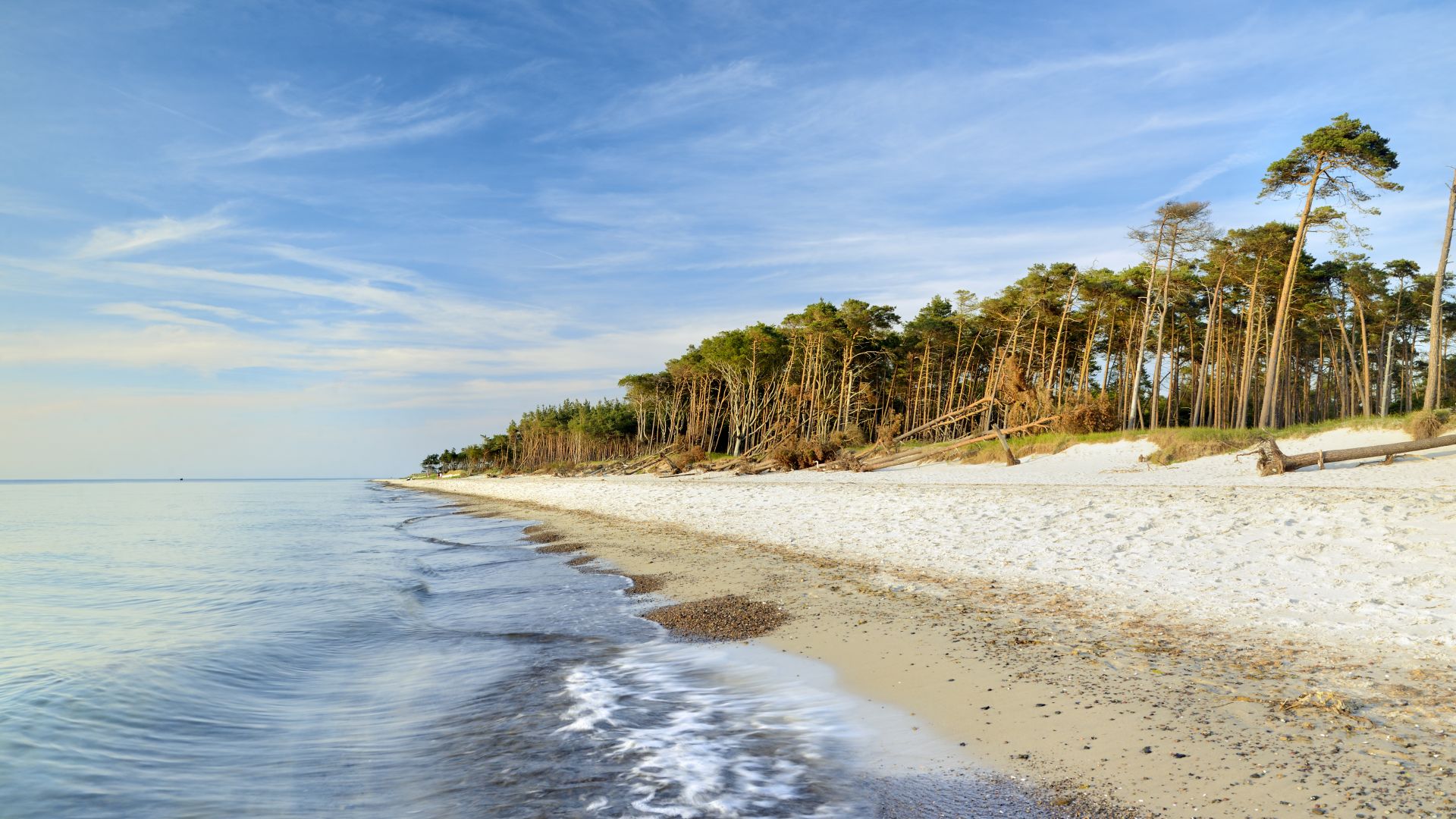 Prerow: View of the white beach and the clear water
©DZT (Francesco Carovillano)
Prerow: View of the white beach and the clear water
©DZT (Francesco Carovillano)
By the water, wide-open views take on a very immediate meaning. In the Western Pomerania Lagoon Area National Park, the Baltic Sea, lagoons, dunes and forests lie close together. Around 200 years ago, artists were already seeking inspiration here and a deeper connection with the landscape. Today, that feeling can be rediscovered. The walk through the Darß Forest to the Weststrand beach is particularly impressive: beneath old trees, the trail leads all the way to the Baltic Sea, where wind, waves and a vast horizon set the pace. It is a place where leaving your smartphone in your backpack and focusing entirely on the landscape comes naturally.
Further west, the Wadden Sea shapes the coastline. In Wangerland in East Frisia, paths follow the dykes, accompanied by salt marshes, expansive skies and the changing tides. Those wishing to extend their digital break can take the ferry from the mainland to Wangerooge. This car-free East Frisian island is best explored on foot or by bike – between beaches, dunes and the North Sea, everyday life naturally finds a different rhythm.
Places for the soul and peaceful landscapes: Sauerland and Siebengebirge
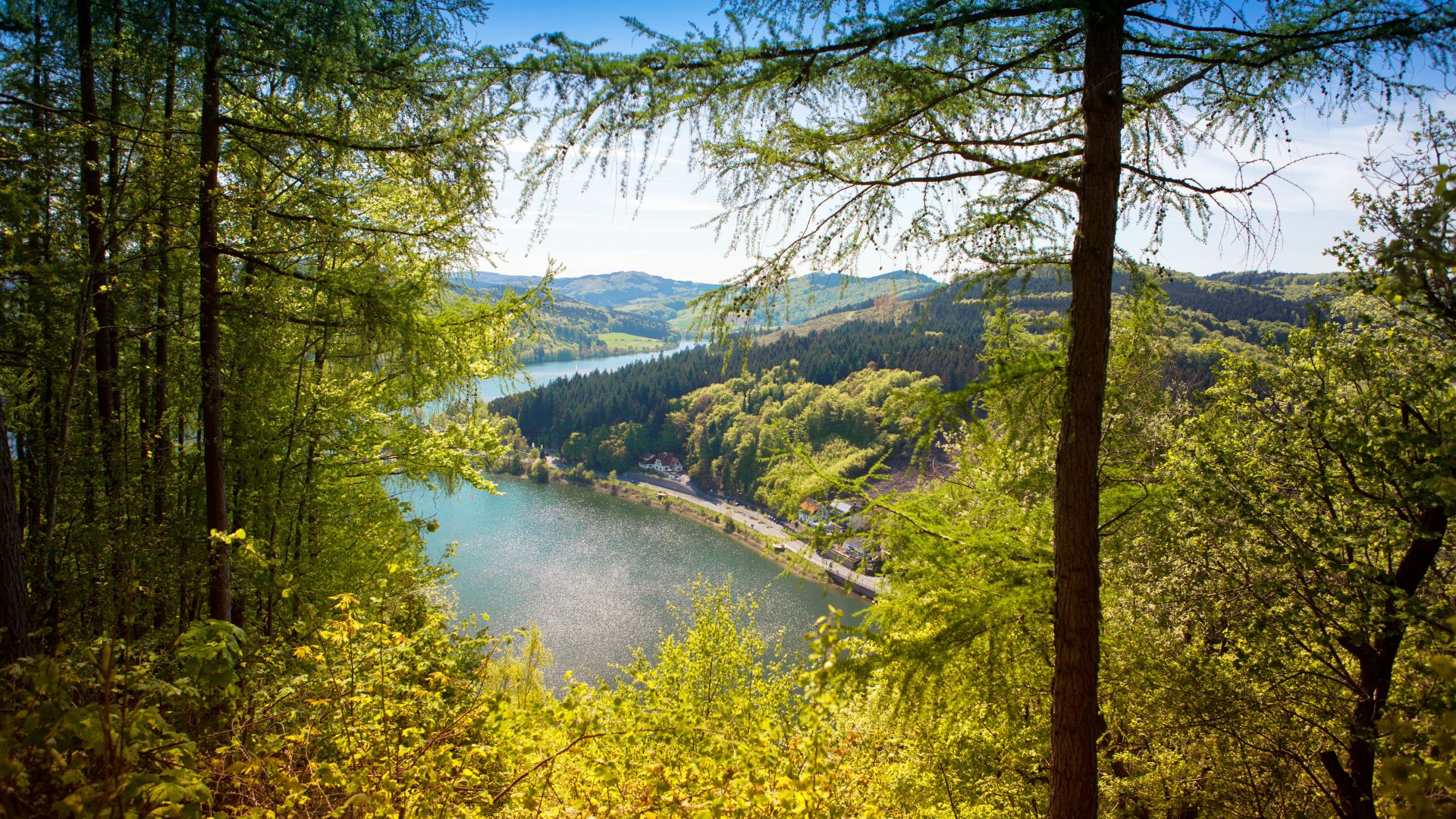 Heringhausen: View of the Diemelsee lake in the Sauerland region
©Adobe Stock (oldline2)
Heringhausen: View of the Diemelsee lake in the Sauerland region
©Adobe Stock (oldline2)
A digital break can also begin with the conscious search for a special place. In the Sauerland, selected locations are known as “Seelenorte” – places for the soul. They draw attention to landscape, tranquillity and personal perception, offering a fitting contrast to the fast-paced consumption of digital content.
Those wishing to combine this kind of break with hiking will also find nature experiences and opportunities to unwind around Lake Diemelsee. Closer to the Rhine, the Siebengebirge near Bonn offers another perspective: wooded hills, trails and viewpoints make the region ideal for an analogue day outdoors. It also proves that a digital detox does not necessarily require a long journey or complete isolation.
Offline in the city: peaceful retreats in Berlin, Bremen and Hamburg
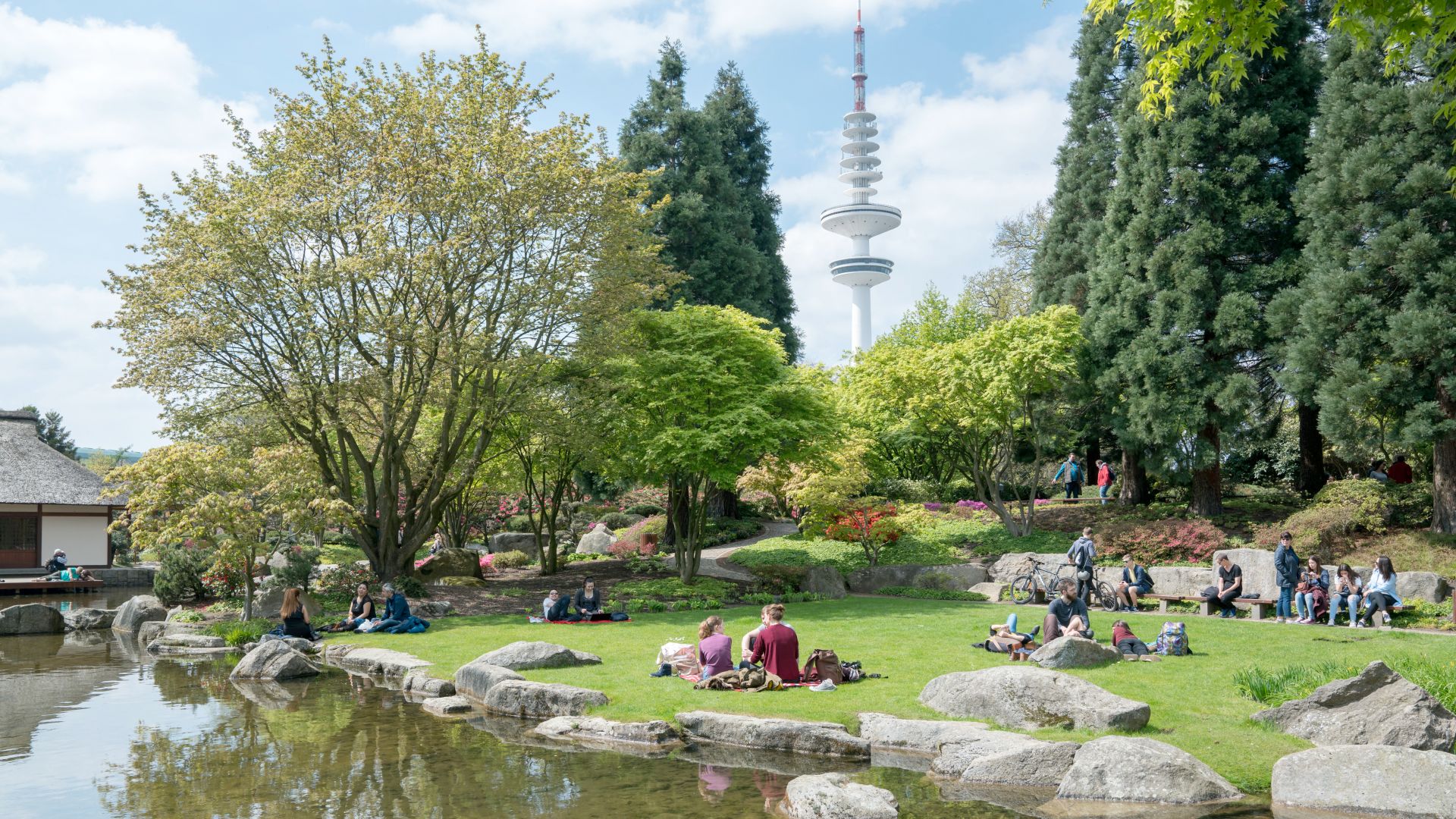 Hamburg: Planten un Blomen
©Hamburg Marketing GmbH (Andreas Vallbracht)
Hamburg: Planten un Blomen
©Hamburg Marketing GmbH (Andreas Vallbracht)
A digital detox can work even when urban life continues right outside the door. In Berlin, the Room of Silence offers a conscious counterpoint to the energy of the capital. Visitors will find a place to switch off, meditate and reflect.
In Bremen, the Wallanlagen provide a green retreat in the heart of the city. A walk through Planten un Blomen in Hamburg also offers space for a break from digital life. The Japanese Garden with its teahouse is particularly well suited to this: its carefully designed landscape creates a peaceful setting to pause and take in the surroundings. Places like these are ideal for a simple experiment: put your smartphone on silent, leave it in your bag and spend an hour without taking photos, posting or looking anything up. Instead, simply pay closer attention.
Step by step towards greater mindfulness: trails for a conscious offline break
Sometimes a clear message helps. In Waldbronn, a certified quality hiking trail already expresses the idea in its name: Geh’ offline – Weg der Gelassenheit (“Go offline – Path of Serenity”). Here, the smartphone becomes secondary while the forest, movement and mindful breaks set the rhythm.
Mindful walking is also at the heart of the Meditation Trail in the Ammergau Alps. Starting at the UNESCO World Heritage Site of the Pilgrimage Church of Wies, this long-distance trail encourages hikers not to reach their destination as quickly as possible, but to take their time. The HeimatSpur mindfulness trail Kleine Kyll in the Volcanic Eifel combines digital detox with conscious walking. Rather than sporting performance, the focus is on experiencing nature with greater awareness.
Nature experiences and the Three Lakes Tour near Freiensteinau provide another good reason to carry your smartphone for emergencies only. The rest of the day belongs to the trail, the water and your own thoughts.
What does digital detox mean on holiday?
Digital detox means consciously taking a break from digital devices and online services for a limited period of time. The aim is to reduce digital distractions and focus more fully on offline experiences.
It does not mean banning technology from your holiday altogether. A smartphone can be useful for getting there, finding your way around and planning your trip. A digital detox begins when you put it away for a while afterwards. This leaves more attention for the things that come without notifications: the rustling of leaves, the breeze from the water, a conversation along the way – or simply an uninterrupted view of the landscape.