Nature & Outdoor Activities
Criss-crossing the country: the German cycle network makes it possible
D stands for Germany and the D routes for an extensive cycle network that criss-crosses the country. Covering around 12,000 kilometres, these Germany-wide cycle routes combine adventure with comfort, nature with culture and a feeling of freedom with the reliability of well-developed paths.
 Give “germany.travel” priority on Google
Relaxed cycling on Germany's long-distance cycle routes
Not least since the boom in e-bikes, more and more people are discovering cycling as a sporty and enjoyable form of holiday. No wonder, since everyone can decide for themselves how fast they want to go. When it comes to deciding where to go, the German Cycle Network (Radnetz Deutschland) with its 14 long-distance cycle routes is a huge help, as they are something like the main arteries, guidelines and narrative threads in the German long-distance cycle route network. In fact, the cycle routes, each several hundred kilometres long – totalling around 12,000 kilometres – connect a whole range of regions, landscape types and cultural areas. So when you set off on a D-route, you're not just travelling from A to B, but right into the heart of German history and travel culture.
What they all have in common is that they are often designed to enable even less experienced cyclists to make pleasant progress. This is due not only to the uniform signage, but also to the good maintenance of the paths and the fact that many sections run along cycle-friendly side roads such as former railway lines or even specially constructed cycle paths. Ideal for setting off with light luggage and heading calmly to the next cycle-friendly accommodation, whether booked or not. It is practical that a corresponding infrastructure has long been established along the route. This also includes holiday apartments, farms and campsites. So there is something to suit every budget and taste.
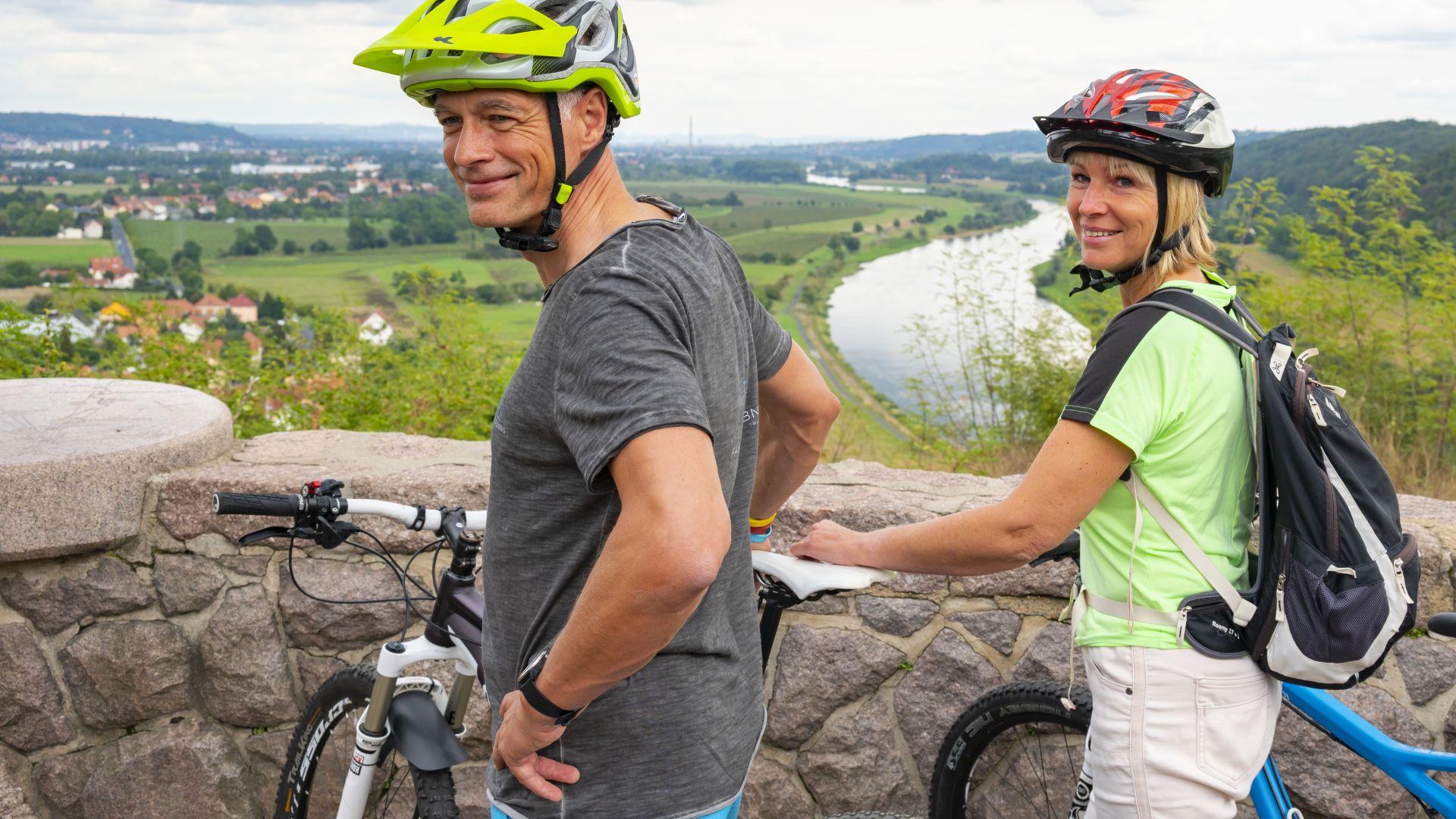 Dresden: Couple takes a break during a bicycle tour
©DZT (Udo Bernhart;CMR)
Dresden: Couple takes a break during a bicycle tour
©DZT (Udo Bernhart;CMR)
Three cheers for spontaneity!
This diversity also applies to the character of the routes: some follow rivers, others old trade routes or coastlines. Some offer open landscapes, moors and wide fields, while others lead through more densely populated regions, including eye-catching examples of industrial culture and modern urban architecture. But everywhere you go, there are little moments of delight waiting for you: bakeries smelling of fresh bread rolls, hidden swimming spots, rest areas with sweeping views, vineyards or beer gardens where you might ask yourself: should I keep cycling or keep drinking, perhaps a second shandy? How fortunate that there are usually plenty of train stations along the routes, because then you can hop on the train instead of pedalling – and that doesn't just apply to spontaneous early finishes. At least for one or two stages.
Good to know: Germany's cycle network currently consists of 13 D-routes plus the German Unity Cycle Route. On D-Route 3, the Europaradweg, which runs across the country from the Dutch to the Polish border, cyclists roll through a panorama of green meadows, lively towns and quiet forests. The more southerly Mittelland Route (D-Route 4), one of the main axes of the German cycle network, also connects west and east. However, the low mountain ranges mean that there are a few more metres of elevation gain on the way from Aachen to Zittau. On the other hand, there are significantly fewer on the D-Route 2, which winds its way along the Baltic Sea coast. Thanks to the gentle gradients between long beaches, lively Hanseatic towns and quiet fishing villages, it is considered one of the most leisurely long-distance routes.
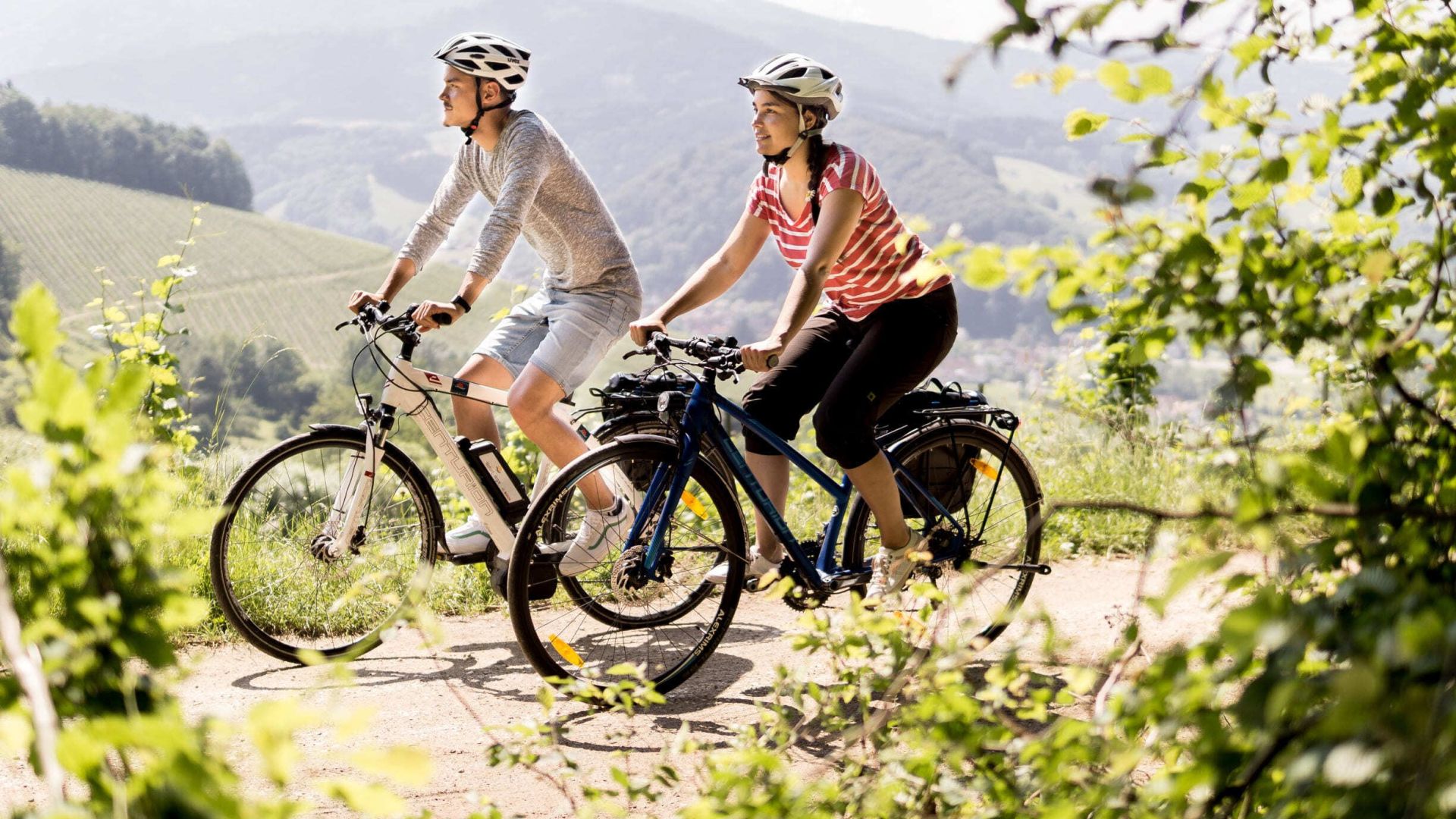 Ottersweier: Couple rides on Baden wine cycle path
©Schwarzwald Tourismus GmbH (Chris Keller)
Ottersweier: Couple rides on Baden wine cycle path
©Schwarzwald Tourismus GmbH (Chris Keller)
Would you rather hear stories about rivers?
As one of the longest and best-known routes in the German cycle network, D-Route 8 runs along the Rhine. If you want to cycle the entire route from the Lower Rhine to Lake Constance, which is rich in castles and wine, you will need to allow a little more time. The route is 1,230 kilometres long. Not quite as long, but also mostly running along the river, is the D-Route 6, where the D could also stand for Danube. Several rivers – the Saar, Moselle, Rhine and Main – accompany the D-Route 5 (Saar-Moselle-Main). It owes its nickname ‘connoisseur's route’ to the rare inclines and the culinary specialities and wines that tempt you along the way.
The D-Route 7 is also interesting. This historic pilgrimage route allows you to explore important religious sites in Germany and Europe by bike. Europe? Yes, because the route continues on to Denmark, Belgium and the Netherlands. And this is no exception: almost all D-routes are well integrated into the EuroVelo network. This means that tireless cyclists can not only overcome their own physical limits, but also cross national borders with ease. The route continues in a similarly cycle-friendly manner towards the Atlantic, the Mediterranean or the Baltic States. A dream come true for anyone for whom the (cycle) route is the destination!
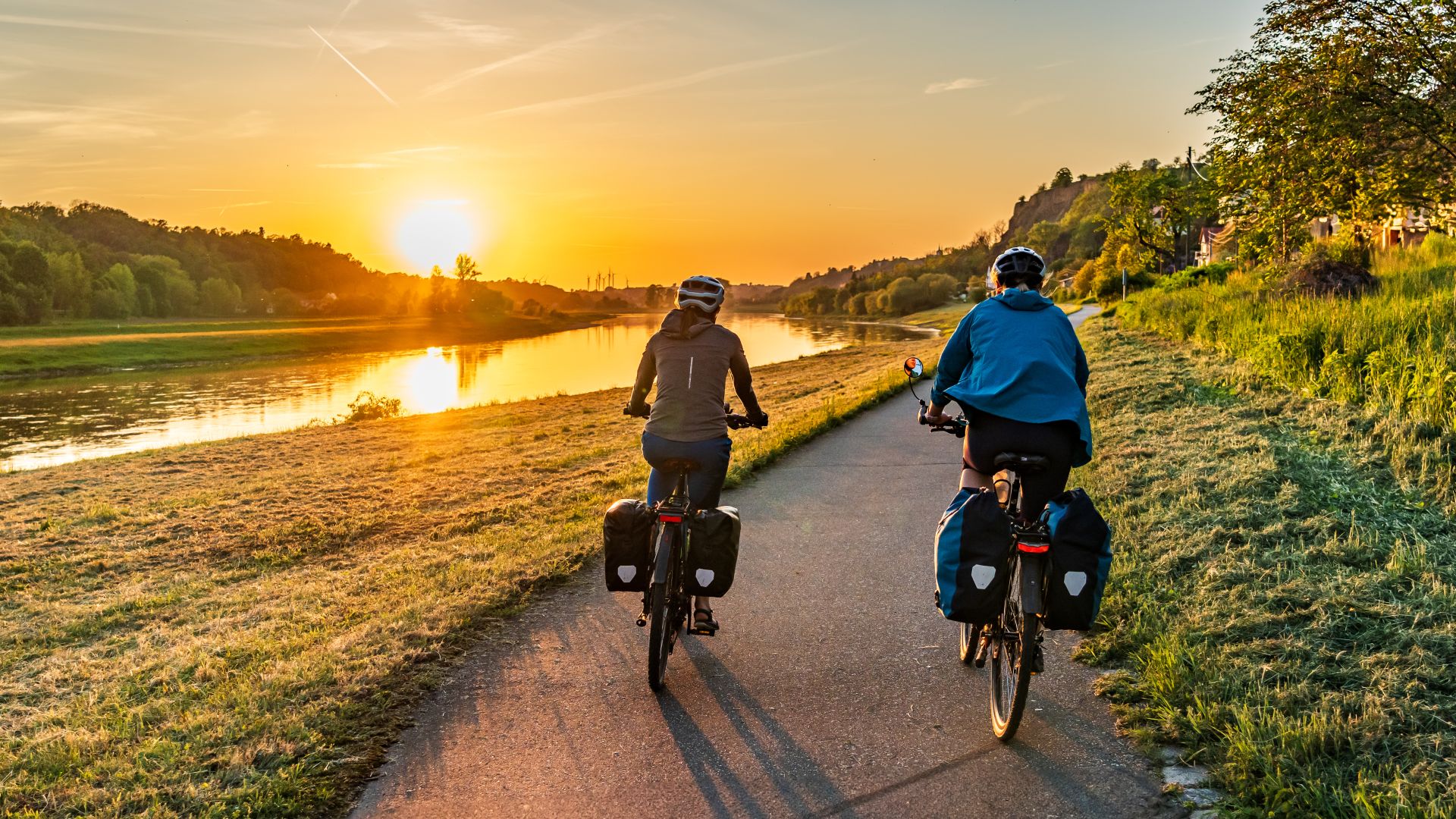 Cyclists in the sunset on the Elbe cycle path
©DZT (Szymon Nitka)
Cyclists in the sunset on the Elbe cycle path
©DZT (Szymon Nitka)