Cities & Culture
Inventions made in Germany
This text was generated with the help of AI ✨
The car, the coffee filter, the MP3 format: inventions from Germany have changed the world. Sometimes quietly and unobtrusively, sometimes with a roaring engine. If you want to trace the origins of these innovations, you don’t have to travel far: museums and historic sites across Germany invite you to experience history firsthand. These eight inventions tell a story of curiosity, perseverance, and the courage to try something new.
 Give “germany.travel” priority on Google
From Stuttgart to Anklam, from Munich to Remscheid: The places where German inventions originated are scattered across the entire country. A journey through these locations is also a journey through eras, biographies, and technological revolutions. What remains is a sense of wonder at just how much change has been driven by individual people and their curiosity.
The automobile: the dawn of personal mobility
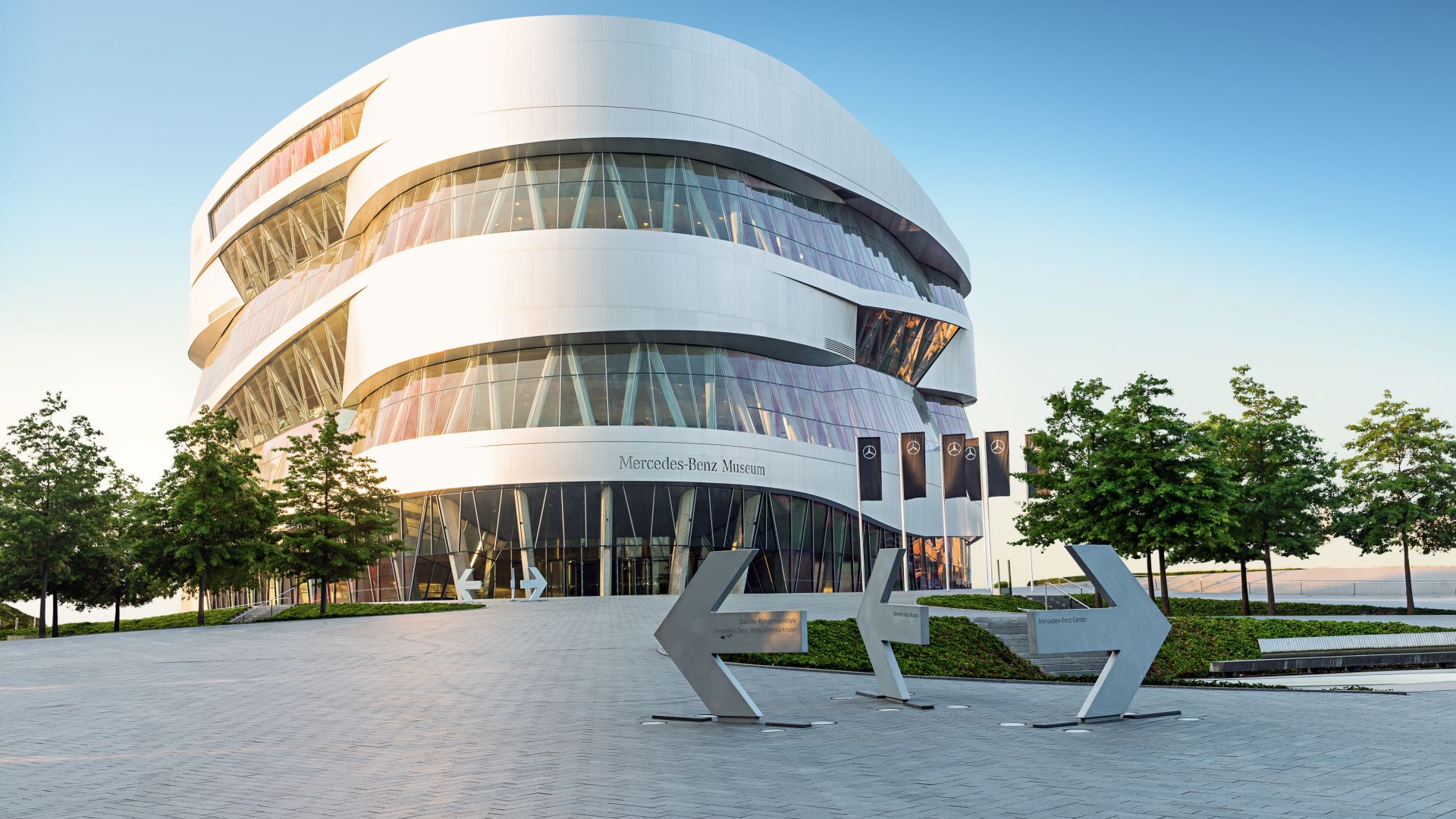 Stuttgart: Mercedes-Benz Museum
©Daimler AG
Stuttgart: Mercedes-Benz Museum
©Daimler AG
When Carl Benz patented his gas-powered vehicle in January 1886, hardly anyone could have imagined how much this design would change the world. The “Benz Patent-Motorwagen No. 1” is considered the birth of the modern automobile—and a symbol of German engineering vision.
At the Mercedes-Benz Museum in Stuttgart, you can trace the evolution from the first patent to futuristic concept cars. At the Technoseum in Mannheim, the history of technology becomes social history—from the early industrial era to the digital age. Spacious exhibition halls, interactive stations, and barrier-free access make the history of technology accessible to everyone.
The glider: a step closer to the sky
In 1894, Otto Lilienthal had a 15-meter-high hill built in Berlin-Lichterfelde: the “Fliegeberg.” From here, he took off on his gliding flights—driven by precise observation and a firm belief in the possibility of human flight.
At the Otto Lilienthal Museum in Anklam, you’ll encounter one of aviation’s most important pioneers. Models, experiments, and historical photographs show how visions turned into concrete flight attempts. The preserved “Fliegeberg” in Berlin makes it clear just how much courage went into every single takeoff.
X-rays: making the invisible visible
In 1895, Wilhelm Conrad Röntgen discovered a form of radiation capable of penetrating matter. Suddenly, the inside of the body became visible without having to open it up. For this discovery, he was awarded the first Nobel Prize in Physics in 1901.
The German Röntgen Museum in Remscheid takes you through the history of this groundbreaking discovery. Original equipment, experiments, and multimedia presentations illustrate how research continues to influence the lives of millions of people to this day.
The jet engine: the dawn of the jet age
In 1939, the “Heinkel He 178”—the world’s first jet-powered aircraft—took off with the turbine engine developed by Hans von Ohain. The flight lasted only a few minutes, but marked a turning point in aviation.
At the Aviation Museum in Hannover-Laatzen, historic engines and aircraft are just a few steps apart. Here, you can experience how technical innovation has shrunk distances and opened up new perspectives on the world.
The coffee filter: an idea for better flavor
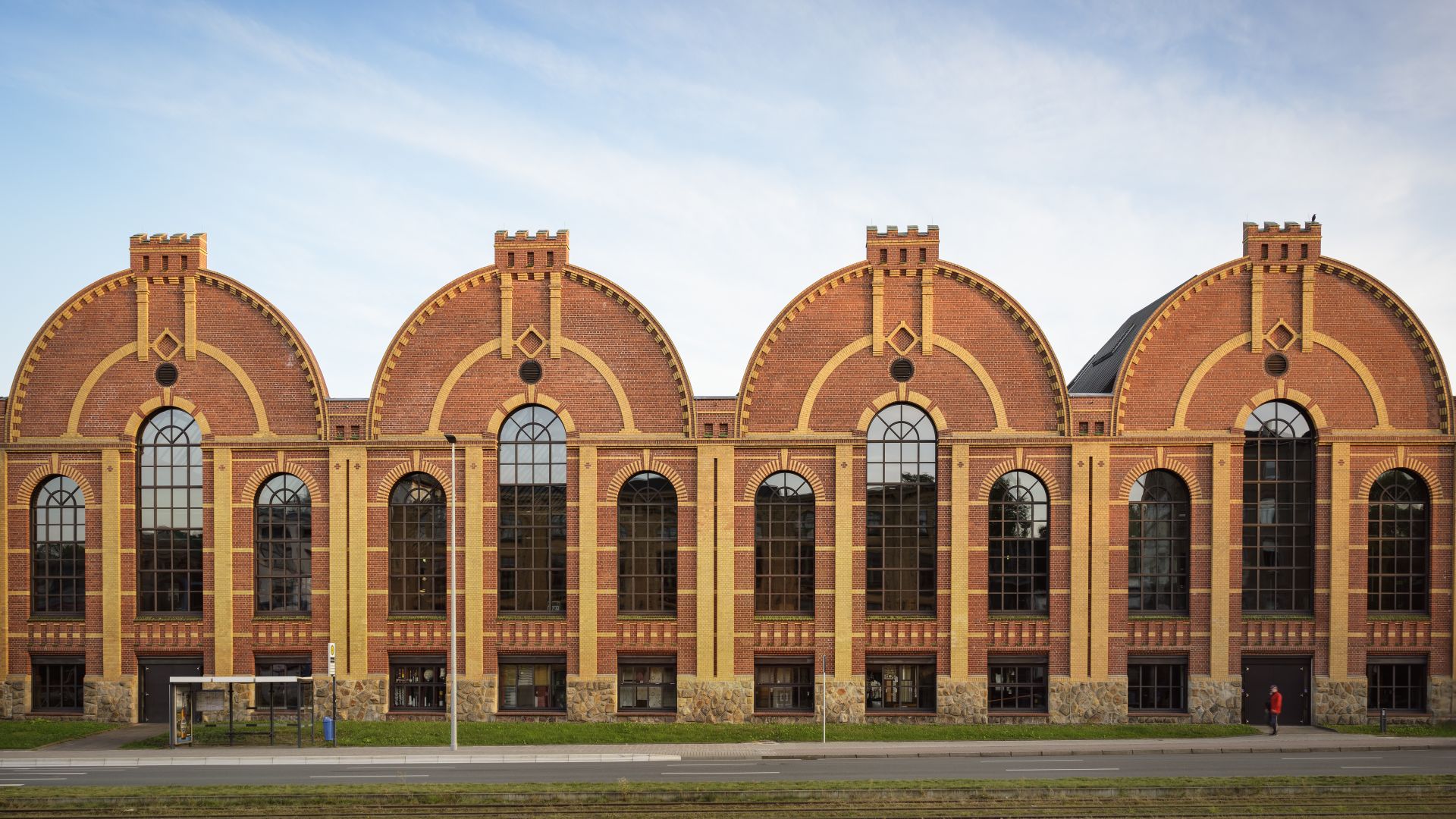 Chemnitz: Saxon Industrial Museum
©Lookphotos (Günther Bayerl)
Chemnitz: Saxon Industrial Museum
©Lookphotos (Günther Bayerl)
Sometimes innovation begins at the kitchen table. In 1908, Melitta Bentz developed a paper coffee filter—and in doing so, changed the way coffee is brewed. Her simple solution ensured a clean flavor and gained international acceptance.
At the Chemnitz Industrial Museum, you’ll discover how an everyday observation became a successful product. The exhibition places the invention within the broader history of entrepreneurial spirit and design in Germany.
MP3: music goes mobile
In the late 1980s, scientists at the Fraunhofer Institute in Erlangen were researching a method for audio compression. In 1988, the foundation for the MP3 format was laid. Music could now be stored in a space-saving manner and distributed digitally worldwide.
At the Museum of Communication in Frankfurt, you’ll experience how technological developments are changing our everyday lives. The exhibition spans the spectrum from pneumatic tube systems to digital streaming—interactive, accessible, and forward-looking.
The valve-less refrigerator: Einstein’s technical ingenuity
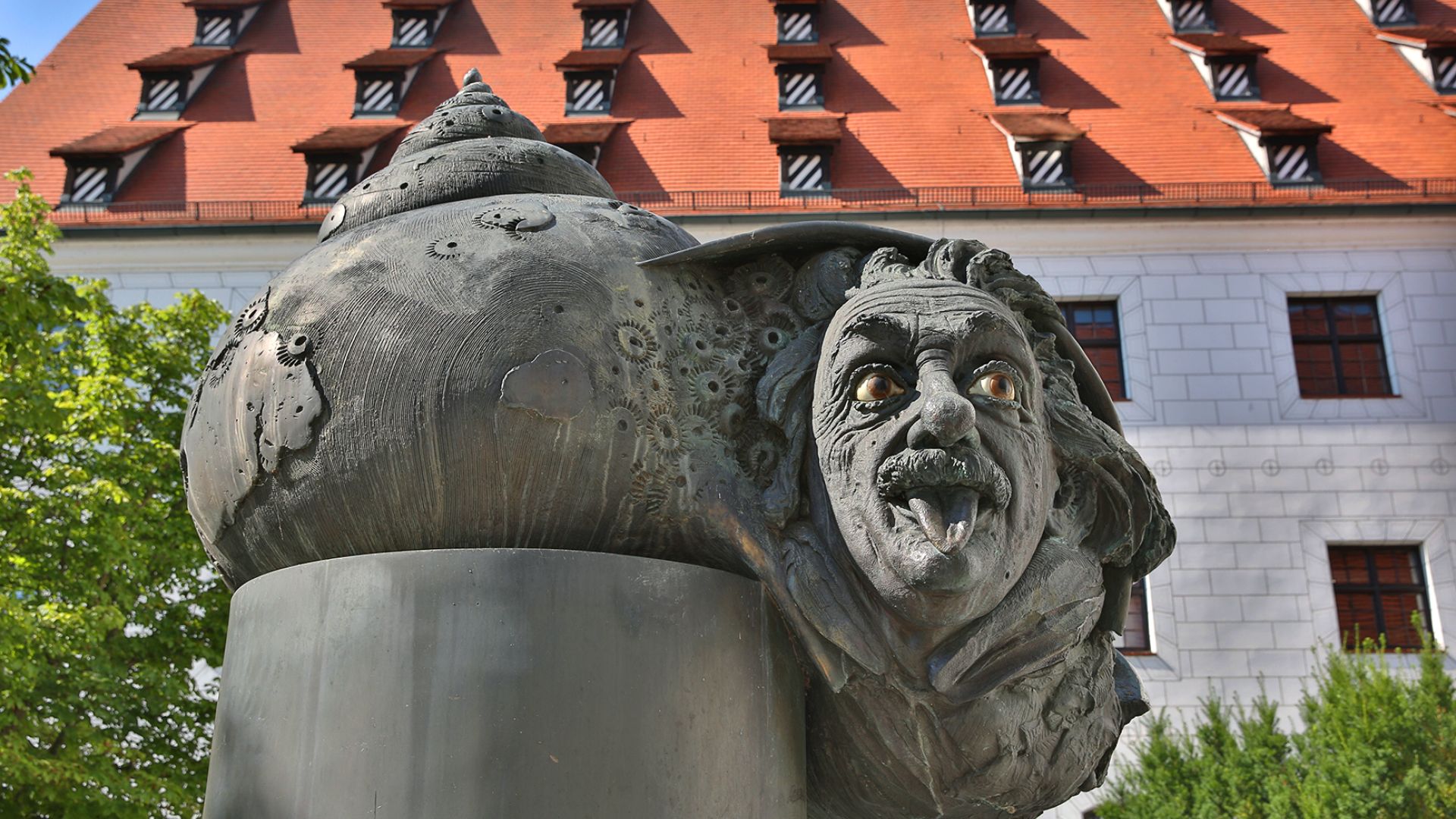 Einstein Fountain in Ulm
©Ulm/Neu-Ulm Touristik GmbH (Achim Mende)
Einstein Fountain in Ulm
©Ulm/Neu-Ulm Touristik GmbH (Achim Mende)
Between 1926 and 1932, Albert Einstein and Leó Szilárd developed refrigeration systems using electromagnetic pumps—entirely without moving valves. They were granted ten patents by the Reich Patent Office for their refrigeration machines, pumps, and methods of cooling.
At the Einstein Museum in Ulm, you’ll discover a lesser-known side of the physicist. Beyond the theory of relativity and the Nobel Prize, his practical inventive genius comes to life here.
The Bioskop: cinema as a new experience
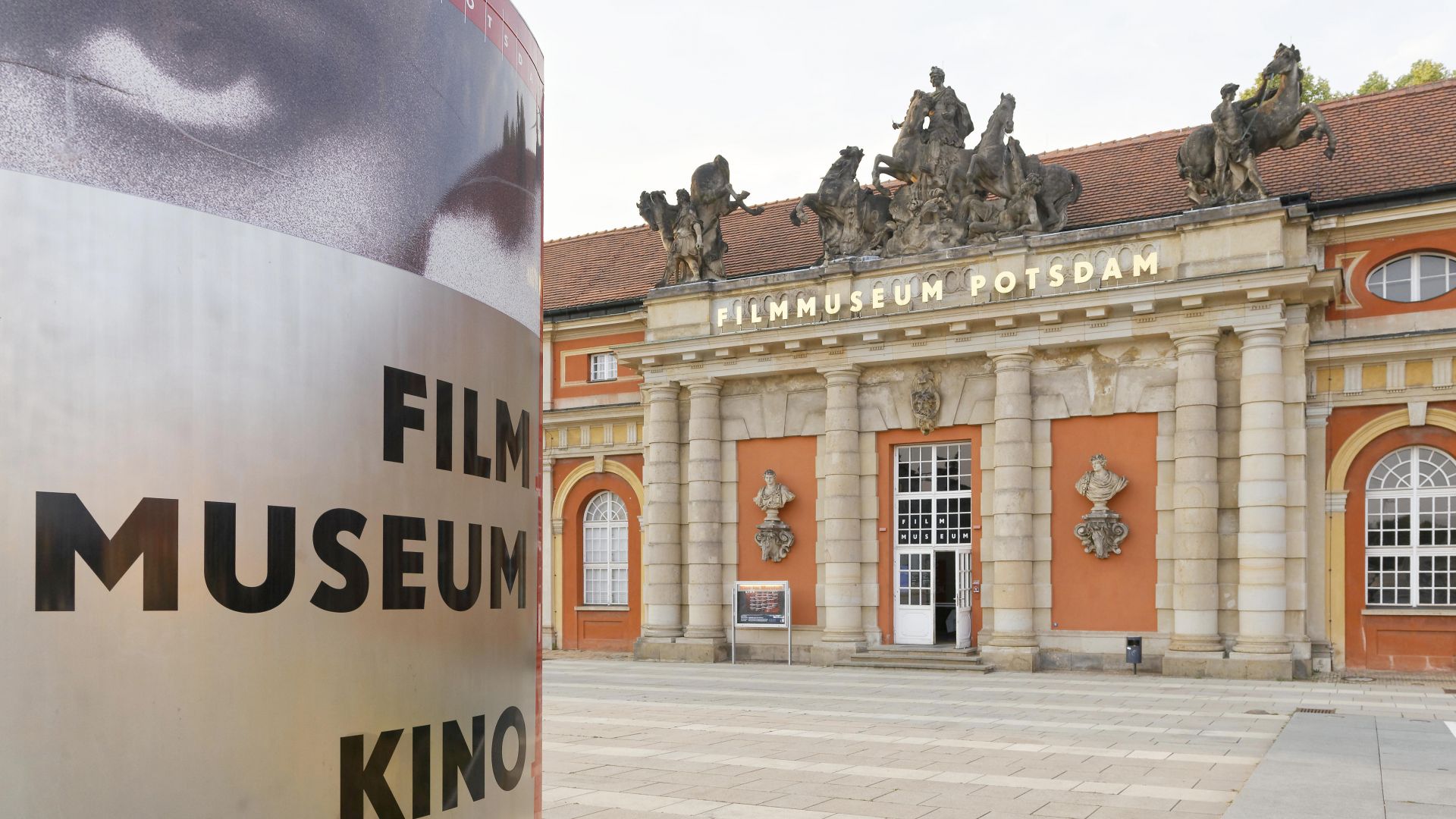 Potsdam: Filmmuseum
©PMSG (Andre Stiebitz)
Potsdam: Filmmuseum
©PMSG (Andre Stiebitz)
In 1895, the Skladanowsky brothers presented their “Bioskop,” a projection device using 54-mm film and two film loops. Moving images became a public event—and laid the foundation for cinema culture in Germany.
At the German Film Museum in Frankfurt am Main and the Film Museum Potsdam, you can immerse yourself in the world of early film technology. Historical equipment, sets, and interactive stations show how technical experiments gave rise to a distinct art form.
FAQ – Frequently Asked Questions
Which German inventions are best known worldwide?
Among the best known are the automobile (Carl Benz, 1886), X-rays (Wilhelm Conrad Röntgen, 1895), the MP3 format (Fraunhofer Institute, 1991), and the coffee filter (Melitta Bentz, 1908). All four have had a lasting impact on their respective fields.
Can several invention sites be easily combined into a travel itinerary?
Absolutely. By combining Stuttgart (automobile) with Frankfurt (MP3, cinema history) and Remscheid (X-rays), you’ll travel through three federal states and several eras of technological history. Depending on your interests, such a tour can be planned to last two to four days.
When is the best time to visit these museums?
Most museums are open year-round. To avoid long wait times, visit outside of school holidays. Some museums offer special exhibitions or themed tours during certain seasons—it’s worth checking the respective website before your visit.
Is there an admission fee for the museums mentioned?
Most museums charge an admission fee, which ranges from about 5 to 15 euros per person, depending on the institution. Children and teenagers pay reduced admission or have free access at many museums. Advance reservations are particularly recommended on weekends.
Is the trip to the sites of these inventions also suitable for children and families?
Yes. Many of the museums mentioned feature interactive stations and engaging exhibits. The German Röntgen Museum in Remscheid, the Aviation Museum in Hannover-Laatzen, and the Museum of Communication in Frankfurt are specifically designed for a broad audience—with exhibits and hands-on activities that appeal to younger visitors as well.