Inspiring Germany
Queer neighbourhoods in Germany: Four cities, four scenes, one mindset
This text was generated with the help of AI ✨
Rainbow flags outside traditional inns, decades-old bars alongside new cafés, memorial plaques next to dance floors: Germany’s queer neighborhoods are places of genuine character. Munich, Hamburg, Berlin, and Cologne invite visitors to discover the country at its most open, welcoming, and vibrant.
 Give “germany.travel” priority on Google
Whether it is the historic Rainbow District in Berlin, Cologne’s Bermuda Triangle, Munich’s Glockenbachviertel, or St. Georg in Hamburg – Germany’s queer neighborhoods reflect the diversity of urban life. Even more inspiring districts and creative hotspots can be found in Germany’s trendiest neighborhoods.
Berlin: Schöneberg – Europe’s oldest queer neighborhood
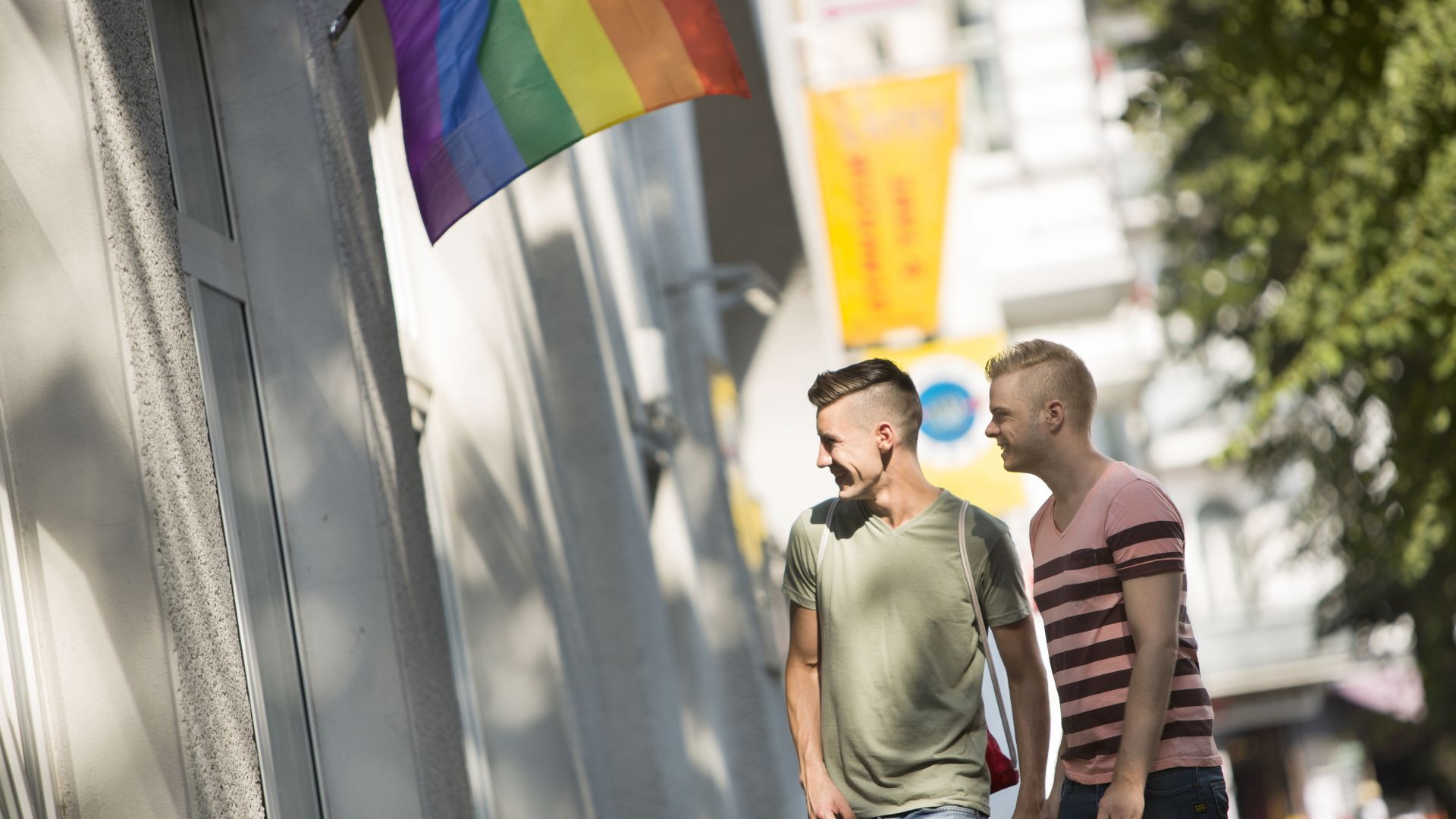 Kieztrip im Homo-Kiez Nollendorfplatz, Berlin
©visitBerlin (Dirk Mathesius)
Kieztrip im Homo-Kiez Nollendorfplatz, Berlin
©visitBerlin (Dirk Mathesius)
Anyone stepping out of Nollendorfplatz underground station enters one of the most historic places in the queer world. As early as the 1920s, Schöneberg developed into the center of Berlin’s gay and lesbian scene. To this day, the district’s history remains visible throughout the neighborhood: a memorial plaque at the station commemorates homosexuals persecuted during the Nazi era, while the station’s dome has been illuminated in rainbow colors since 2013.
Motzstraße and Fuggerstraße, which branch off from the square, are lined with queer bars, bookstores, and community meeting places. Every year, the Lesbian and Gay City Festival takes place around Nollendorfplatz, marking the start of Pride Week and attracting hundreds of thousands of visitors. Those wishing to discover Germany’s diverse Pride culture can find further inspiration at the country’s numerous Pride events. The history of the Rainbow District can be experienced even more vividly on guided tours led by Berlin drag queens, covering everything from the Roaring Twenties to the present day and offering stories and perspectives beyond the traditional guidebook.
Cologne: Schaafenstraße, Rudolfplatz, Ehrenfeld – The Bermuda Triangle and beyond
Cologne is a permanent fixture on Europe’s queer travel calendar. The city on the Rhine is home to the Bermuda Triangle around Schaafenstraße, one of Germany’s densest queer nightlife districts. Along just 150 meters of street, bars, clubs, and meeting places stand side by side, making it the second-largest concentration of its kind in Germany after Berlin.
Visitors who wish to explore Cologne’s queer side beyond the classic party strip should also discover the surrounding neighborhoods. Around Rudolfplatz and in the Belgian Quarter, stylish bars invite guests to enjoy relaxed evenings. Ehrenfeld adds its own flair with a young, creative, and club-oriented community, further enriching the city’s queer nightlife. Thanks to the short distances between the districts, it is easy to move from one atmosphere to the next.
Munich: Glockenbachviertel – Bavarian openness to the world
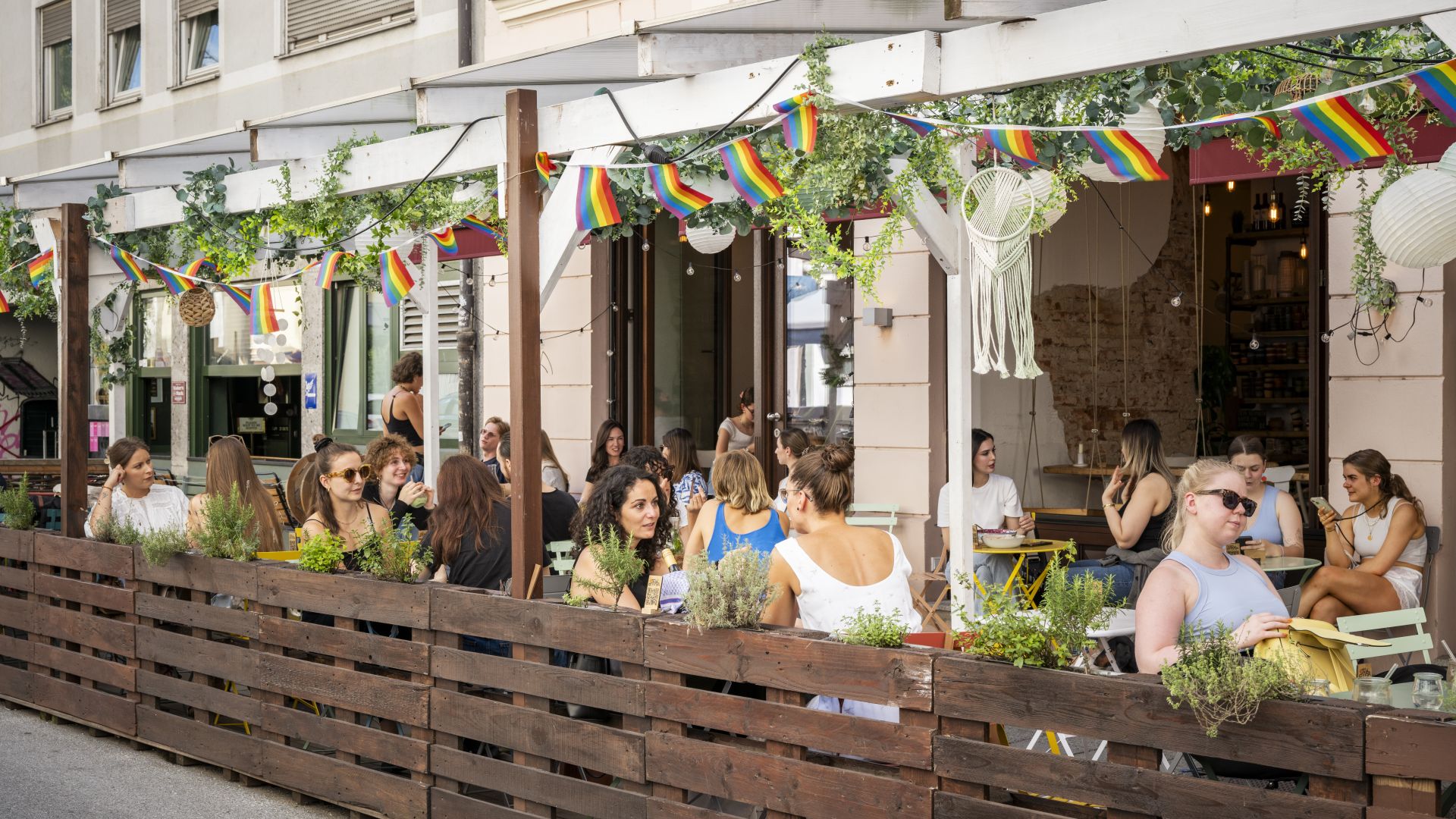 Café in the Glockenbachviertel in Munich
©DZT (Dagmar Schwelle)
Café in the Glockenbachviertel in Munich
©DZT (Dagmar Schwelle)
Located just south of Munich’s city center, the Glockenbachviertel has developed over recent decades into the heart of the Bavarian capital’s queer scene. What makes the district unique is a combination rarely found elsewhere: Munich’s relaxed lifestyle blends with queer visibility to create an atmosphere that appeals equally to locals and visitors.
As early as the 1980s, the then less fashionable Glockenbachviertel was already a magnet for the LGBTQIA+ community, a legacy that can still be felt in certain corners today. Nowadays, the district is characterized by an elegant urban flair, with historic buildings, lively street cafés, designer boutiques, and a community that embraces diversity as an integral part of Munich’s identity.
Hamburg: St. Georg – Long Street, big heart
Hamburg’s queer center lies just a short distance from the main railway station: St. Georg, a district that does not simply display openness but lives it every day. The streets around Lange Reihe and Kleiner Alsterdamm attract a diverse community—cosmopolitan, relaxed, and shaped by a mix of long-time residents and newcomers. Queer bars and clubs are an integral part of the streetscape, without defining the district solely through its nightlife scene.
St. Georg is just as vibrant during the day as it is after dark: strolling along the Alster, shopping in the boutiques of Lange Reihe, enjoying a coffee in the afternoon, and ending the evening with a drink in a queer bar. Hamburg’s LGBTQIA+ community has been deeply rooted in the district for decades, giving it a sense of confidence and authenticity that visitors immediately notice.
FAQ – Frequently Asked Questions
Is Germany an LGBTQIA+-friendly travel destination?
Yes. Germany introduced marriage equality in 2017 and has one of the most comprehensive anti-discrimination laws in the European Union. Major cities such as Berlin, Cologne, Hamburg, and Munich are home to established queer neighborhoods with vibrant communities and a wide range of cultural events.
Which queer neighborhood in Germany has the longest history?
Nollendorfplatz in Berlin-Schöneberg is considered Europe’s oldest queer neighborhood. Since the 1920s, it has been a meeting place for the gay and lesbian community. A memorial plaque at the underground station commemorates homosexuals persecuted during the Nazi era.
When do Pride events take place in German cities?
Berlin Pride (CSD) takes place in July, while ColognePride is held in summer, usually in late June or early July. It is considered Europe’s largest Pride demonstration, attracting more than one million visitors. Hamburg and Munich also celebrate Pride during the summer months. Exact dates vary from year to year.
What is the Bermuda Triangle in Cologne?
The Bermuda Triangle is the popular name for the queer nightlife district around Schaafenstraße in central Cologne. Within a stretch of around 150 meters, visitors will find bars, clubs, and community meeting places, making it Germany’s second-highest concentration of LGBTQIA+ venues after Berlin.
Is there a queer neighborhood in Hamburg?
Yes. St. Georg, located close to Hamburg Central Station, is the heart of the city’s queer scene. The district combines everyday life, nightlife, and LGBTQIA+ culture in a relaxed and cosmopolitan atmosphere. FC St. Pauli has also been a symbol of queer visibility in German professional football for many years.
Do you have to be queer to visit these neighborhoods?
No. All of these districts welcome visitors of every background who value diversity and inclusion. Street festivals, Pride events, and cultural programs are designed for a broad audience, including queer communities, allies, and curious visitors alike.