Inspiring Germany
CSD in Germany: Five cities that bring colour to the summer
This text was generated with the help of AI ✨
Summer sunshine, music from all sides, people in bright colours and an energy that permeates entire neighbourhoods: Pride season in Germany is one of the liveliest travel experiences the country has to offer. From early June through to August, towns and cities of all sizes celebrate their diversity – openly, warmly and with a global outlook for everyone.
 Give “germany.travel” priority on Google
Cologne: A whole city atmosphere in rainbow colours
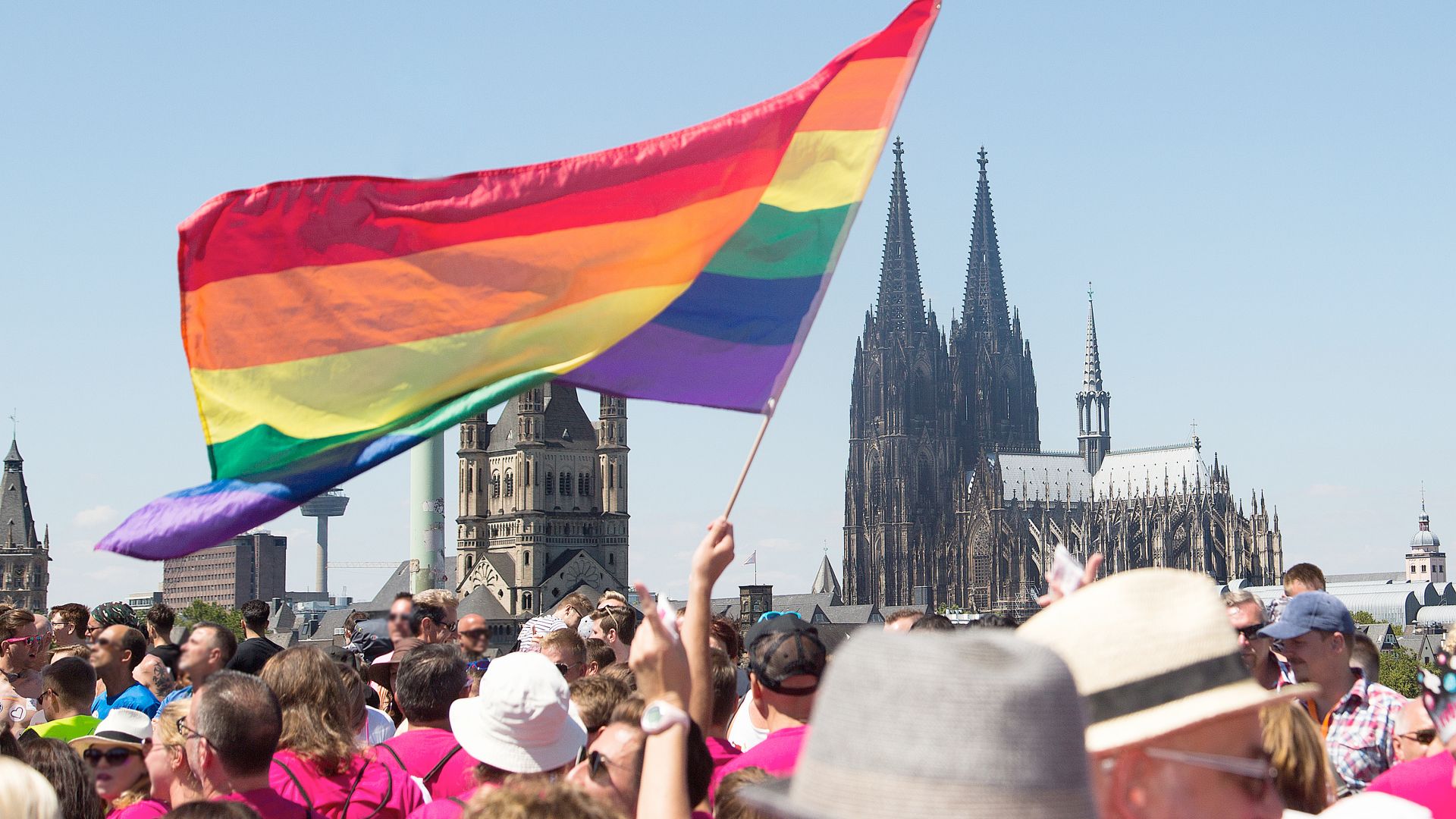 People at the CSD in Cologne
©AdobeStock (Dreadlock)
People at the CSD in Cologne
©AdobeStock (Dreadlock)
When over a million people flock to the city of the cathedral on the first weekend in July, Cologne is transformed into a colourful hub of diversity and joie de vivre. ColognePride is one of Europe’s largest Pride events – a two-week festival of concerts, exhibitions, gatherings and parties that transforms the already lively city into one huge meeting place.
The grand parade on the first Sunday in July winds its way from the Deutz bridgehead via Heumarkt, Schildergasse and Hohenzollernring to Cologne Cathedral. Anyone visiting Cologne at this time will experience Rhineland warmth in its purest form: cosmopolitan, musical, hospitable.
Berlin: Where Pride meets history
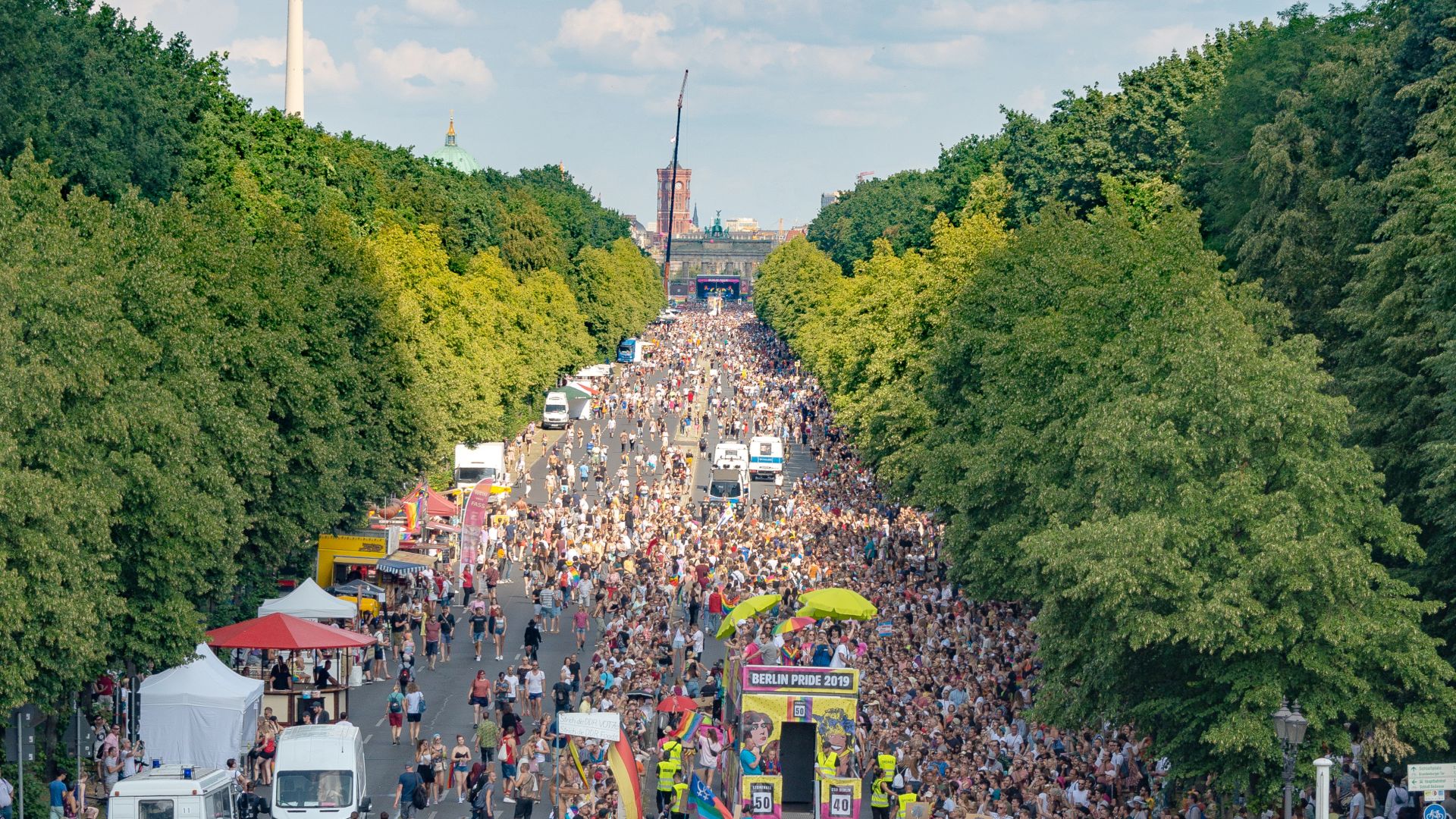 Christopher Street Day on the Straße des 17. Juni in Berlin
©DZT (Geertje Marquardt)
Christopher Street Day on the Straße des 17. Juni in Berlin
©DZT (Geertje Marquardt)
Berlin is the city where German Pride history began – and it carries this heritage with pride and vitality. On the last Saturday in July, the CSD parades through the heart of the capital: from Leipziger Straße via Potsdamer Platz to Straße des 17. Juni, where the evening draws to a close at the Brandenburg Gate. The route alone is a sightseeing tour through modern Berlin.
All around, neighbourhoods such as Schöneberg, Kreuzberg and Friedrichshain are transformed into one continuous open-air stage accompanied by music, performances and a unique energy. Berlin in Pride mode is sightseeing, nightlife and a way of life all rolled into one.
Hamburg: A port city with a big heart
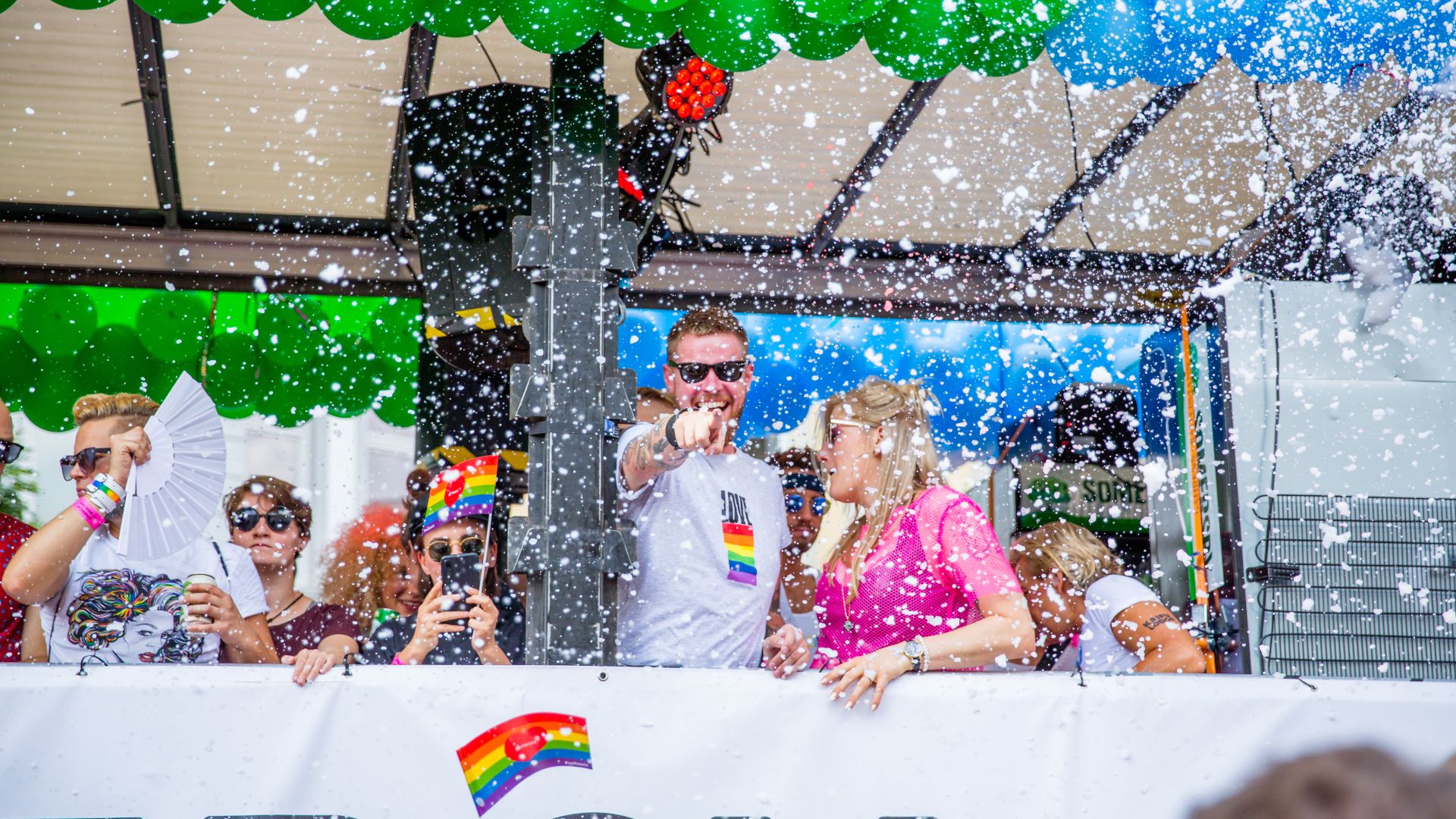 Hamburg: Christopher Street Day
©DZT (Hinrich Carstensen)
Hamburg: Christopher Street Day
©DZT (Hinrich Carstensen)
The Hanseatic city also celebrates its CSD as a Pride Week lasting several days: it begins at the end of July and concludes in early August with a large parade. Hamburg shows itself at its most cosmopolitan – with a blend of maritime laid-back charm, Hanseatic elegance and a genuine zest for life.
The three-day street festival around Jungfernstieg, Ballindamm and Rathausmarkt turns the heart of the city into a stage. With the Binnenalster as a backdrop, it creates one of the most beautiful Pride atmospheres in Germany – sparkling water, historic façades and thousands of people celebrating together. Anyone still in the mood afterwards can stroll on to the Reeperbahn or enjoy the harbour lights on an evening stroll along the Alster.
Munich: Diversity against a Baroque backdrop
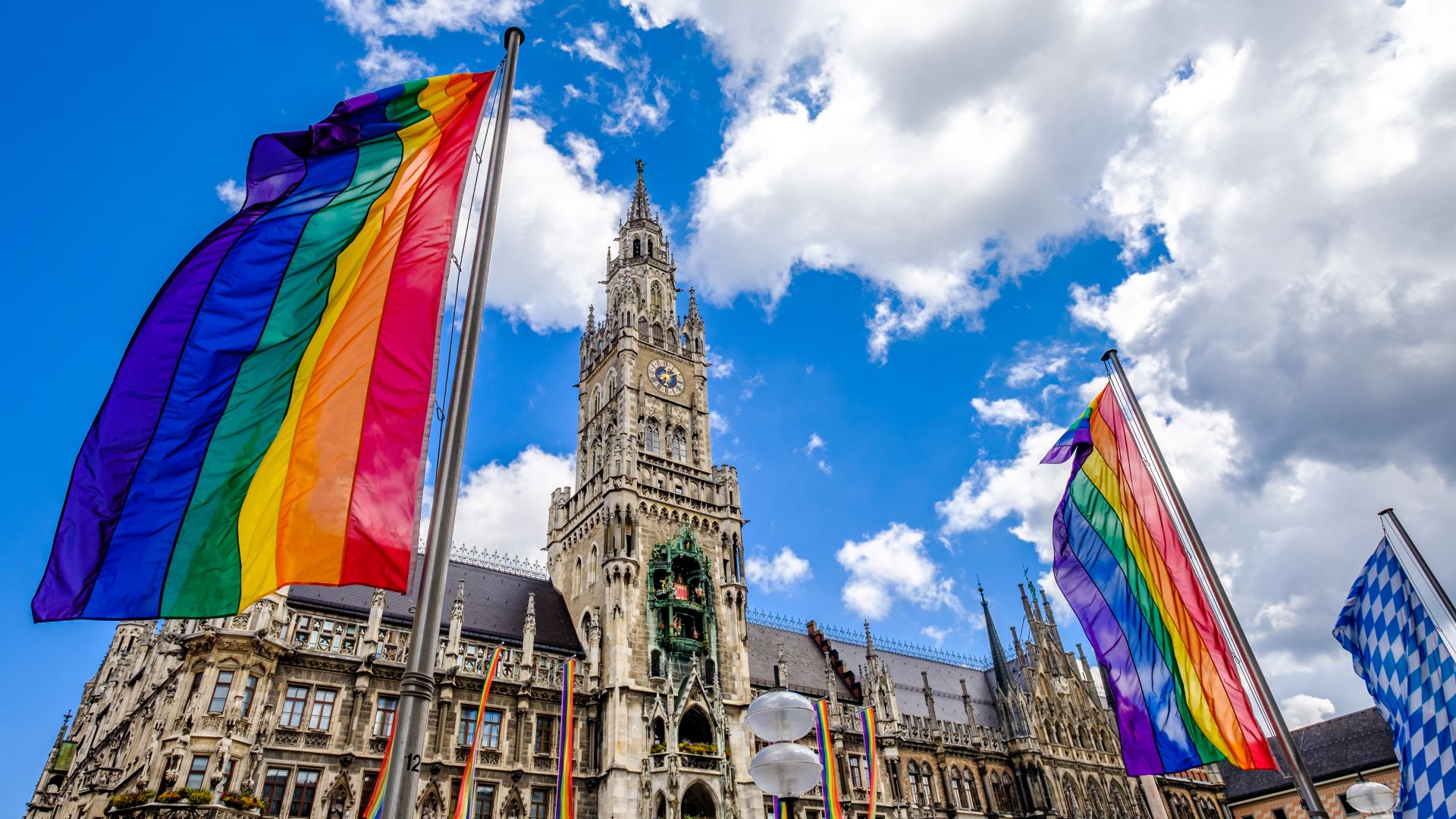 Rainbow flags in front of Munich City Hall
©Shutterstock (FooTToo)
Rainbow flags in front of Munich City Hall
©Shutterstock (FooTToo)
Munich in summer has many faces – and one of the most colourful is on display at the CSD on the last weekend in June. Around Marienplatz and Ludwigstraße, a Pride atmosphere unfolds that is truly infectious. Beer gardens and rainbow flags are less than a hundred metres apart here.
The supporting programme is particularly worth a look: two weeks of Pride Weeks fill the city with concerts, film nights, drag shows and cultural events. The highlight – RathausClubbing – dancing on several floors in the New Town Hall right on Marienplatz – is one of those Munich specialities you won’t find anywhere else.
Frankfurt: Pride with a view of the skyline
When the rainbow flag flies from the balcony of the Römer in July, one of the most colourful weekends of the year begins in Frankfurt. Where suits usually rush through the streets, people in colourful outfits now dance across the pavements. Amidst half-timbered facades and glass skyscrapers, a Pride event with a character all of its own unfolds.
The parade traditionally starts at the historic Römer and winds its way through the city centre to the banks of the Main, where the street festival draws to a close against one of Germany’s most beautiful river backdrops. With stages, food stalls, music and a crowd that brings Frankfurt’s diversity to life, the festival site on Schaumainkai invites visitors to linger for several days.
FAQ – Frequently Asked Questions
What is Christopher Street Day (CSD)?
CSD is an annual demonstration for the rights of LGBTQIA+ people. It commemorates the Stonewall riots of June 1969 in New York City, when queer people publicly stood up against police violence and discrimination for the first time. Today, CSD combines political protest with celebration and raising social awareness.
When does CSD take place in Germany?
The dates vary depending on the city, but are mostly in the summer. Cologne traditionally celebrates on the first weekend in July, Munich on the last weekend in June, Frankfurt in mid-July, Berlin at the end of July and Hamburg at the beginning of August.
Which CSD in Germany is the largest?
ColognePride in Cologne is considered one of the largest in Europe, attracting around 1.2 million people. The Berlin CSD also draws hundreds of thousands. The 2025 Hamburg CSD, with around 260,000 participants, was the largest in the city’s history to date.
Is admission to the CSD free?
Participation in the CSD demonstrations and parades is usually free of charge. Costs may only apply to commercial participants. Admission fees may also apply for individual accompanying events such as concerts, parties or special events – for example, the Munich RathausClubbing.
What’s the best way to get to a Pride event in Germany?
All major Pride cities are easily accessible by train, bus and plane. As Pride events lead to heavy traffic, the organisers recommend travelling by public transport.