Cities & Culture
In the footsteps of Martin Luther: hands-on Reformation
Martin Luther is one of the most influential figures in European history. With his theses published in 1517, he revolutionized the church and paved the way for the Reformation. His life, works, and ideas can still be experienced in many places today.
 Give “germany.travel” priority on Google
In surveys on the “most important Germans in history,” Martin Luther regularly tops the list. After all, he was not only a theologian and monk, but also a decisive reformer whose influence extended far beyond the country's borders. Luther questioned the authority of the Pope, which was considered unheard of at the time. He also translated the Bible into German so that it could be understood by everyone. This was an act with far-reaching consequences, as his reform movement led to the schism in the Western Church and laid the foundation for the Protestant tradition. And even though the rebel has been dead for almost 500 years, his views on education, freedom of belief, and decisions of conscience still shape society and culture today. Those interested in discovering the relevance of his ideas for the present day can best do so at Luther's historical sites, where they can also experience the atmosphere of the 15th and 16th centuries.
Eisleben: Birthplace and place of death
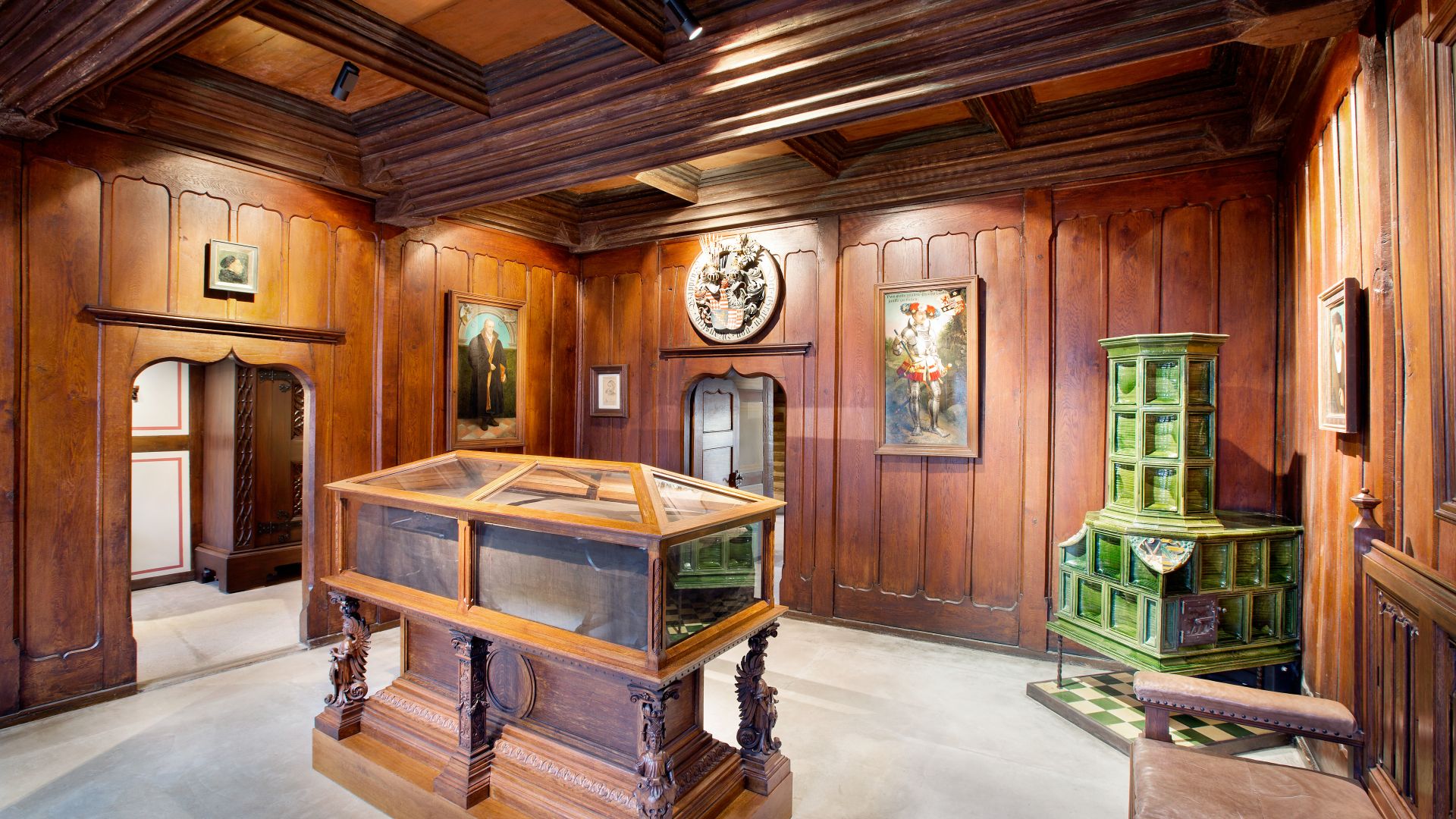 Lutherstadt Eisleben: The house where Luther died
©DZT (Christof Herdt)
Lutherstadt Eisleben: The house where Luther died
©DZT (Christof Herdt)
Luther was born in Eisleben in 1483 and died there in 1546 after an eventful life. His birthplace, the Luther House in Eisleben, is now a museum. It provides insights into his childhood and youth and brings the social and religious circumstances of that time to life. In the nearby Sterbehaus, on the other hand, the focus is on Luther's death. Like the birthplace and other sites in Lutherstadt Wittenberg, it has been part of the UNESCO World Heritage Site “Luther Memorials” since 1996. Using contemporary reports, objects, portraits, and multimedia stations, the permanent exhibition also shows how a veritable myth surrounding the church rebel arose at an early stage.
Erfurt: Studies and monastic life
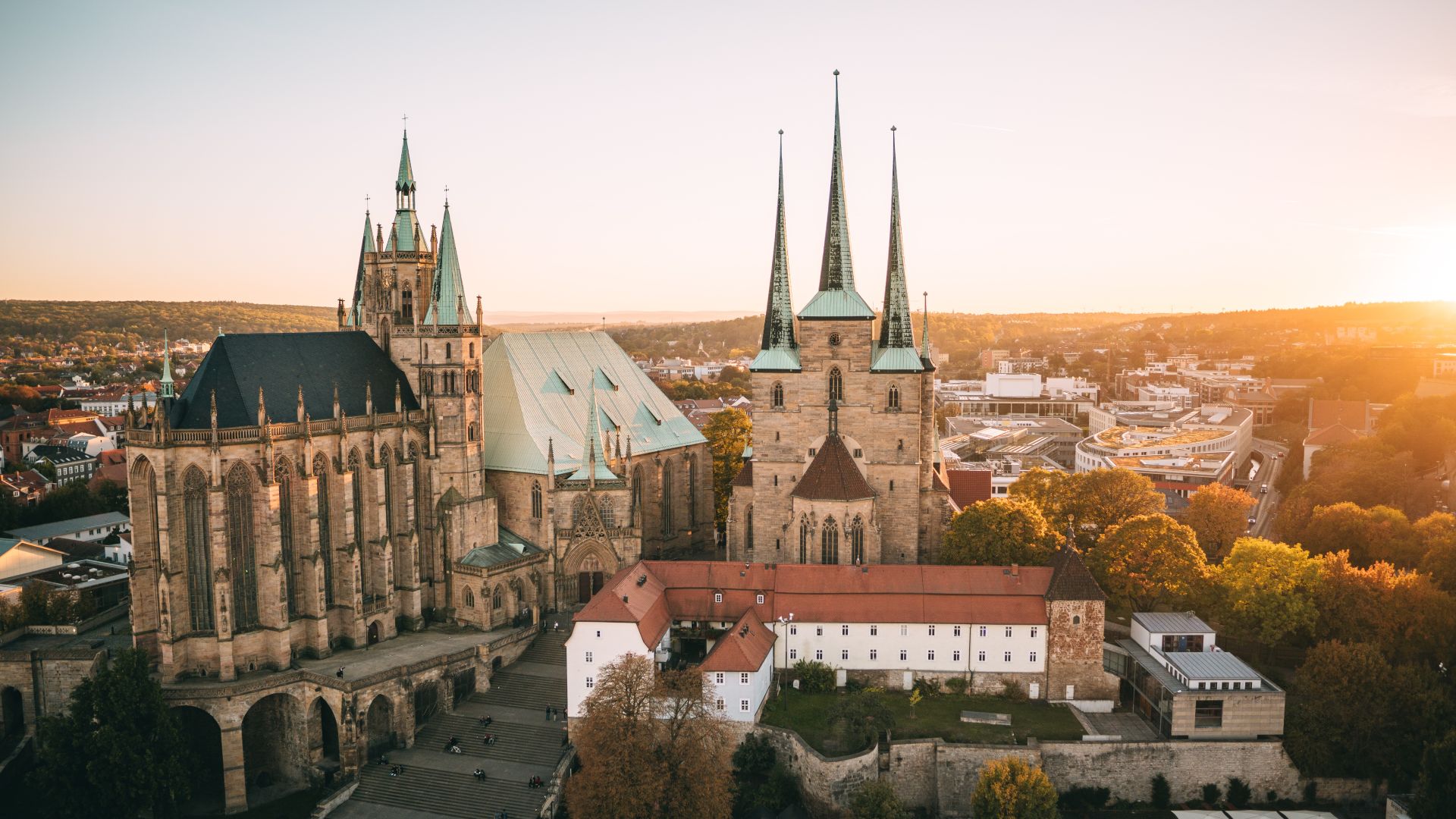 Erfurt Cathedral and Severi Church
©Adobe Stock (Steffen Knaust)
Erfurt Cathedral and Severi Church
©Adobe Stock (Steffen Knaust)
Luther earned his master's degree at the university in the Thuringian city of Erfurt and began to study theology intensively. After a dramatic thunderstorm, “the philosopher,” as his fellow students called him, joined the Augustinian order. The monastery where Luther lived and worked as a monk for six years is open to visitors. In addition to the monastery church, where Luther preached as he did in Erfurt Cathedral and elsewhere, it also houses an exhibition. This illustrates how his time at the Augustinian monastery in Erfurt prepared him for his Reformation mission.
Lutherstadt Wittenberg: The cradle of the Reformation
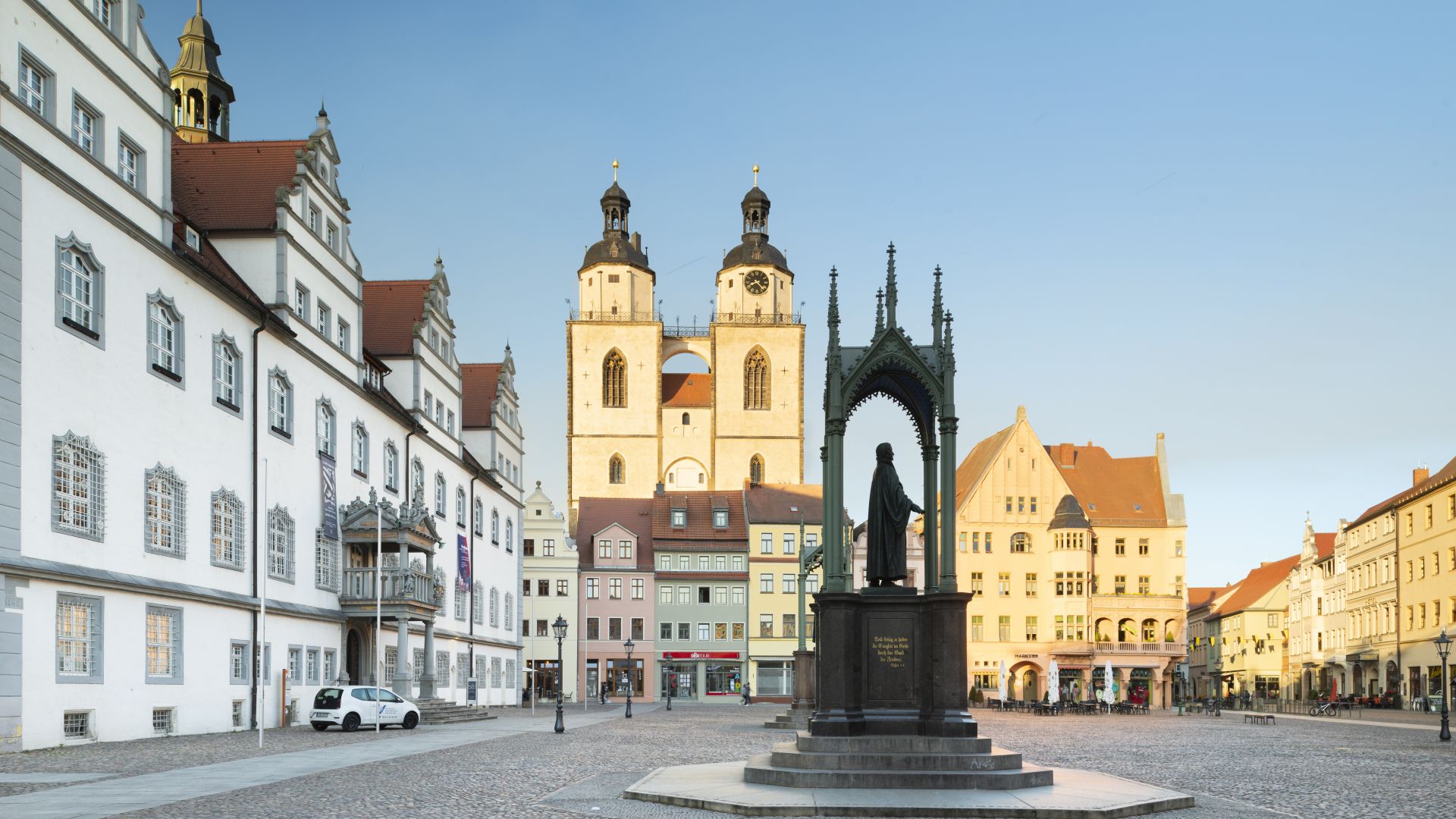 Wittenberg: Market square with St. Mary`s Church
©DZT (Francesco Carovillano)
Wittenberg: Market square with St. Mary`s Church
©DZT (Francesco Carovillano)
The place where the Reformation took shape is called Wittenberg. On October 31, 1517, Luther nailed his famous 95 theses to the door of the castle church. In these theses, he denounced, among other things, the practice of selling indulgences and the venality of church offices. This act fundamentally changed the history of the church. Today, this church is a UNESCO World Heritage Site, as are St. Mary's Church and Luther House in Wittenberg, which is considered the most important museum about the reformer. This is not least because the exhibition also presents many devotional objects, including a private Bible and his will.
Good to know: The city has been called Lutherstadt Wittenberg since 1938 and celebrates several festivals related to the Reformation every year. Yadegar Asisi's 360-degree panorama “Luther 1517” also provides an interesting picture of that time. With light, sound, and perspective, the 15 × 75-meter circular painting brings history to life in a multi-sensory experience. If you look closely, you will find the two Cranachs and Philipp Melanchthon, Luther's close friend, in the crowd. His house is also a UNESCO World Heritage Site and can be visited as a museum.
Eisenach and Wartburg Castle: Translation of the Bible
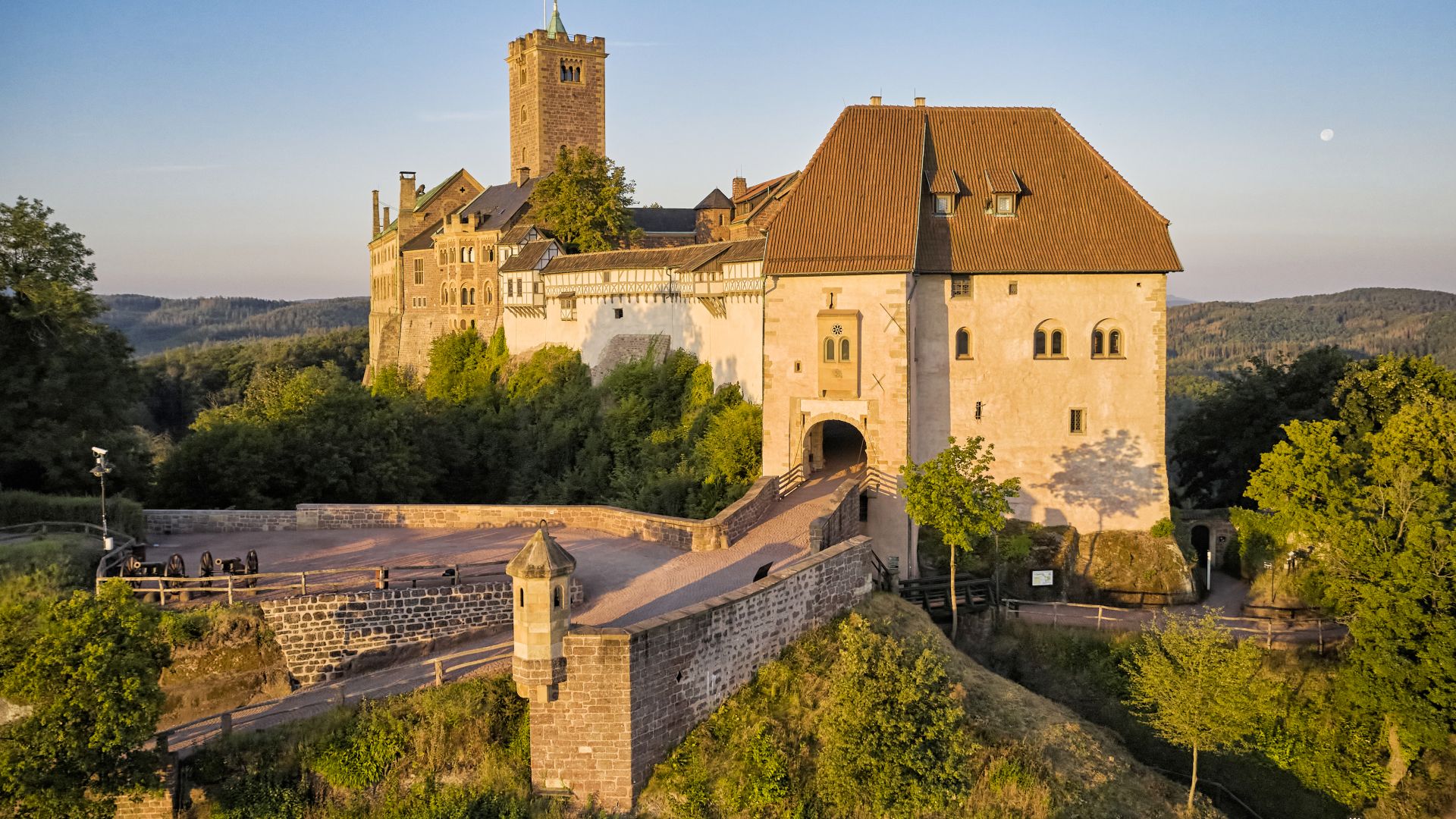 Wartburg Castle in the morning sun
©Thüringer Tourismus GmbH (Florian Trykowski)
Wartburg Castle in the morning sun
©Thüringer Tourismus GmbH (Florian Trykowski)
Luther's connection to Eisenach stems from his school days in what is now the Luther House with the Cotta family, but even more so from his stay at nearby Wartburg Castle. After fleeing the Diet of Worms, where he was condemned as a heretic, he went into hiding there under the name “Junker Jörg.” During this time, he translated the New Testament into German – a milestone that revolutionized not only faith but also the German language. Today, castle tours provide insights into Luther's study and original manuscripts. The Luther House in Eisenach completes the picture and is dedicated to Luther's time in the city.
Those who want to delve deeper into the subject can follow the “Routes of the Reformation.” This network of trails also includes Mansfeld, where Luther grew up, Leipzig, where he debated, and other stops such as Halle, Coburg, and Nuremberg. Tip: Guided tours and events related to the Reformation take place at all these locations. In short: You can't get more Luther than this!