
Inspiring Germany
Gorges and Ravines: 7 Impressive Nature Experiences
This text was generated with the help of AI ✨
Roaring water, narrow rock faces, and shaded trails: gorges and ravines are among the most impressive natural experiences in Germany. They lead deep into pristine landscapes, past waterfalls, moss-covered rocks, and spectacular viewpoints. Whether in the Alps, the Black Forest, or the low mountain ranges—each region has its own geological features. These seven gorges showcase this diversity and inspire you to experience Germany’s nature up close.
 Give “germany.travel” priority on Google
Gorges and ravines reveal a particularly unspoilt side of Germany. They combine physical activity with immersive experiences of nature and constantly offer new perspectives – from narrow footbridges to sweeping views down into the valley. Those who immerse themselves in these landscapes will discover not only impressive geological features, but also tranquil retreats and unique play of light.
Partnach Gorge (Bavaria): Dramatic Alpine scenery near Garmisch-Partenkirchen
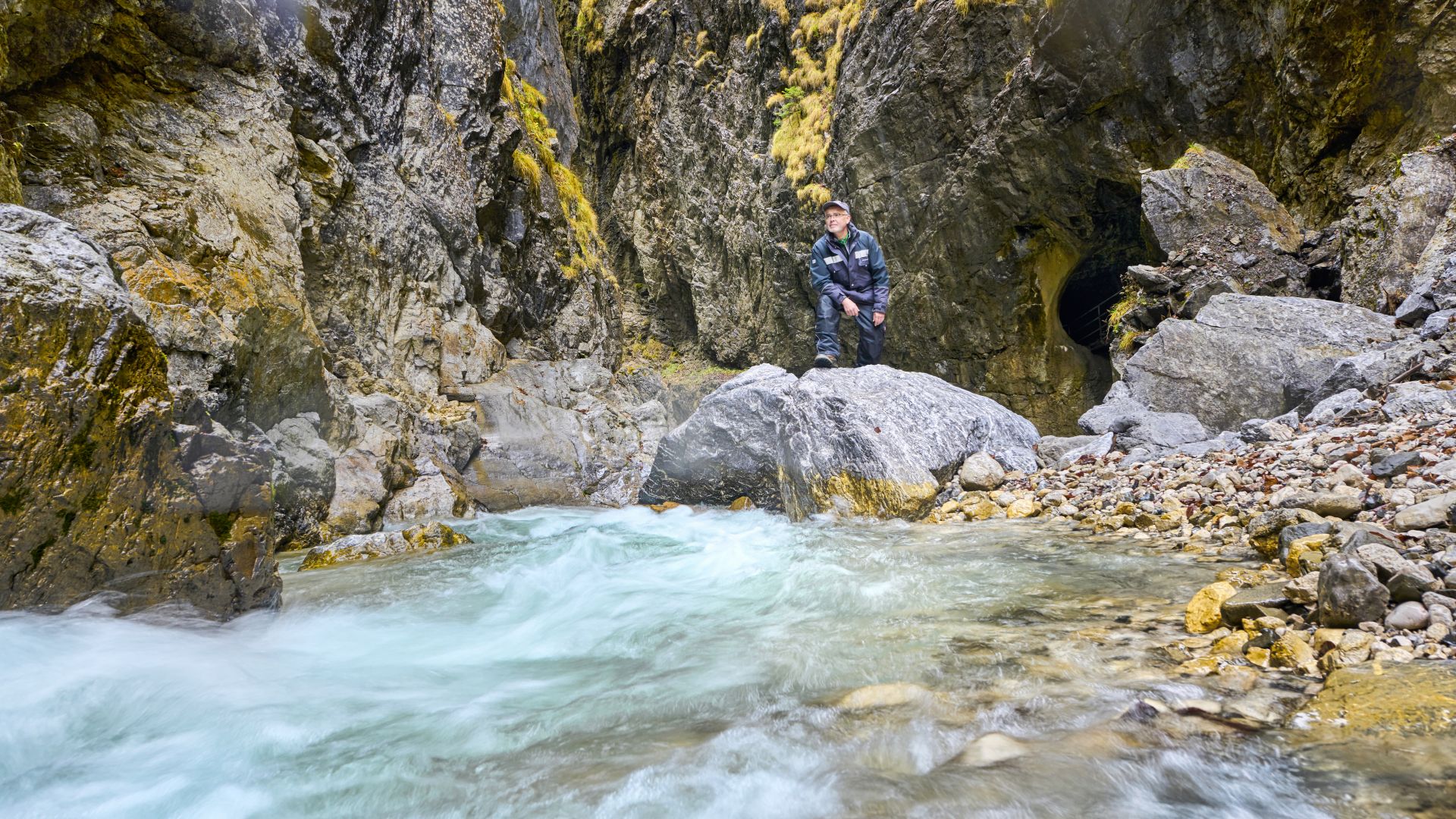 Garmisch-Partenkirchen: Rudolf Achtner, administrator of the Partnachklamm, crossing this furious gorge
©DZT (Jens Wegener)
Garmisch-Partenkirchen: Rudolf Achtner, administrator of the Partnachklamm, crossing this furious gorge
©DZT (Jens Wegener)
The Partnach Gorge is one of Germany’s most famous gorges. Near Garmisch-Partenkirchen, the Partnach River has carved its way deep into the Wetterstein Mountains. The trail leads along steep rock faces via secured footbridges and through short tunnels, while the water rushes powerfully through the narrow gorge. A visit in winter is particularly impressive, when ice formations cover the rocks. The gorge is well-developed and is also suitable for less experienced hikers.
Breitachklamm (Bavaria): A Deep Look into the Allgäu Alps
Near Oberstdorf, the Breitachklamm opens up as one of the deepest rock gorges in Central Europe. Over thousands of years, the Breitach River has carved out an impressive gorge here. Visitors follow the river along safe paths, past overhanging rock faces and narrow passages. Information stations explain how the gorge was formed. In summer, the gorge provides pleasant coolness, while in winter, frozen waterfalls and ice curtains dominate the landscape.
Höllentalklamm (Bavaria): Raging Waters in the Wetterstein Mountains
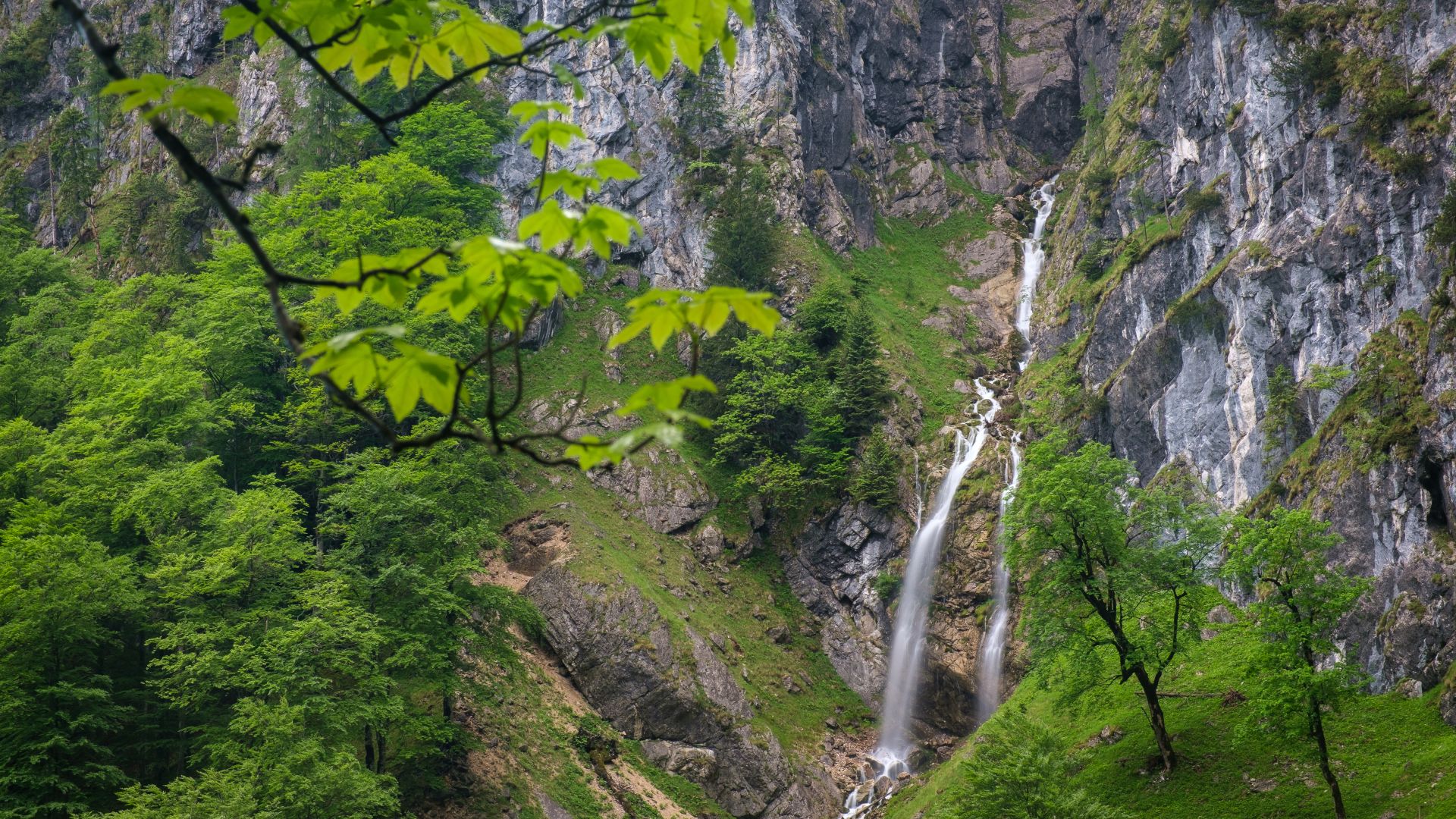 Zugspitze region: waterfall in the Höllentalklamm
©DZT (Rafa Pérez)
Zugspitze region: waterfall in the Höllentalklamm
©DZT (Rafa Pérez)
The Höllentalklamm is also located near Garmisch-Partenkirchen, but it feels wilder and more pristine than the Partnachklamm. The trail leads over bridges, footbridges, and through rock tunnels right alongside the roaring water. The gorge is at its most impressive, especially after the snow melts. It also serves as the entrance to the Höllental valley and thus the starting point for challenging hikes toward the Zugspitze.
Wutach Gorge (Baden-Württemberg): The “Grand Canyon” of the Black Forest
The Wutach Gorge in the southern Black Forest is less a narrow ravine than a widely branching system of gorges and forms the most impressive section of the Schluchtensteig Trail. On paths that are narrow in places, hikers follow the course of the Wutach through a varied landscape featuring rock formations, floodplain forests, and steep slopes. The region is a nature reserve and is considered one of the most biodiverse areas in Baden-Württemberg. Especially in spring and early summer, the gorge comes alive with blooming vegetation and high water levels.
Drachenschlucht (Thuringia): Narrow rock passages in the Thuringian Forest
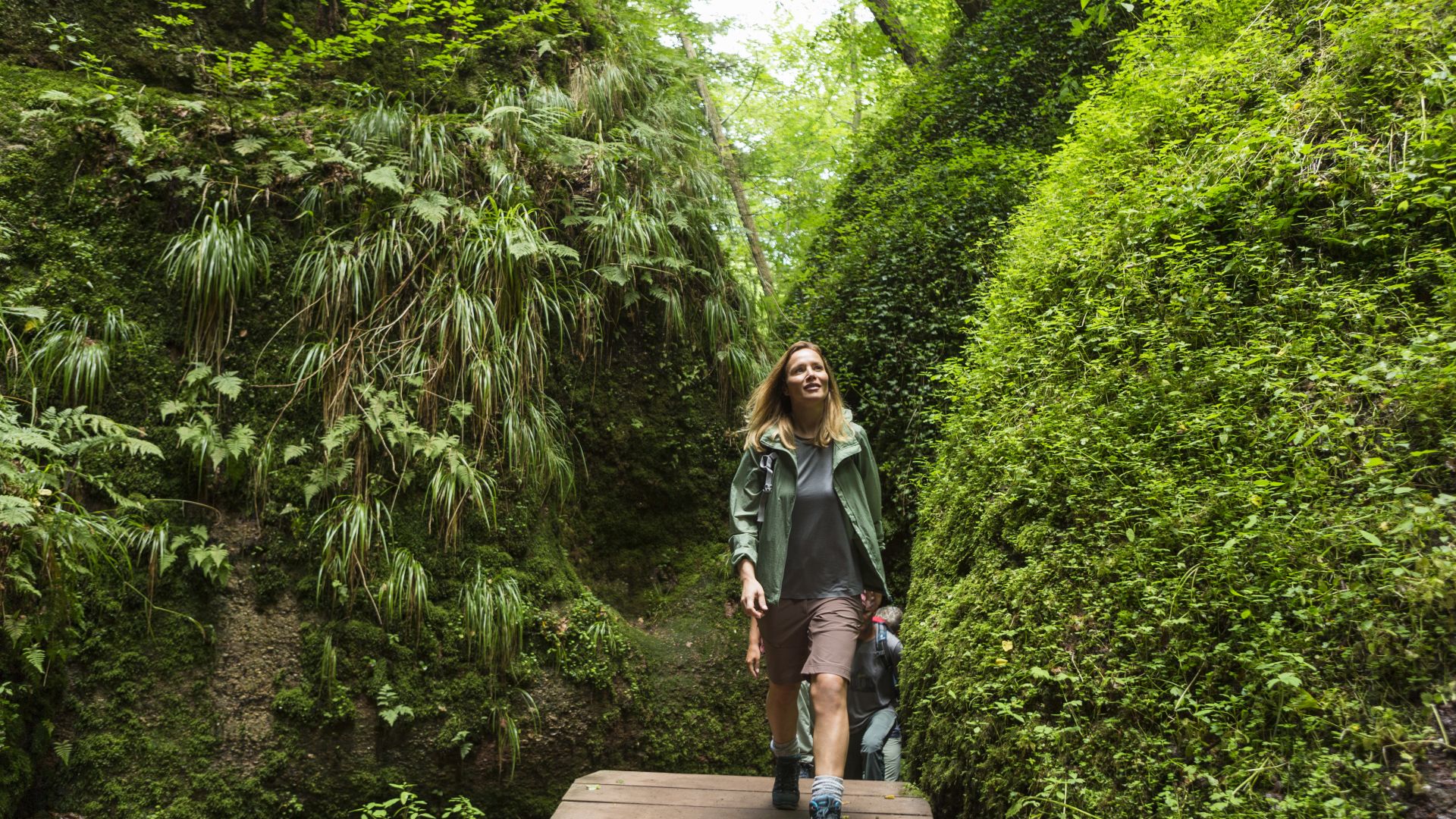 Thüringer Wald: Wandern mit Kindern in der Drachenschlucht
©TTG (Guido Werner)
Thüringer Wald: Wandern mit Kindern in der Drachenschlucht
©TTG (Guido Werner)
Near Eisenach, the Drachenschlucht winds its way through the Thuringian Forest. In places, it is only a few meters wide, with high rock walls closing in closely. Wooden walkways lead through the shady gorge, where the light constantly shifts. The Dragon Gorge can easily be combined with a hike to Wartburg Castle and offers a surprisingly intense experience of nature over a relatively short distance.
Ehrbachklamm (Rhineland-Palatinate): A Hidden Natural Gem in the Hunsrück
The Ehrbachklamm is one of the quieter gorges in Germany. Between Brodenbach and Emmelshausen, the trail follows the Ehrbach stream through an unspoiled landscape featuring small waterfalls, rocks, and dense forests. Sure-footedness is an advantage here, as the path is narrow and rocky in places. It is precisely this unspoiled nature that makes the gorge so appealing—a place for anyone who wants to experience nature away from the crowds.
Kirnitzschklamm (Saxony): A rocky landscape in Saxon Switzerland
The Kirnitzschklamm is located in the Saxon Switzerland National Park and combines striking sandstone formations with a tranquil river landscape. Hiking trails lead along the Kirnitzsch River through the narrow gorge, past bizarre rock formations and dense forests. Other highlights in the area include the Schrammsteine and the Malerweg. The gorge is ideal for leisurely hikes and offers many opportunities for combining different routes.