
Inspiring Germany
10 bridge gems: engineering, history, adventure
From dizzying suspension bridges to magnificent medieval half-timbered structures to the world's largest brick bridge: Germany is home to a number of spectacular bridges that invite you to marvel, take photos, and stroll across them. Some are even worth a (short) trip in their own right!
 Give “germany.travel” priority on Google
Göltzschtal Bridge in the Vogtland district: a masterpiece of engineering
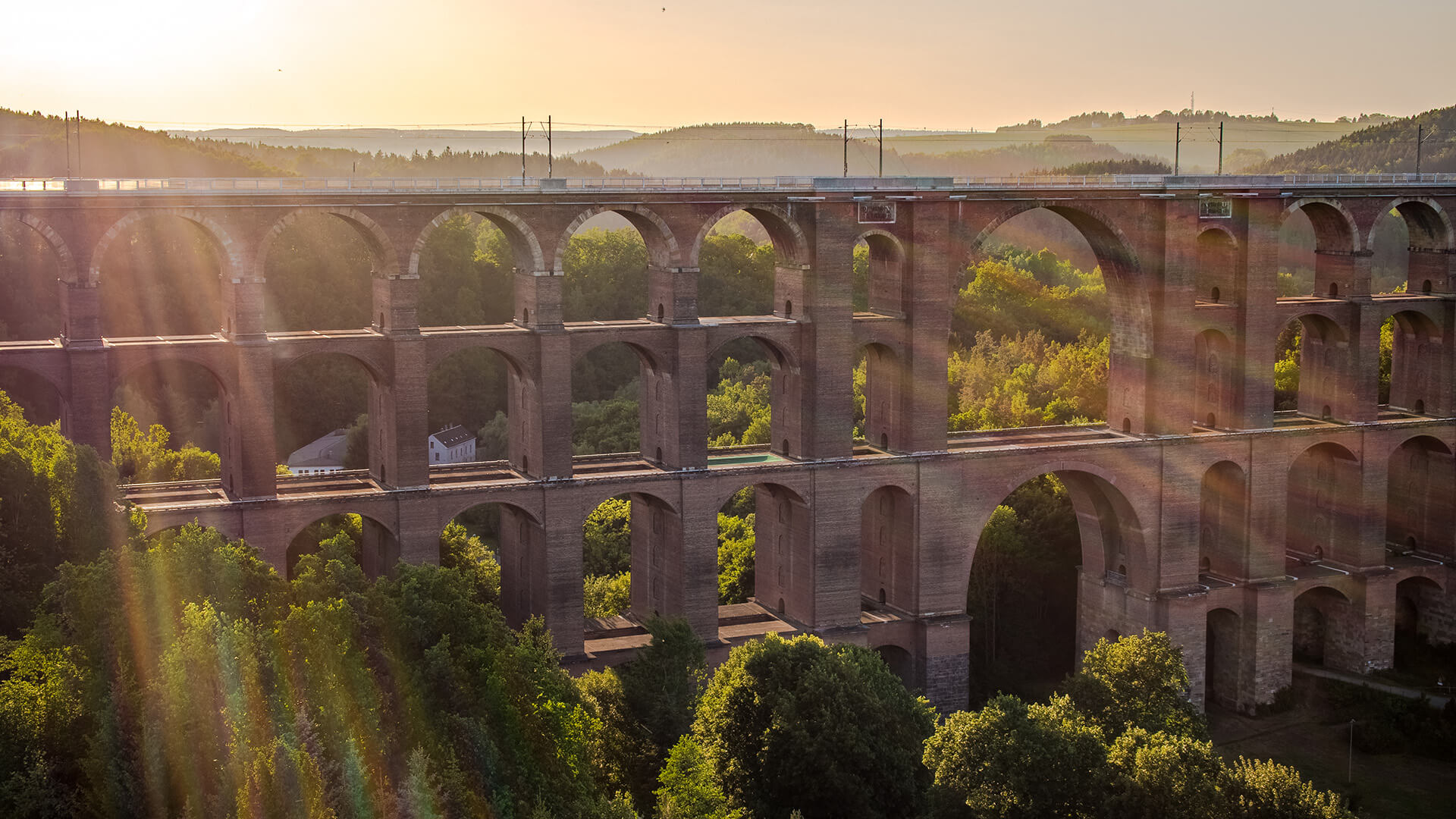 Göltzschtalbrücke: biggest brick stone bridge in the world
©AdobeStock (Daniel)
Göltzschtalbrücke: biggest brick stone bridge in the world
©AdobeStock (Daniel)
Around 26 million bricks, artfully arranged in 98 arches and four tiers, make the Göltzschtal Bridge near Netzschkau in Saxony's Vogtland district, completed in 1851, the largest brick bridge in the world – and the most significant structure from the early days of German railways. Trains still roll across the 574-meter-long bridge today, while hikers rejoice up to 78 meters below in the valley floor. Concertgoers also get their money's worth, as open-air concerts are regularly held at the nearby festival grounds.
Hohenzollern Bridge in Cologne: Steel meets love ritual
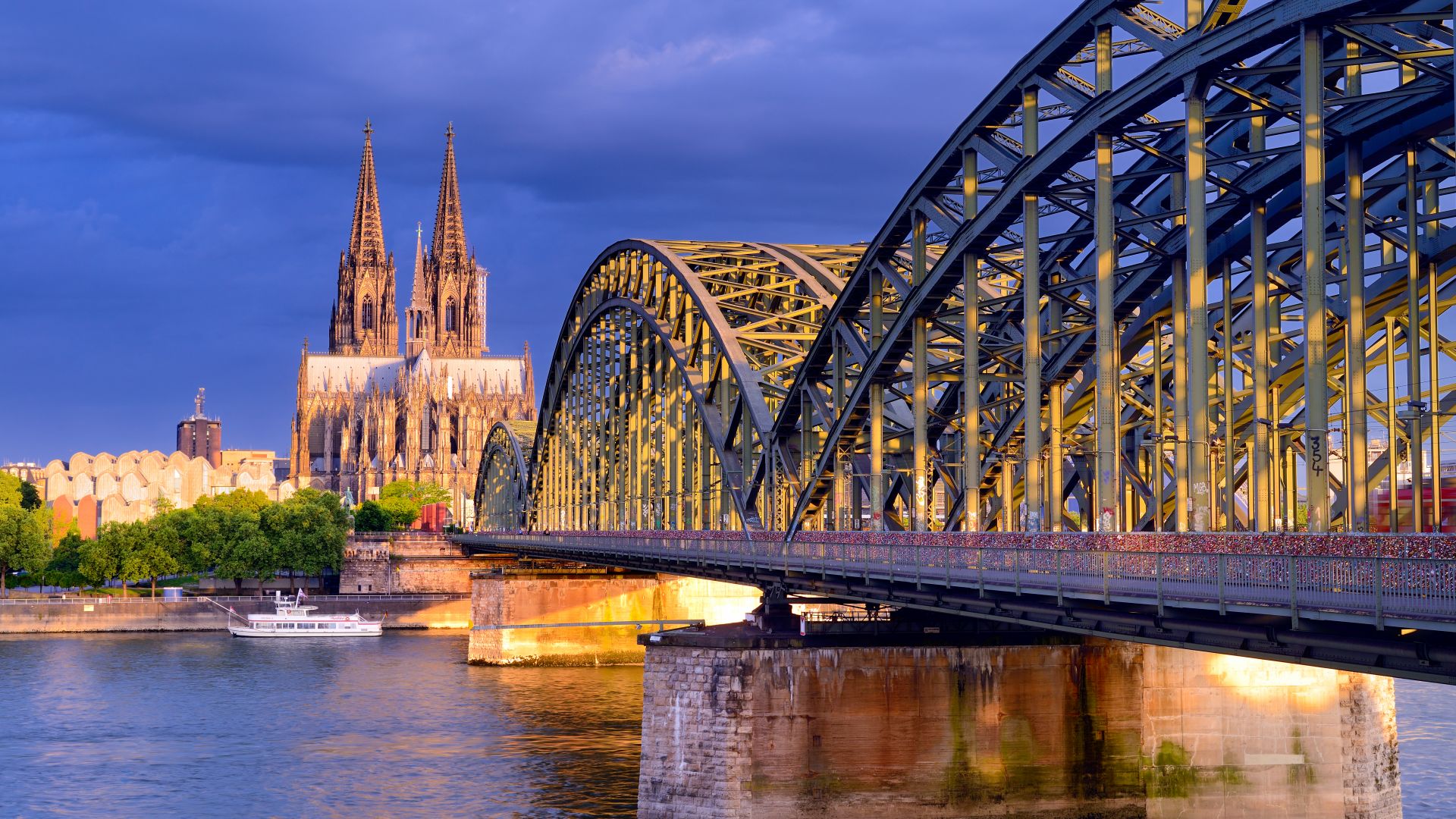 Cologne Cathedral with Hohenzollern Bridge
©DZT (Francesco Carovillano)
Cologne Cathedral with Hohenzollern Bridge
©DZT (Francesco Carovillano)
Rivets instead of flourishes, steel instead of stone! There's no question about it: Germany's busiest railway bridge, rebuilt after World War II and significantly expanded in the 1980s, is not a diva, but Cologne's workhorse—albeit one with heart. Romantics, at any rate, love the Rhine bridge located directly above the old town at the World Heritage Cathedral. Around 500,000 love locks hang from the pedestrian railings below the three steel arches, more than anywhere else in Germany.
Geierlay Suspension Bridge in Mörsdorf: Thrills above the Hunsrück
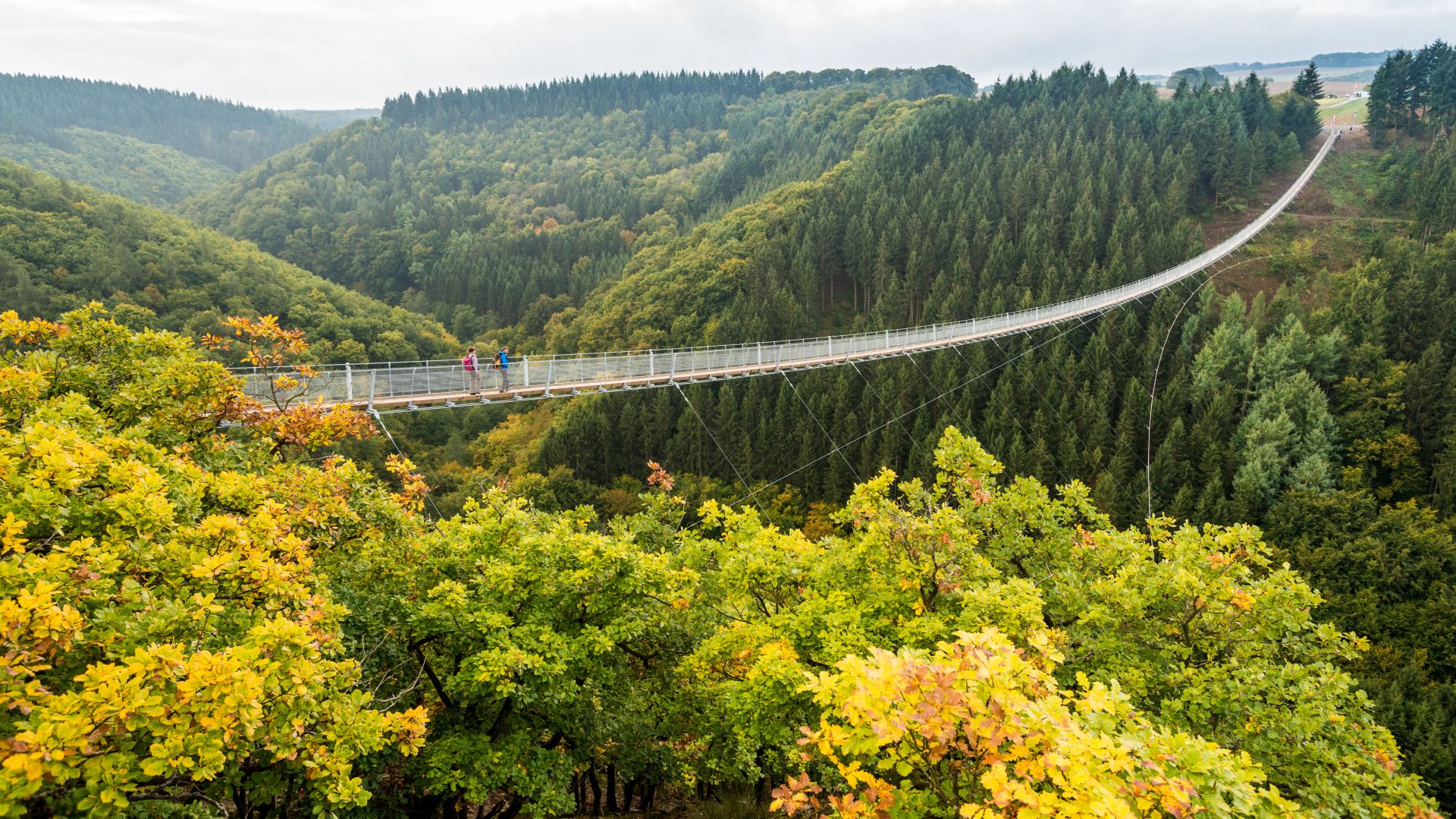 Mörsdorf: Geierlay suspension rope bridge in the Hunsrück region
©Rheinland-Pfalz Tourismus GmbH (Dominik Ketz)
Mörsdorf: Geierlay suspension rope bridge in the Hunsrück region
©Rheinland-Pfalz Tourismus GmbH (Dominik Ketz)
It looks like something out of an Indiana Jones movie, but it's very real: opened in 2015, the Geierlay Suspension Bridge not only connects Mörsdorf and Sosberg, but also offers breathtaking views and an adrenaline rush. After all, pedestrians walk on a slightly swaying walkway made of Douglas fir boards and held by steel cables, up to 100 meters above the valley floor. The fact that it has since had to relinquish the title of “Germany's longest suspension bridge” has not diminished its enormous popularity.
Krämerbrücke in Erfurt: Medieval flair between half-timbered houses and the river
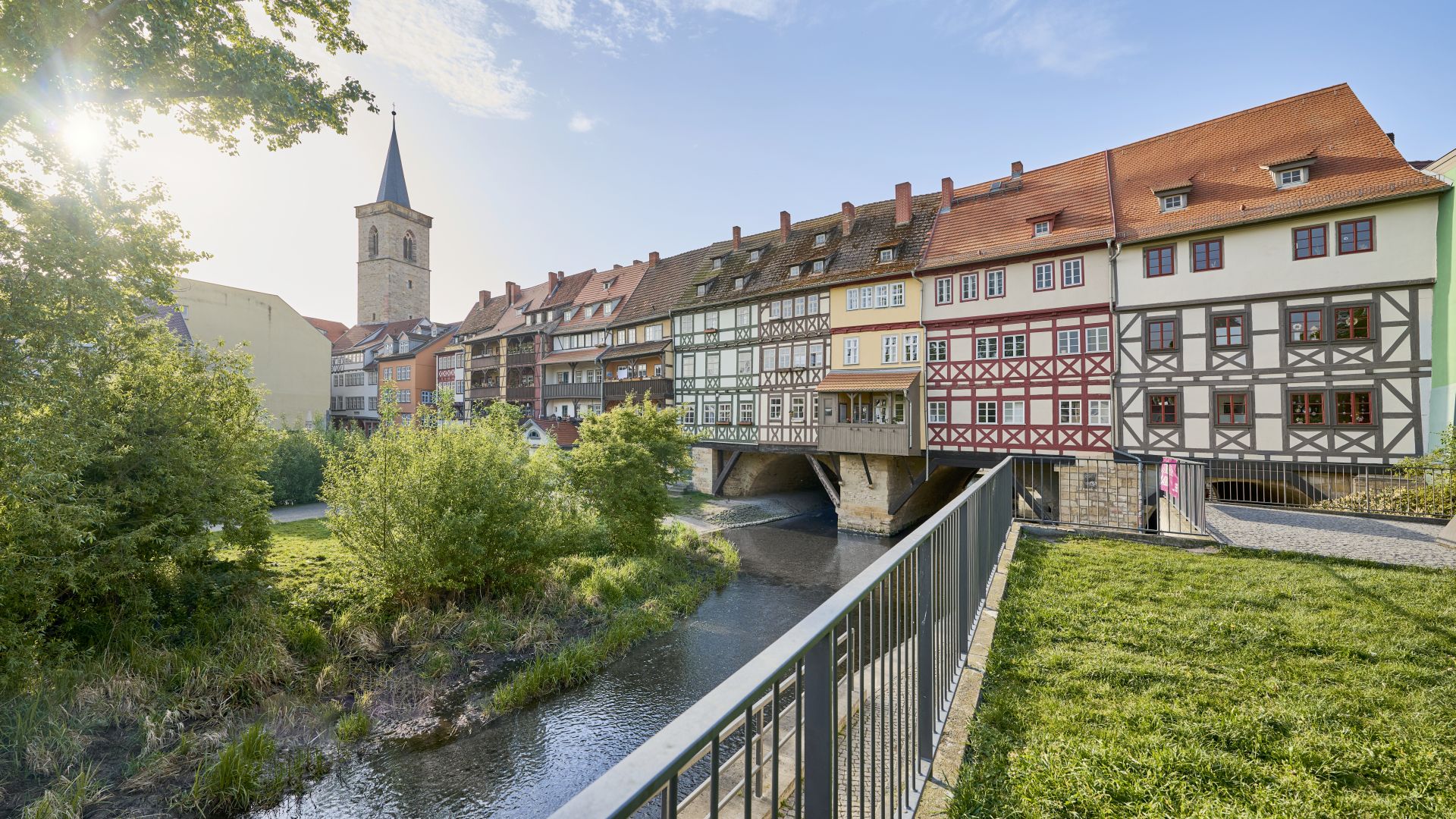 Krämerbrücke
©DZT (Jens Wegener)
Krämerbrücke
©DZT (Jens Wegener)
Europe's longest continuously inhabited bridge is located neither in Florence nor Lucerne, but in Erfurt! Since 1325, the Krämerbrücke has spanned the two arms of the Gera River for 120 meters, looking like a small, lively street above the water. Thirty-two half-timbered houses made of wood and stone line up next to each other, housing galleries, cafés, and shops. Tip: Germany's only bridge completely built up with houses is particularly busy during the Krämerbrückenfest at the end of June.
Rakotz Bridge in Kromlau Park: Like something out of a fairy tale
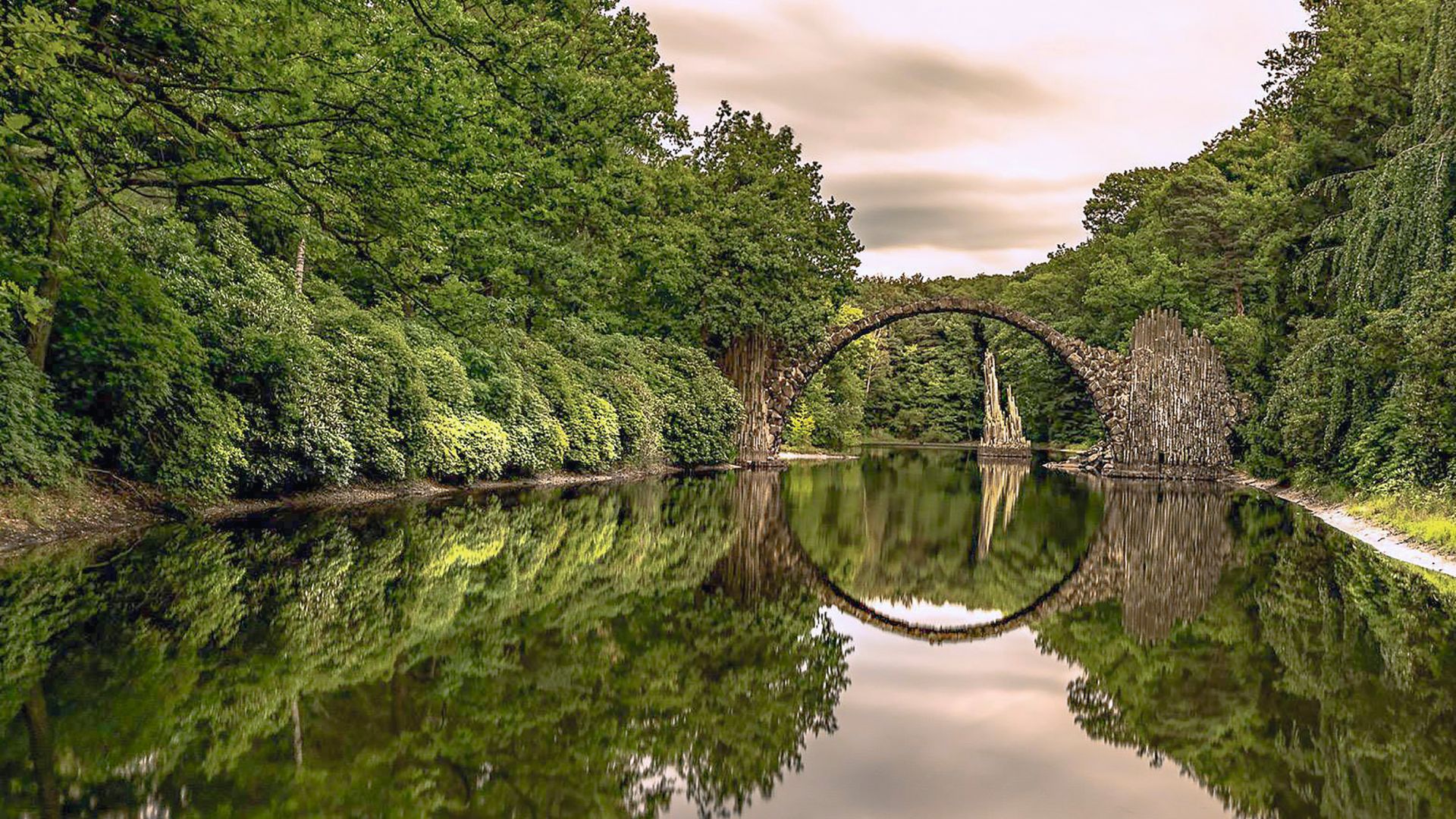 Kromlau: Rakotz Bridge in Rhododendron Park
©Tourismus Marketing Gesellschaft Sachsen GmbH (Anita Demianowicz)
Kromlau: Rakotz Bridge in Rhododendron Park
©Tourismus Marketing Gesellschaft Sachsen GmbH (Anita Demianowicz)
No entry, but marveling is allowed! The Rakotz Bridge in Kromlau, Saxony, is just 20 meters long, but its perfectly circular reflection in the water has made it a world-famous photo motif. How did it get its nickname, Devil's Bridge? Well, when the bridge was built around 1860, people believed that only the Prince of Hell could create such a delicate arch out of basalt stones. Think again! In any case, it blends in heavenly with the romantic azalea and rhododendron park.
Säckingen Rhine Bridge: 850 years of eventful history
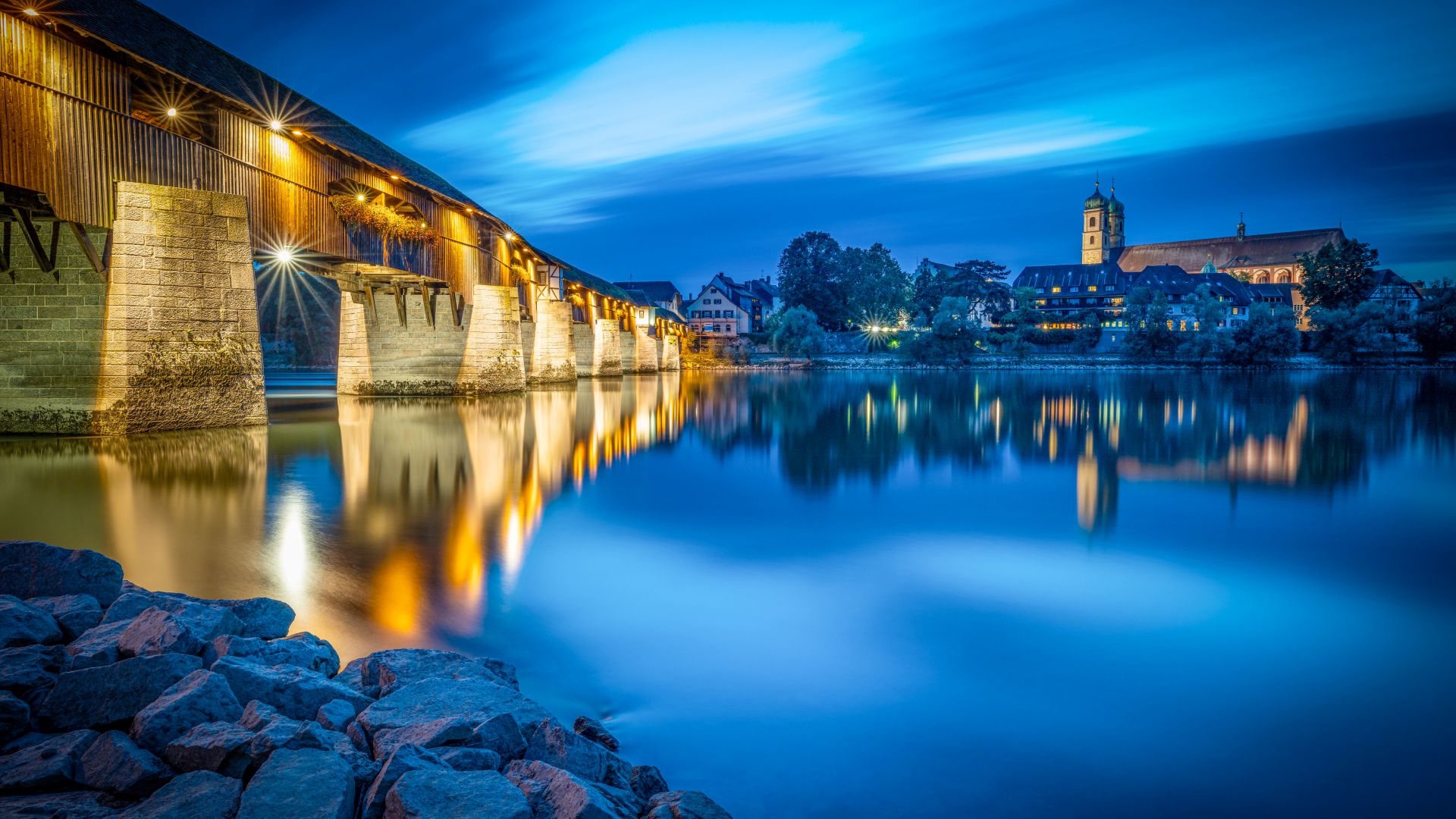 Wooden bridge over the Rhine in Bad Säckingen during the blue hour
©AdobeStock (Martin)
Wooden bridge over the Rhine in Bad Säckingen during the blue hour
©AdobeStock (Martin)
At 204 meters long, this monument, which is only accessible to pedestrians and cyclists, is Europe's longest covered wooden bridge – and a true border crosser: it connects Bad Säckingen in Baden with the Swiss municipality of Stein. First mentioned in 1272, the bridge over the Upper Rhine, which rests on six stone bases, has been rebuilt and renovated time and again after fires and floods. Impressively, the flair of the historic wooden half-timbered construction has always been preserved.
Prerow Pier: Coastal romance on steel piles
The Baltic resort of Prerow on the Fischland-Darß-Zingst peninsula is well known for its sandy beach and unspoiled Darß forest. However, since 2024, the town has had a new landmark: the pier, which is around four meters wide and built on 87 piles, clearly towers above its predecessors. At 720 meters, it is even the longest bridge in the Baltic Sea region – and a popular photo spot for walkers, with its hidden sea view and horseshoe-shaped island harbor. This is located at the viewing terrace at the bridgehead.
Rendsburg High Bridge: Steel giant over the Kiel Canal
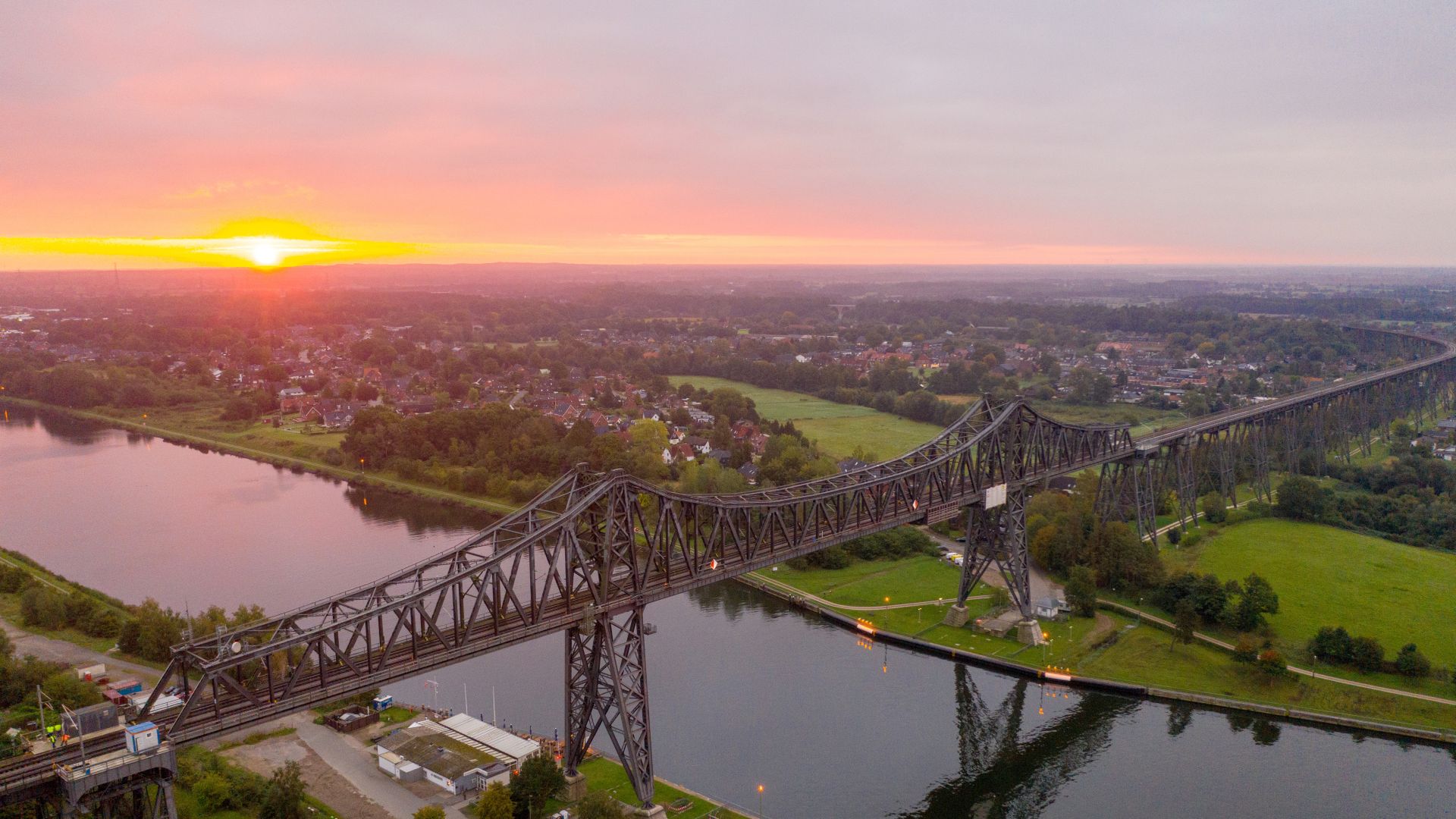 Rendsburg railroad bridge over the Kiel Canal
©TASH GmbH (sh-tourismus.de/MOCANOX)
Rendsburg railroad bridge over the Kiel Canal
©TASH GmbH (sh-tourismus.de/MOCANOX)
Located west of Kiel, this 18,000-ton colossus is one of the largest steel structures in Europe. Opened in 1913, it carries trains 42 meters above the Kiel Canal. The mighty steel girders, cables, and gears of the 2.5-kilometer-long structure are impressive in themselves. But that's not all: an attached transporter bridge allows pedestrian and vehicle traffic and elicits additional oohs and aahs. In fact, the combination of a road bridge and transporter bridge is unique in the world.
Oberbaum Bridge in Berlin: Connecting what belongs together
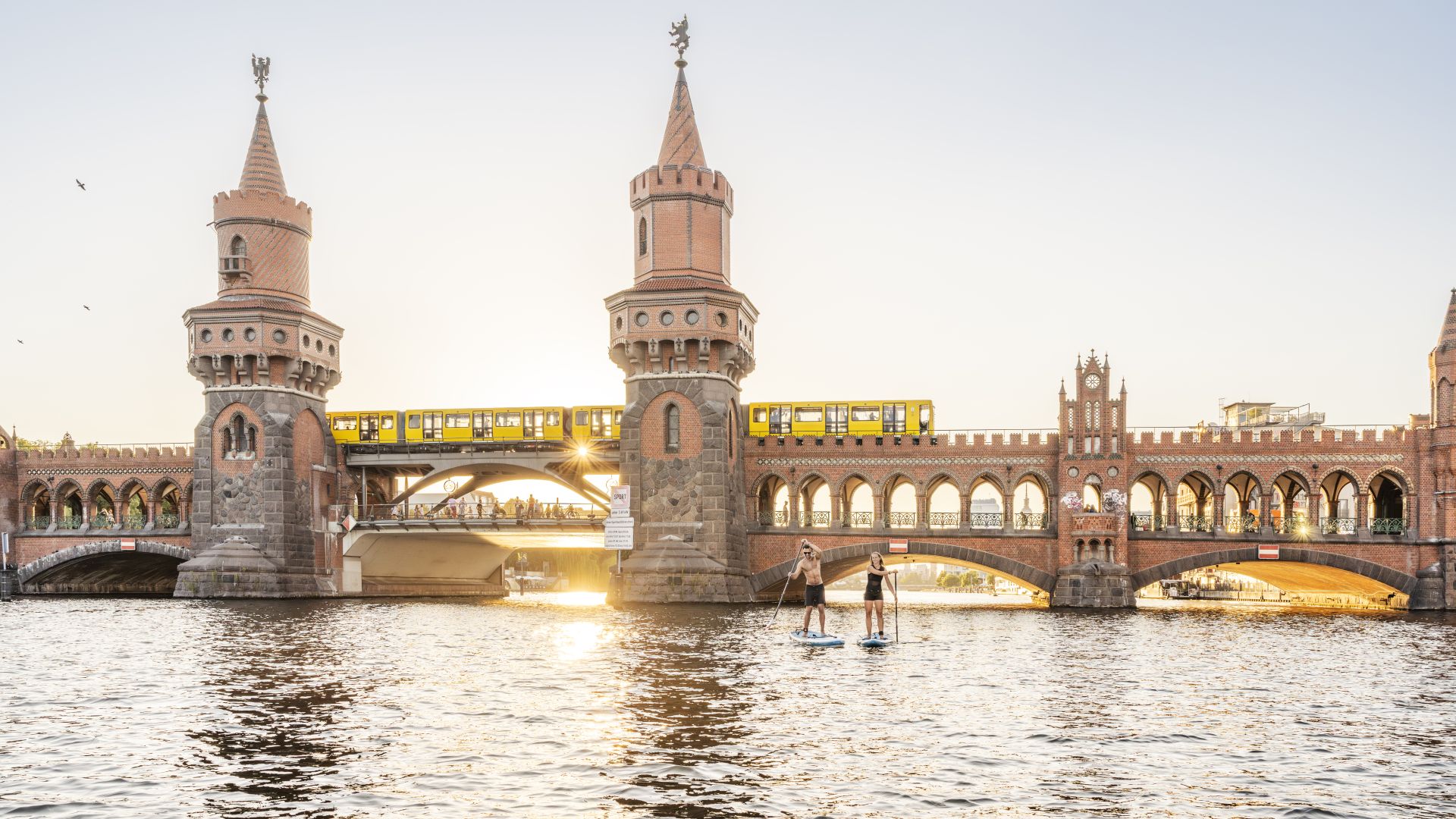 Oberbaumbrücke with stand-up paddlers on the Spree
©DZT (Dagmar Schwelle)
Oberbaumbrücke with stand-up paddlers on the Spree
©DZT (Dagmar Schwelle)
First came reunification, then regional reform. Built in 1926, the Oberbaum Bridge is a prestigious symbol of the growing together of Friedrichshain and Kreuzberg, i.e., East and West Berlin. The 150-meter-long bridge over the Spree, with its red brick arches and pointed towers in Gothic style, also has a unifying effect. In addition to the subway, this also has a social component: life pulsates above and below the water during after-work get-togethers, festivals, and photo shoots.
Stone Bridge in Regensburg: A masterpiece of medieval architecture
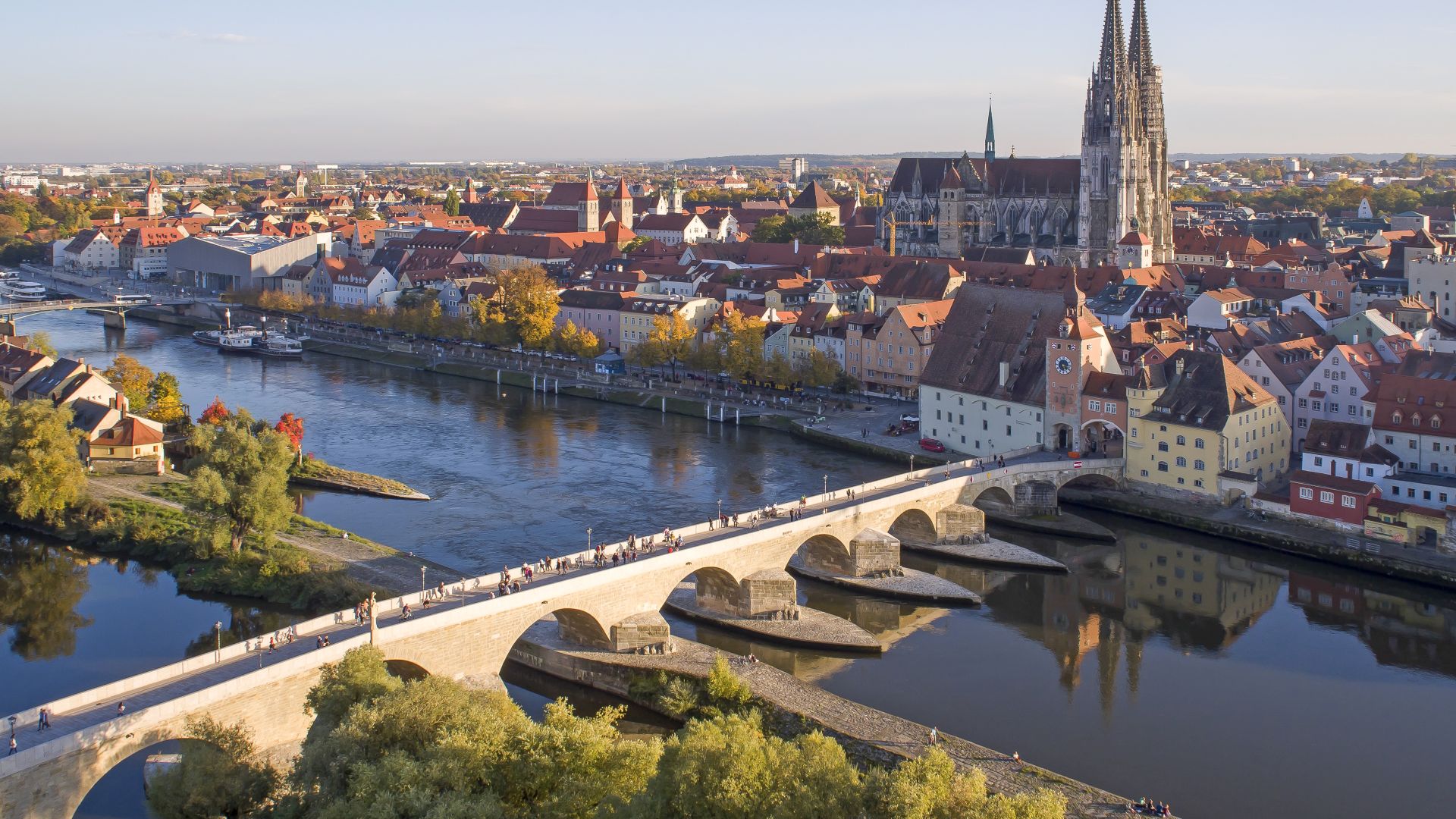 View of the Stone Bridge and St. Peter`s Cathedral in Regensburg
©Regensburg Tourismus GmbH (Julian_Elliot_Photography, RTG)
View of the Stone Bridge and St. Peter`s Cathedral in Regensburg
©Regensburg Tourismus GmbH (Julian_Elliot_Photography, RTG)
In the heart of Regensburg stands a true medieval marvel: the Stone Bridge. It has spanned the Danube since 1135 and is considered Germany's oldest surviving bridge still in use today. Its 16 stone arches carry not only pedestrians and cyclists, but also history. After all, emperors, merchants, and countless travelers have left their mark here. These traces lead straight to the old town with its cathedral and patrician houses, which, like the Stone Bridge, are UNESCO World Heritage Sites.