Experience & Enjoy
One tuber, many regional traditions: discover the potato in Germany
This text was generated with the help of AI ✨
Kartoffel, Grumbeere, Tüfte: the many different names alone reveal just how deeply rooted the humble potato is in Germany’s regional cuisines. Sometimes it is served mashed, sometimes grated and fried in a pan, and sometimes shaped into dumplings or Schupfnudeln.
 Give “germany.travel” priority on Google
Follow the trail from north to south and you will discover much more than regional recipes. Museums, farm shops, cookery courses, guided city tours and festivals reveal just how closely food is connected with landscape, language and history. The potato provides a surprisingly versatile common – or rather golden – thread for a culinary journey through Germany.
Mecklenburg-Western Pomerania: Tüfte and potato history
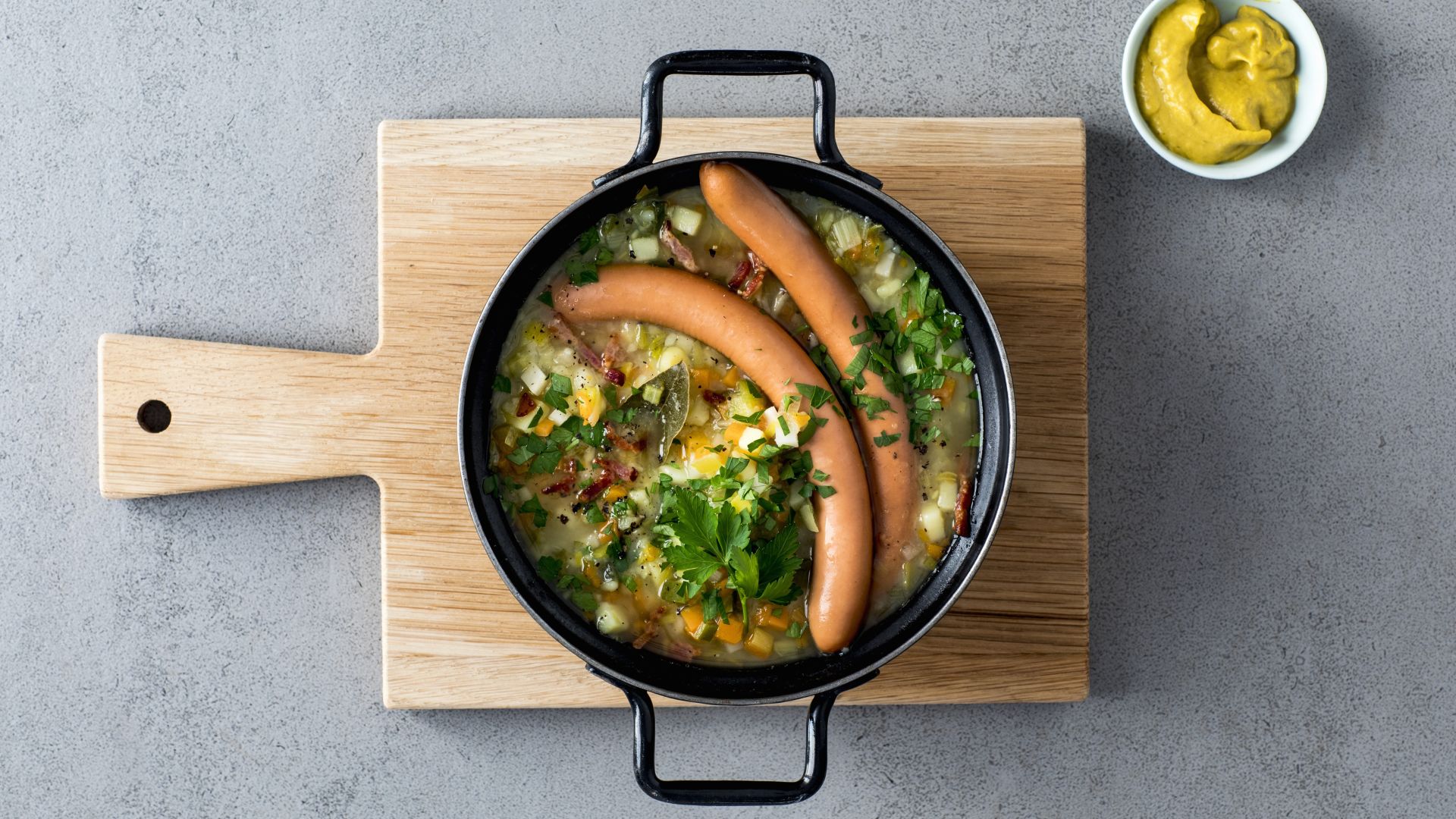 Berlin potato soup with Vienna sausage
©Stockfood / Gräfe & Unzer Verlag (Becca Crawford)
Berlin potato soup with Vienna sausage
©Stockfood / Gräfe & Unzer Verlag (Becca Crawford)
- What it is called here: Tüfte, Tüffel or Kartoffel
- What’s on the menu: potato soup, potato bread and other hearty potato dishes
- Where to experience it: Western Pomeranian Potato Museum in Tribsees
In Mecklenburg-Western Pomerania, the regional language has several names for the potato, including Tüfte and Tüffel. It is just as versatile in the kitchen: potato soup and potato bread are part of the traditional repertoire, as are potatoes served with fish and other regional dishes. Tribsees in the Trebel Valley offers a deeper insight into this culinary culture. The Western Pomeranian Potato Museum displays historic farming equipment, an old farmhouse kitchen and various potato varieties. Visitors can also discover how the plant, originally from South America, reached Europe and evolved from an agricultural crop into an everyday staple.
Fun fact: Following a famine in Pomerania, Frederick II issued his first “potato decree” in 1746 to encourage cultivation of the tuber, which was still relatively uncommon at the time.
Lüneburg Heath: potatoes from field to hotel
- What it is called here: Heidekartoffel
- What’s on the menu: mashed potatoes, rösti, potato tarte flambée – even potato cake
- Where to experience it: First German Potato Hotel in Lübeln
The sandy soils of the Lüneburg Heath are closely associated with potato cultivation. The local Heidekartoffel is correspondingly versatile: it accompanies Heidschnucke lamb and trout, is served mashed or as rösti, and appears in more contemporary creations such as potato tarte flambée. Even a potato cake with marzipan is part of the repertoire.
At the first German Potato Hotel in Lübeln in the Wendland region, the tuber takes centre stage. The restaurant serves changing potato dishes made with ingredients from the surrounding area, while according to the hotel, the potatoes come from a neighbouring farmer. Even the rooms are named after potato varieties, turning a regional staple into a travel experience.
Fun fact: The hotel began with an unusual idea: farmers could once pay for their stay with produce. Potatoes were among the items they brought most frequently.
Thuringia: make your own dumplings at a Kloßseminar
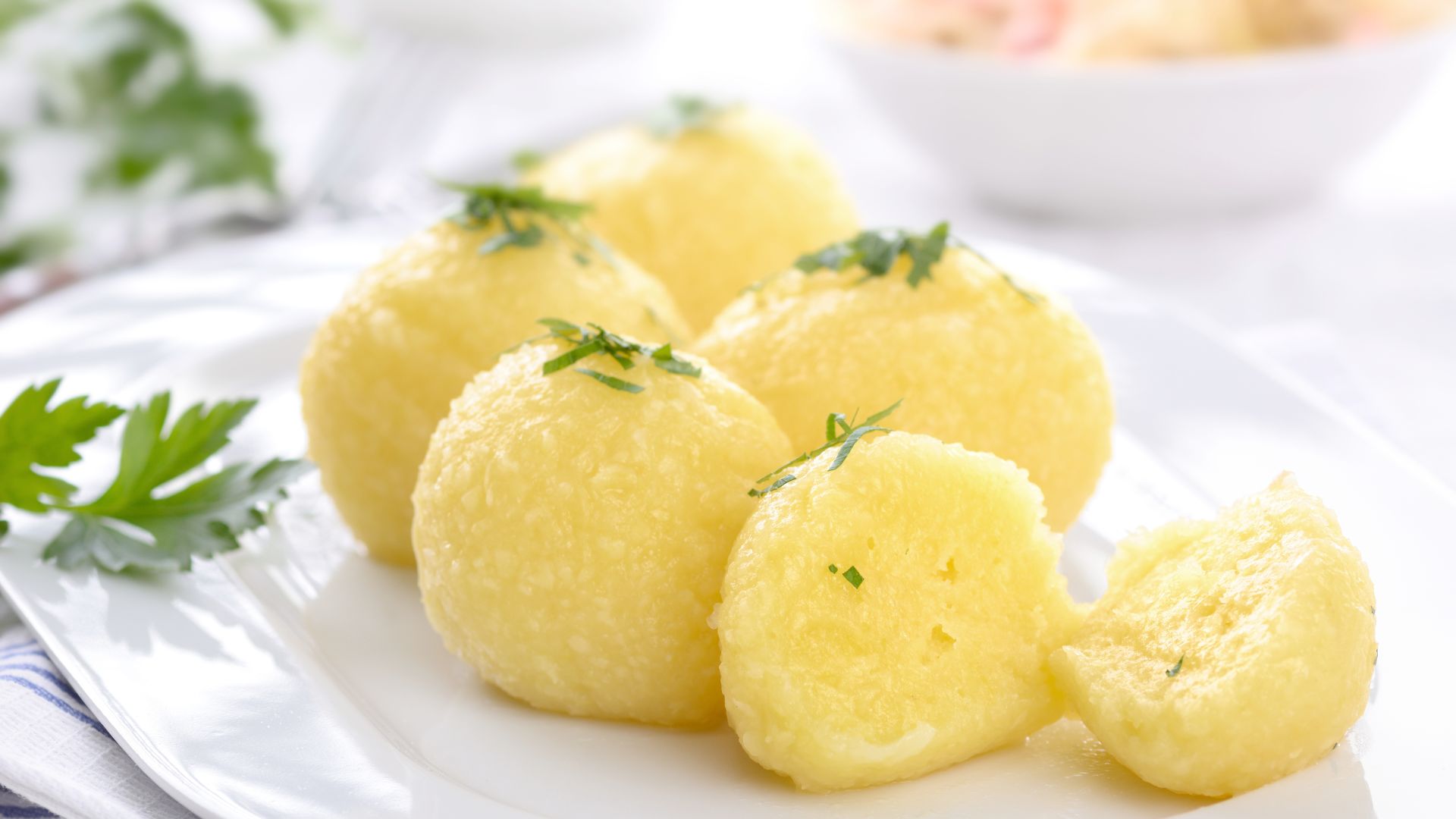 Potato dumplings
©Adobe Stock (kab-vision)
Potato dumplings
©Adobe Stock (kab-vision)
- What it is called here: Kartoffel
- What’s on the menu: Thuringian potato dumplings
- Where to experience it: Kloßseminar at Leuchtenburg Castle and Thüringer Kloß-Welt in Heichelheim
Round on the outside, surprisingly skilful on the inside: Thuringian dumplings are a dish in which the potato is completely transformed. At Leuchtenburg Castle near Seitenroda, visitors can discover how they are made. During a Kloßseminar, participants use fresh potatoes to shape traditional Thuringian dumplings. Afterwards, they are served as part of a three-course meal, accompanied by stories about this regional speciality.
The trail continues in Heichelheim, where Thüringer Kloß-Welt has dedicated an entire museum to the speciality. Its “Kartoffel-Welt” traces the history of potato processing in Thuringia, while the Kloß-Imbiss offers the chance to sample authentic Thuringian dumplings. The museum area is wheelchair accessible.
Fun fact: The idea for the dumpling museum in Heichelheim emerged in 1997 following an encounter with actor Manfred Krug. He was looking for a new dumpling press, and a nationwide appeal subsequently brought in numerous presses and other equipment.
Palatinate: Grumbeersupp meets Quetschekuche
- What it is called here: Grumbeere
- What’s on the menu: Soup with Grumbeere (potatoes) with Quetschekuche, Grumbeerkiechle or Grumbeere with “Weißer Käs”
- Where to taste and experience it: wine taverns, seasonal wine taverns and farm shops in the Palatinate
Potato? In the Palatinate, the tuber is called “Grumbeere”, derived from Grundbirne, or “ground pear”. It shapes a cuisine that likes to bring savoury and sweet flavours together. One particularly characteristic combination is soup with Grumbeere with Quetschekuche: potato soup served with plum cake. Other favourites include Grumbeerkiechle, crispy potato pancakes, and potatoes with “Weißer Käs”, a fresh cheese speciality. Traditional potato dishes like these can be found in wine taverns and seasonal wine taverns across the region.
To discover the Grumbeere closer to where it grows, follow its trail to the Rhine Plain in the eastern Palatinate. This is where the region’s early potato cultivation is concentrated. Farm shops sell potatoes and other seasonal produce directly from the Palatinate – an easy way to explore the culinary landscape beyond the restaurant table.
Fun fact: The Palatinate’s early potato harvest begins as early as the end of May, earlier than in any other potato-growing region in Germany.
Saarland: Dibbelabbes on a culinary city tour
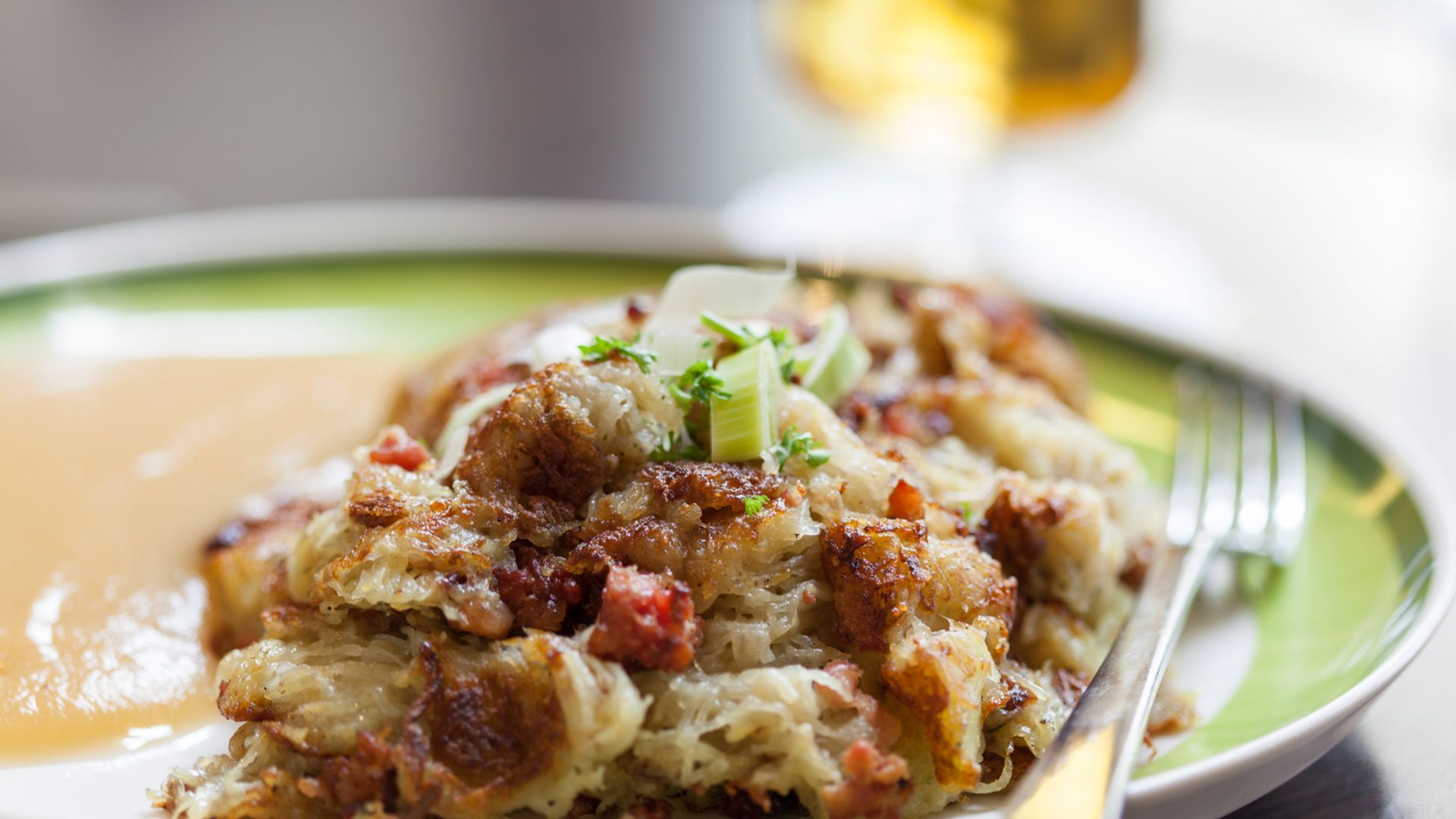 "Dippelabbes", typical dish in the Saarland, made with potatoes
©TZ Saarland (Eike Dubois)
"Dippelabbes", typical dish in the Saarland, made with potatoes
©TZ Saarland (Eike Dubois)
- What it is called here: Grumbeere
- What’s on the menu: Dibbelabbes and Gefillde
- Where to experience it: culinary city tour in Saarbrücken
In Saarland, potatoes come with plenty of crispy, roasted flavour. Dibbelabbes is a hearty dish made from grated potatoes, while “Gefillde” are stuffed potato dumplings. Both specialities can be combined with sightseeing in Saarbrücken. A culinary city tour under the Saarland motto “Hauptsach gudd gess” takes visitors past historic buildings and to a selection of places to eat. At the end of the tour, one of the restaurants on St. Johanner Markt offers a choice between Gefillde filled with liver sausage and minced meat or vegetarian Dibbelabbes with apple sauce.
Along the way, the potato also tells the story of Saarland’s location: the region’s cuisine combines hearty traditional dishes with French influences. The tour turns this into a culinary introduction to Saarbrücken, bringing local history and flavours together.
Fun fact: “Hauptsach gudd gess” sums up a Saarland approach to enjoying life: the main thing is to eat well.
Swabia: Schupfnudeln from the frying pan to the festival
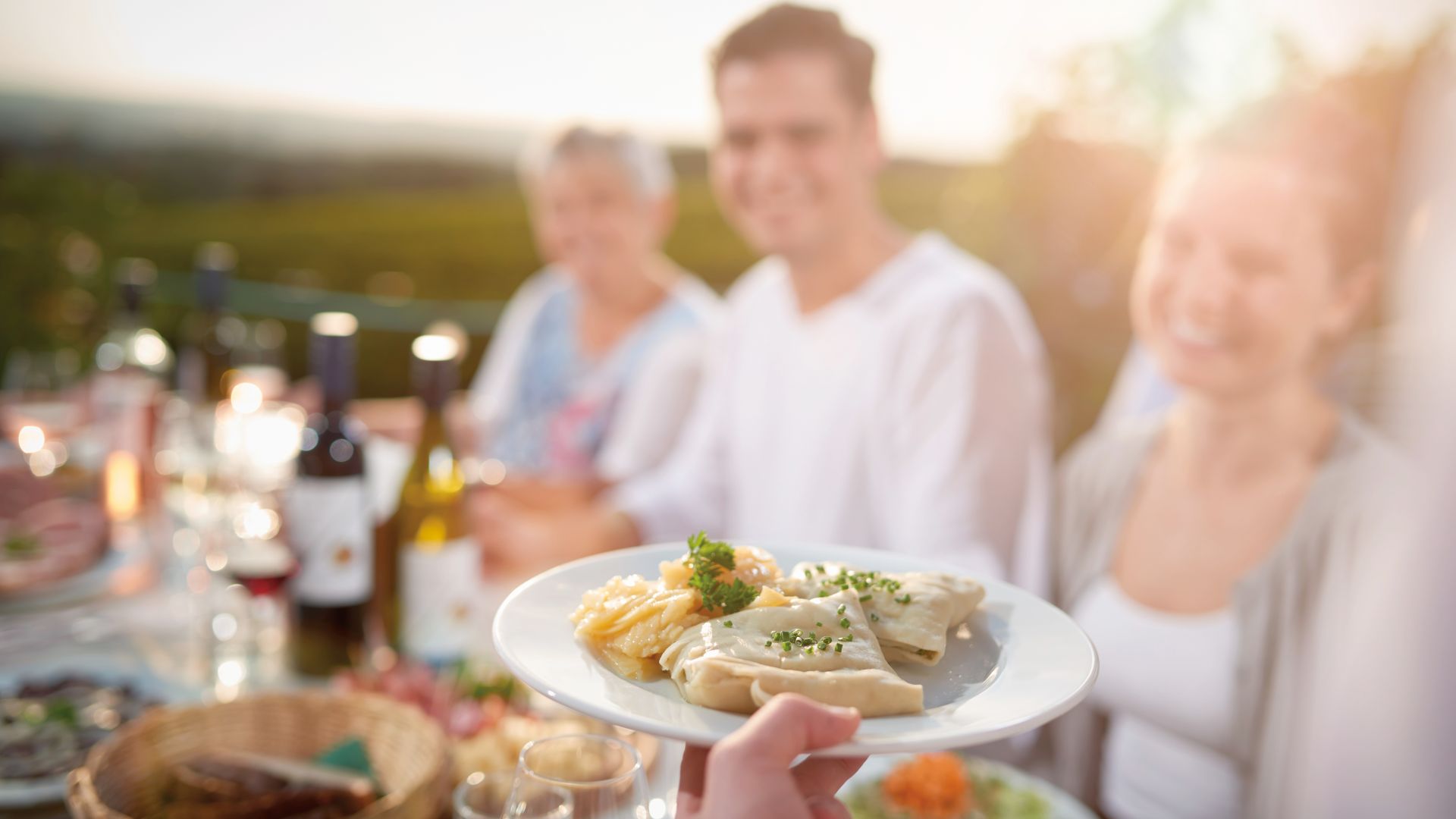 Stuttgart: Swabian ravioli (Maultaschen) with potatoe salad, a regional speciality
©Stuttgart-Marketing GmbH (SMG) (Jean-Claude Winkler)
Stuttgart: Swabian ravioli (Maultaschen) with potatoe salad, a regional speciality
©Stuttgart-Marketing GmbH (SMG) (Jean-Claude Winkler)
- What it is called here: Kartoffel
- What’s on the menu: Schupfnudeln with sauerkraut or Maultaschen with potato salad
- Where to try it: at festivals and restaurants serving regional cuisine, including in Stuttgart
Golden brown from the pan, elongated in shape and often served with sauerkraut: Schupfnudeln are a staple of southern German cuisine and are particularly widespread in Baden-Württemberg. Savoury versions are served as a side dish with meat or traditionally with sauerkraut, while sweet variations come with cinnamon and sugar. Their history predates today’s common potato version: during the Thirty Years’ War, soldiers were already shaping elongated noodles from their flour rations. Recipes later developed differently from region to region.
In Stuttgart, Schupfnudeln with sauerkraut are part of traditional festival fare. At the Stuttgart Wine Village, for example, they are served alongside other Swabian specialities such as Maultaschen with potato salad. Here, the potato shows its sociable side: not as an elaborate individual dish, but as uncomplicated food enjoyed among festival tents, wine and city life.
Fun fact: Early Schupfnudeln contained no potatoes at all. Only later regional adaptations turned the old flour-based dish into the potato noodles widely known today.