
Inspiring Germany
Germany’s low mountain ranges: 8 unique experiences among rocks, forests and starry skies
This text was generated with the help of AI ✨
Germany’s low mountain ranges reveal surprising perspectives. Between the Teutoburg Forest and the Bavarian Forest, the Eifel and the Fichtel Mountains, unusual experiences await: take a boat trip underground, spend a night beneath a star-filled sky, shape your own glass sphere in a glassworks or try your hand at panning for real gold. These eight experiences show just how closely nature, culture and regional history are intertwined in Germany’s low mountain ranges.
 Give “germany.travel” priority on Google
Up high: viewpoints in the low mountain ranges
 Horn-Bad Meinberg: Externsteine
©DZT (Florian Trykowski)
Horn-Bad Meinberg: Externsteine
©DZT (Florian Trykowski)
Where steep rock formations open up sweeping panoramic views, some of Germany’s most impressive photo opportunities await. Rising up to 40 metres, the Externsteine in the Teutoburg Forest are among the country’s best-known natural and cultural monuments. In the Swabian Alb, the Zeller Horn offers the much-photographed view of Hohenzollern Castle. In the Fichtel Mountains, the Weißmain-Ochsenkopf Trail leads to the region’s second-highest peak: from the Asenturm tower, the view stretches far across the forested low mountain landscape. Those with a head for heights will find one of the most impressive experiences in the Hunsrück: the Geierlay suspension bridge crosses the valley high above the ground.
Underground: caves and mines to explore
 Hayingen: Woman visits the water cave Wimsener Höhle in a boat
©DZT (Florian Trykowski)
Hayingen: Woman visits the water cave Wimsener Höhle in a boat
©DZT (Florian Trykowski)
Some of the most fascinating stories of the low mountain ranges unfold beneath the surface. In the Swabian Alb, Wimsener Höhle is Germany’s only show cave that can be explored by boat, taking visitors around 70 metres into a mysterious karst world while they learn about the geology of the Alb. In the Westerwald, a historic mine railway takes visitors into the Grube Bindweide visitor mine, following the same route once used by miners in the former iron ore mine.
Hands-on nature: rock labyrinths, gold panning and wilderness
 Rock Formations in the Luisenburg Rock Labyrinth
©AdobeStock (Vermeulen-Perdaen)
Rock Formations in the Luisenburg Rock Labyrinth
©AdobeStock (Vermeulen-Perdaen)
In the Fichtel Mountains, the Luisenburg Rock Labyrinth, Europe’s largest granite boulder field, invites visitors to climb and explore among rocky crevices and caves – more than 300 million years of geological history within touching distance. In the Upper Palatinate Forest, visitors can try panning for gold along the Gold Educational Trail, while the Waldnaab Valley nature reserve, with its bizarre rock formations and natural riverside paths, offers a small-scale adventure. In Bavarian Forest National Park, Germany’s oldest national park, families can experience nature with all their senses on ranger-led tours and at the Haus zur Wildnis visitor centre. Meanwhile, the accessible circular trail at Waldhaus Mehlmeisel wildlife park offers encounters with lynx and wild boar.
Traditional craftsmanship: glass and porcelain
Craft traditions come to life in the Bavarian Forest. At Joska Glass World, visitors can stand at the glass furnace themselves and, with expert guidance, shape their own glass sphere – an authentic introduction to the region’s glassmaking tradition. Those wishing to delve deeper can visit the Forest History Museum and the Forest Glass Garden. In the neighbouring Fichtel Mountains, Porzellanikon, Europe’s largest specialist porcelain museum, tells the story of “white gold”, from historic production sites to modern design.
Nights beneath the stars: star parks in Germany’s low mountain ranges
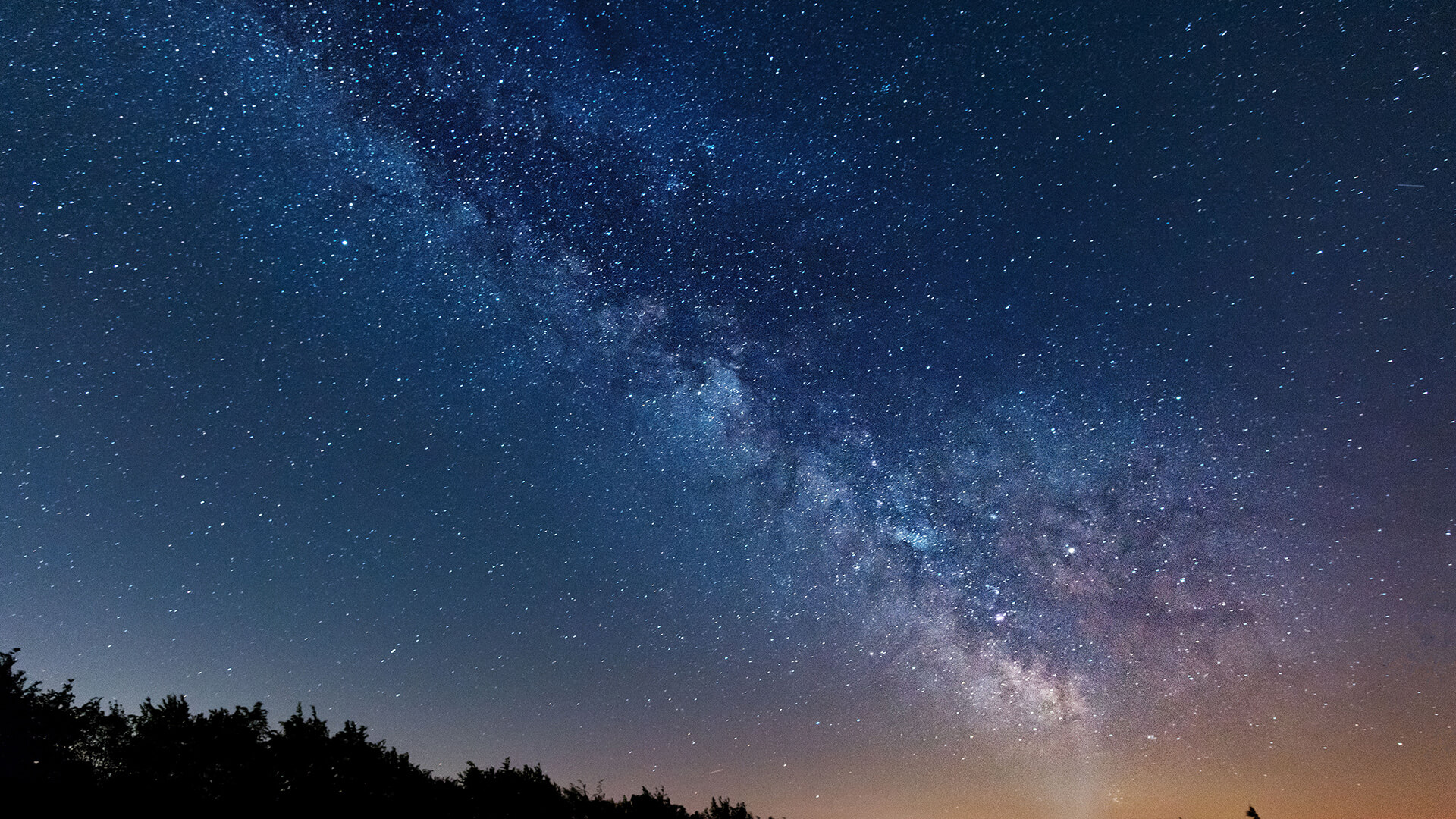 Starry sky over the International Star Park Eifel National Park
©Nationalpark Eifel (Maximilian Kaiser)
Starry sky over the International Star Park Eifel National Park
©Nationalpark Eifel (Maximilian Kaiser)
Far from the light pollution of major cities, Germany’s low mountain ranges offer some of the country’s darkest night skies. In the Eifel National Park Star Park, guided stargazing walks and astronomy activities turn the night itself into an experience. In the Bavarian Forest, a planned third Bavarian star park is set to create another place where visitors can admire fascinating constellations.
Savouring the slow life: picnic spots, tiny houses and forest bathing
Not every experience in the low mountain ranges needs an adrenaline rush. In the Solling-Vogler region, a ready-packed picnic basket accompanies hikers to some of the most beautiful spots in the “Wilde Heimat” landscape. In the Spessart, guests can stay in tiny houses surrounded by rural scenery with cows and goats, or choose accommodation with a historic atmosphere. Around Bad Neualbenreuth in the Upper Palatinate Forest, forest bathing and wellness activities demonstrate just how relaxing time among the trees can be.
Iconic hiking trails: Romanticism, volcanoes and river valleys
 Saechsische Schweiz-Osterzgebirge: Malerweg with the table stones: Lilienstein, Gohrisch and Papststein
©DZT (Francesco Carovillano)
Saechsische Schweiz-Osterzgebirge: Malerweg with the table stones: Lilienstein, Gohrisch and Papststein
©DZT (Francesco Carovillano)
Those wishing to explore the low mountain ranges on foot will find long-distance trails with distinctive character. The 116-kilometre Painters Way in Saxon Switzerland passes through landscapes that inspired Caspar David Friedrich and other Romantic artists. The Eifelsteig connects volcanic landscapes, forests and river valleys on its route from Aachen to Trier. In the Fichtel Mountains, the certified Weißmain-Ochsenkopf Trail passes springs and rock formations, while the “Wanderschätze” trails in Solling-Vogler provide extra motivation with a hiking stamp booklet. Along the Schwarzer Regen river in the Bavarian Forest, one of Germany’s top riverside hiking trails also runs from Bayerisch Eisenstein to Regen.
Engineering amid the forests: record-breaking bridges, observation spheres and an idea that travelled the world
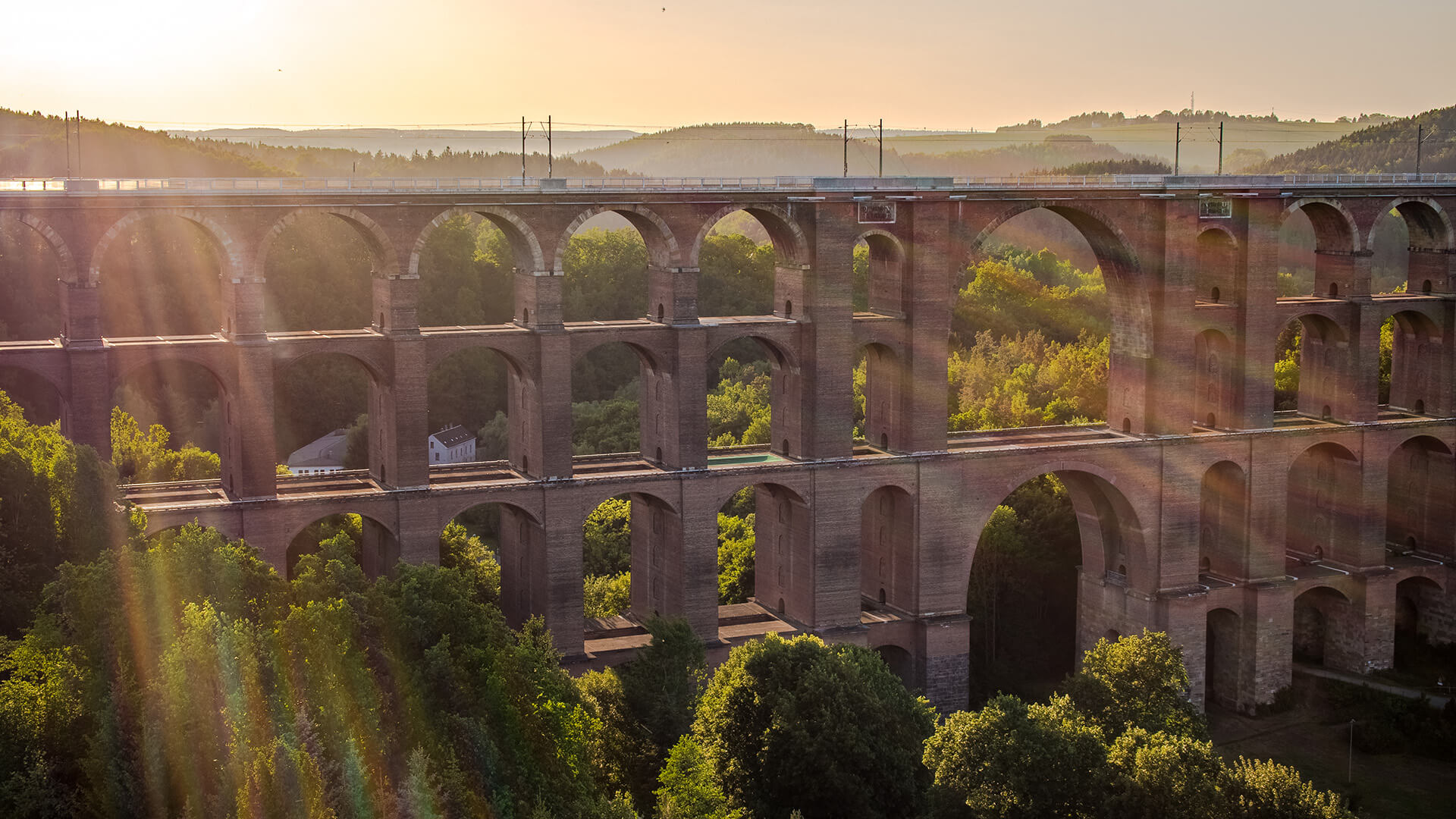 Göltzschtalbrücke: biggest brick stone bridge in the world
©AdobeStock (Daniel)
Göltzschtalbrücke: biggest brick stone bridge in the world
©AdobeStock (Daniel)
Architecture and engineering have also left their mark on the low mountain ranges. Built from 26 million bricks, the Göltzsch Valley Bridge in the Vogtland is the world’s largest brick-built bridge – and trains still cross this historic structure every day. In the Upper Palatinate Lake District, the walk-in wooden adventure sphere at Lake Steinberger See combines unusual architecture with a viewing platform. In the Westerwald, the Raiffeisen Museum vividly traces the origins of the cooperative movement and the story of Friedrich Wilhelm Raiffeisen.